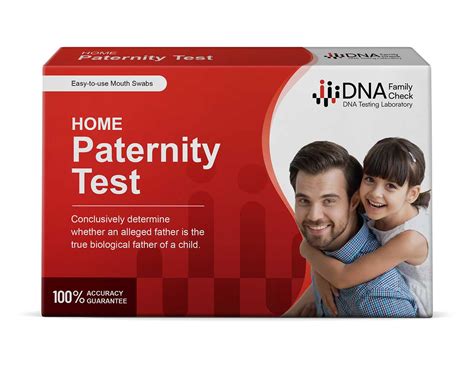
The advent of at-home paternity testing has revolutionized the way individuals can determine parentage, offering a discreet, efficient, and relatively affordable method to seek answers about biological relationships. This phenomenon has sparked significant interest and debate, reflecting broader societal shifts towards autonomy in personal and health-related decision-making. However, the landscape of at-home paternity testing is nuanced, encompassing legal, ethical, and emotional considerations that potential users must navigate.
Understanding At-Home Paternity Tests
At-home paternity tests typically involve collecting a DNA sample from the alleged father and the child (and sometimes the mother, though her participation is not always required) using cheek swabs or, less commonly, blood samples. These samples are then mailed to a laboratory for analysis. The process specifically looks at genetic markers to determine if there’s a match between the alleged father and the child, indicating a biological relationship.
How Accurate Are At-Home Paternity Tests?
The accuracy of at-home paternity tests is remarkably high when conducted properly and through accredited laboratories. These tests can claim accuracy rates of 99.9% or higher in determining whether an individual is the biological father of a child. However, accuracy can be compromised if the samples are contaminated or not collected correctly, emphasizing the importance of following the instructions provided with the test kit carefully.
Legal Implications of At-Home Paternity Tests
While at-home paternity tests offer privacy and convenience, their legal standing varies by jurisdiction. In many places, these tests are not admissible in court for legal purposes such as child support or custody cases. For legally binding results, individuals often need to undergo a court-ordered paternity test, which is conducted under supervision to ensure the integrity of the sample collection process.
Considerations for Court-Admissible Tests
For those seeking to use paternity test results in legal proceedings, it’s crucial to understand the distinction between at-home tests and those that are court-admissible. Court-admissible tests require a legal chain of custody, meaning that the samples are collected, stored, and transported under conditions that prevent tampering and ensure that the DNA samples can be legally verified as belonging to the individuals in question.
Emotional and Ethical Considerations
The decision to undergo at-home paternity testing is often fraught with emotional complexity. Individuals may be seeking answers to questions about their biological heritage, dealing with relationship issues, or navigating family dynamics. It’s essential to approach these tests with a clear understanding of the potential outcomes and the emotional implications they may carry.
Counseling and Support
Given the potential emotional impact of paternity test results, seeking professional counseling or support can be beneficial. This is especially true in situations where the results may lead to significant life changes or revelations about one’s identity and family relationships.
Choosing the Right At-Home Paternity Test
With numerous at-home paternity test kits available, selecting the right one can seem daunting. Key considerations include the test’s accuracy, the privacy and security of the testing process, the cost, and whether the test is court-admissible if legal proceedings are a potential next step.
Accreditation and Reputation
Opting for a test kit from an accredited and reputable laboratory is paramount. Look for companies that are accredited by recognized organizations, such as the American Association of Blood Banks (AABB) or the College of American Pathologists (CAP), as these accreditations indicate that the laboratory meets certain standards for quality and reliability.
The Future of At-Home Paternity Testing
As technology continues to advance, at-home paternity testing is likely to become even more accessible and possibly more sophisticated. The integration of genetic testing into personalized medicine and the increasing availability of direct-to-consumer genetic tests are trends that will continue to shape how individuals understand their genetic makeup and biological relationships.
Ethical and Regulatory Challenges
The expansion of at-home genetic testing, including paternity testing, poses ethical and regulatory challenges. There is a growing need for clear guidelines and protections to ensure that these tests are used responsibly and that individuals are fully informed about the implications of the results.
Conclusion
At-home paternity testing represents a significant advancement in genetic testing, offering individuals a means to explore and understand their biological relationships with unprecedented ease. However, this convenience comes with the responsibility to navigate complex legal, ethical, and emotional landscapes. By approaching at-home paternity testing with a comprehensive understanding of its implications and limitations, individuals can make informed decisions that align with their personal and familial circumstances.
What is the average cost of an at-home paternity test?
+The cost of at-home paternity tests can vary widely, typically ranging from $70 to over $200, depending on the test's complexity, the need for additional participants (like the mother), and whether the test is court-admissible.
How long does it take to receive results from an at-home paternity test?
+The time to receive results from an at-home paternity test can vary, but most laboratories provide results within 3 to 5 business days after receiving the samples. Some expedited services may offer faster turnaround times for an additional fee.
Can at-home paternity tests be used for legal purposes?
+Not all at-home paternity tests are admissible in court. For legal purposes, such as establishing paternity for child support or custody cases, a court-ordered test that follows a legal chain of custody is typically required. However, some at-home tests are designed to be court-admissible if certain conditions are met, such as supervised sample collection.
In conclusion, at-home paternity testing is a powerful tool for those seeking to understand their biological relationships. With its high accuracy, convenience, and relative affordability, it has become an attractive option for many. Nevertheless, it’s essential to approach this technology with a nuanced understanding of its legal, ethical, and emotional implications to ensure that its use aligns with individual and societal well-being.