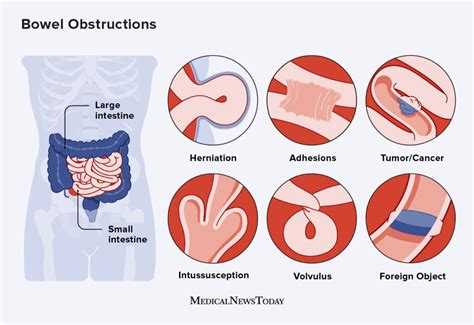
The human digestive system is a complex and highly specialized process, crucial for the absorption of nutrients and the elimination of waste. However, this intricate process can sometimes go awry, leading to conditions such as bowel obstruction. A bowel obstruction, also known as intestinal obstruction, occurs when the normal flow of intestinal contents is blocked, preventing the movement of food, fluids, and gas through the intestines. This blockage can lead to severe abdominal pain, vomiting, constipation, and other serious complications if not addressed promptly. Understanding the causes of bowel obstruction is crucial for its prevention, diagnosis, and treatment.
Identifying the Causes
Bowel obstructions can be caused by a variety of factors, which can be broadly categorized into mechanical and non-mechanical (or functional) causes. Mechanical obstructions are due to physical blockages, while non-mechanical obstructions result from the failure of the intestinal muscles to move contents through the digestive tract.
Mechanical Obstructions
Mechanical obstructions are the most common type of bowel obstruction. They can result from several factors:
Adhesions: These are bands of fibrous tissue that can form between loops of the intestine or between the intestine and other organs, often as a result of surgery, infection, or inflammation. Over time, these adhesions can tighten and constrict the intestine, blocking the normal flow of intestinal contents.
Hernias: A hernia occurs when part of the intestine bulges through a weakened area in the abdominal wall. This bulging can sometimes cut off the blood supply to the intestine and block the flow of intestinal contents.
Tumors: Both benign and malignant tumors can grow inside or outside the intestine and block the passage of food, fluid, and gas.
Volvulus: This refers to a condition where the intestine twists around itself and the tissue that holds it in place, cutting off its blood supply and blocking the intestine.
Intussusception: A condition where a part of the intestine slides into an adjacent part, one segment slipping inside the next, much like the parts of a telescope. This can block the flow of contents and cut off blood supply.
Foreign bodies: Sometimes, objects that are swallowed can get stuck in the intestines and cause an obstruction.
Non-Mechanical Obstructions
Non-mechanical or functional obstructions occur when there is no physical blockage, but the intestines fail to function normally, leading to a buildup and blockage of food, fluid, and gas.
Paralytic ileus: This is a temporary halt of the normal contractions of the bowel muscles, often following surgery, certain medications, or illnesses. The intestines temporarily stop functioning, leading to a buildup of contents.
Pseudo-obstruction: This condition is characterized by impairment of the muscle contractions that move contents through the intestines, but without any physical blockage. It can be acute or chronic.
Understanding the Risk Factors
Certain individuals are at a higher risk of developing bowel obstruction. These include people who have had abdominal surgery, have a history of hernias, have a family history of certain conditions like colon cancer, or those with conditions that cause chronic inflammation of the intestines, such as Crohn’s disease. Age can also be a factor, as the incidence of bowel obstruction increases with age.
Diagnosis and Treatment
Diagnosing bowel obstruction involves a combination of physical examination, medical history, imaging tests like X-rays, CT scans, and sometimes, a surgical exploration. The treatment depends on the cause of the obstruction. For mechanical obstructions, surgical intervention is often necessary to relieve the blockage. Non-mechanical obstructions may be treated with medication to stimulate bowel movement or through supportive care like fluid replacement and bowel rest until normal function returns.
Preventive Measures
While some causes of bowel obstruction are unavoidable, certain preventive measures can reduce the risk. Maintaining a diet high in fiber can help prevent constipation, which can sometimes contribute to the development of bowel obstruction. Avoiding smoking, managing chronic conditions, and being cautious with medication use can also lower the risk.
Conclusion
Bowel obstruction is a serious condition that requires immediate medical attention. Understanding its causes, recognizing the risk factors, and knowing when to seek medical help are crucial for preventing severe complications. Through comprehensive diagnosis and appropriate treatment, individuals can recover from bowel obstruction and regain normal digestive function.
What are the common symptoms of bowel obstruction?
+Common symptoms include severe abdominal pain or cramping, vomiting, especially vomiting up food that has not been digested, inability to pass gas or have a bowel movement, and abdominal swelling or bloating. The severity of symptoms can vary depending on the location and extent of the obstruction.
How is bowel obstruction diagnosed?
+Diagnosis involves a combination of physical examination, medical history, and imaging tests. Common imaging tests include X-rays of the abdomen, CT scans, and sometimes, a barium enema or upper GI series. Blood tests may also be conducted to check for signs of dehydration or infection.
Can bowel obstruction be treated without surgery?
+For non-mechanical obstructions, treatment may involve medication to stimulate bowel movement, fluid replacement to combat dehydration, and bowel rest, where nothing is taken by mouth to allow the bowel to rest. However, for most mechanical obstructions, surgical intervention is necessary to relieve the blockage and restore normal bowel function.