The radial head, a crucial component of the elbow joint, plays a pivotal role in facilitating rotational movements and weight-bearing activities. However, when this vital structure becomes compromised due to injury or trauma, it can significantly impact an individual’s quality of life. A broken radial head, also known as a radial head fracture, is a common injury that can occur due to various reasons, including falls, sports accidents, or direct blows to the elbow. In this comprehensive guide, we will delve into the world of radial head fractures, exploring the causes, symptoms, diagnosis, treatment options, and rehabilitation strategies to help individuals get back to their normal lives.
Causes and Risk Factors
Radial head fractures can occur due to various mechanisms, including:
- Falls onto an outstretched hand, which can transmit force up the forearm and cause the radial head to fracture
- Direct blows to the elbow, such as those sustained during contact sports or accidents
- Twisting or bending injuries, which can cause the radial head to fracture due to excessive stress
- Osteoporosis, a condition characterized by weakened bones, which can increase the risk of fractures
Certain individuals are more prone to radial head fractures, including:
- Athletes participating in contact sports, such as football, hockey, or rugby
- Older adults with osteoporosis or weakened bones
- People with a history of previous elbow injuries or fractures
Symptoms and Diagnosis
The symptoms of a broken radial head can vary depending on the severity of the injury, but common signs and symptoms include:
- Severe pain in the elbow, which can radiate to the forearm or wrist
- Swelling, bruising, or redness around the elbow
- Limited mobility or stiffness in the elbow joint
- Difficulty rotating the forearm or wrist
- Instability or clicking sensations in the elbow
To diagnose a radial head fracture, doctors typically perform a combination of physical examinations, imaging tests, and diagnostic procedures, including:
- X-rays to visualize the bone structure and identify any fractures
- CT scans or MRI scans to assess the extent of the injury and detect any associated soft tissue damage
- Physical examinations to evaluate range of motion, strength, and stability of the elbow joint
Treatment Options
The treatment of a broken radial head depends on the severity of the injury, the individual’s overall health, and their lifestyle requirements. Common treatment options include:
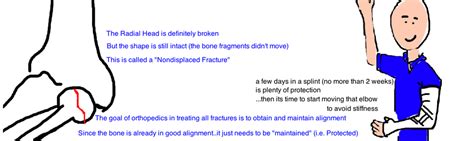
- Conservative management: For non-displaced or minimally displaced fractures, conservative management may be sufficient, involving rest, ice, compression, and elevation (RICE) to reduce pain and inflammation, as well as physical therapy to maintain range of motion and strength.
- Pain management: Over-the-counter or prescription pain medications, such as acetaminophen or ibuprofen, can help alleviate pain and discomfort.
- Immobilization: In some cases, the elbow may need to be immobilized in a cast or splint to allow the bone to heal.
- Surgery: For more severe fractures, surgical intervention may be necessary to stabilize the bone, repair any damaged soft tissues, and restore elbow function. Surgical options include:
- Open reduction and internal fixation (ORIF) to stabilize the bone with plates, screws, or wires.
- Radial head replacement, where the damaged radial head is replaced with a prosthetic implant.
- Arthroscopic surgery, a minimally invasive procedure to visualize and treat the injury through small incisions.
Rehabilitation and Recovery
Rehabilitation plays a crucial role in the recovery process, helping individuals regain strength, range of motion, and functional ability in the affected elbow. A comprehensive rehabilitation program may include:
- Physical therapy: Gentle exercises and stretches to maintain range of motion, strength, and flexibility.
- Pain management: Ongoing pain management strategies, such as medication or alternative therapies, to alleviate discomfort.
- Strengthening exercises: Progressive resistance exercises to strengthen the muscles around the elbow joint.
- Functional activities: Gradual introduction of functional activities, such as lifting, carrying, or throwing, to promote recovery and restore normal function.
Conclusion
A broken radial head can be a debilitating injury, but with proper treatment and rehabilitation, individuals can make a successful recovery and return to their normal lives. By understanding the causes, symptoms, diagnosis, treatment options, and rehabilitation strategies, individuals can take the first step towards healing and restoring elbow function. Remember, each individual’s recovery journey is unique, and it’s essential to work closely with healthcare professionals to develop a personalized treatment plan that addresses specific needs and goals.
What are the most common causes of radial head fractures?
+The most common causes of radial head fractures include falls onto an outstretched hand, direct blows to the elbow, twisting or bending injuries, and osteoporosis.
How is a radial head fracture diagnosed?
+A radial head fracture is typically diagnosed through a combination of physical examinations, imaging tests (such as X-rays, CT scans, or MRI scans), and diagnostic procedures.
What are the treatment options for a broken radial head?
+Treatment options for a broken radial head include conservative management, pain management, immobilization, and surgery (such as ORIF, radial head replacement, or arthroscopic surgery).
How long does it take to recover from a radial head fracture?
+Recovery time from a radial head fracture can vary depending on the severity of the injury and the individual’s overall health, but most people can expect to regain functional ability within 3-6 months.