The winter season is here, and with it comes the dreaded cold and flu season. But this year, there’s an added layer of concern - COVID-19. As the pandemic continues to evolve, it can be challenging to determine whether your symptoms are caused by a common cold, the flu, or something more serious like COVID-19. In this article, we’ll delve into the differences between these three illnesses, explore their symptoms, and provide guidance on how to navigate the current health landscape.
Understanding the Differences
The common cold, flu, and COVID-19 are all respiratory illnesses, but they are caused by different viruses. The common cold is usually caused by rhinoviruses, while the flu is caused by influenza viruses. COVID-19, on the other hand, is caused by a coronavirus, specifically SARS-CoV-2. Each of these illnesses has distinct symptoms, and understanding these differences is crucial for proper diagnosis and treatment.
Symptoms of the Common Cold
The common cold is a mild illness that can cause a range of symptoms, including:
- Runny or stuffy nose
- Sneezing
- Coughing
- Sore throat
- Headache
- Fatigue
- Muscle aches
Cold symptoms typically develop gradually and can last for 7-10 days. While the common cold can be uncomfortable, it is usually not serious and can be treated with over-the-counter medications and self-care.
Symptoms of the Flu
The flu, also known as influenza, is a more severe illness that can cause:
- High fever (usually above 102°F)
- Chills
- Cough
- Sore throat
- Runny or stuffy nose
- Headache
- Fatigue
- Muscle or body aches
- Diarrhea and vomiting (more common in children)
Flu symptoms can develop suddenly and can be severe, especially in older adults, young children, and people with certain chronic health conditions. The flu can lead to serious complications, such as pneumonia, bronchitis, and sinus and ear infections.
Symptoms of COVID-19
COVID-19 is a highly infectious illness that can cause a range of symptoms, from mild to severe. Common symptoms of COVID-19 include:
- Fever or chills
- Cough
- Shortness of breath or difficulty breathing
- Fatigue
- Muscle or body aches
- Headache
- Sore throat
- Runny nose or stuffy nose
- Diarrhea
- Nausea or vomiting
In severe cases, COVID-19 can cause pneumonia, acute respiratory distress syndrome, and other serious complications. It’s essential to seek medical attention immediately if you experience severe symptoms, such as difficulty breathing, chest pain, or severe headache.
It's crucial to note that some people with COVID-19 may not exhibit any symptoms at all, or they may experience mild symptoms that resemble a common cold. This is why testing and contact tracing are vital in controlling the spread of the virus.
How to Tell the Difference
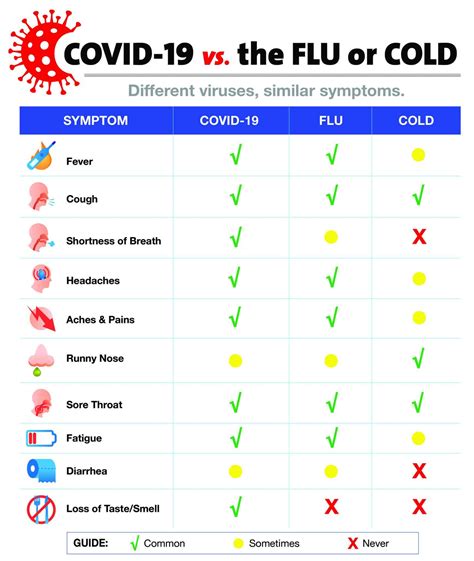
So, how can you determine whether your symptoms are caused by a cold, flu, or COVID-19? Here are some key differences to look out for:
- Fever: COVID-19 and the flu are more likely to cause a high fever, while a cold typically does not.
- Cough: A dry, hacking cough is more common with COVID-19, while a wet, productive cough is more typical of the flu.
- Shortness of breath: COVID-19 can cause shortness of breath or difficulty breathing, especially in severe cases, while this is less common with the flu and cold.
- Loss of taste or smell: COVID-19 can cause a loss of taste or smell, which is not typically associated with the flu or cold.
What are the most common symptoms of COVID-19?
+The most common symptoms of COVID-19 include fever, cough, shortness of breath, fatigue, and muscle or body aches. However, some people may experience mild symptoms or no symptoms at all.
How can I protect myself from getting COVID-19?
+To protect yourself from COVID-19, practice good hygiene, such as washing your hands frequently, wearing a mask in public, and maintaining social distancing. It's also essential to stay up-to-date on vaccination recommendations and follow local health guidelines.
What should I do if I think I have COVID-19?
+If you think you have COVID-19, stay home and isolate yourself from others. Contact your healthcare provider for guidance and follow their instructions for testing and treatment. If you experience severe symptoms, such as difficulty breathing, seek medical attention immediately.
Conclusion
In conclusion, while the common cold, flu, and COVID-19 share some similarities, they are distinct illnesses with different symptoms and severity levels. By understanding the differences between these illnesses and taking proactive steps to protect yourself, you can reduce your risk of getting sick and stay healthy during the winter season. Remember, if you’re unsure about your symptoms or have concerns about COVID-19, it’s always best to consult with a healthcare professional for personalized guidance and care.
The key to navigating the current health landscape is to stay informed, take proactive steps to protect yourself, and seek medical attention if you experience severe symptoms.