Pain, a complex and multifaceted phenomenon, has been a persistent companion to humanity, affecting millions of people worldwide. The experience of pain is inherently subjective, making it challenging to quantify and measure. To tackle this issue, healthcare professionals have developed various pain assessment tools, including the pain level scale. But how accurate is this scale in capturing the essence of an individual’s pain experience?
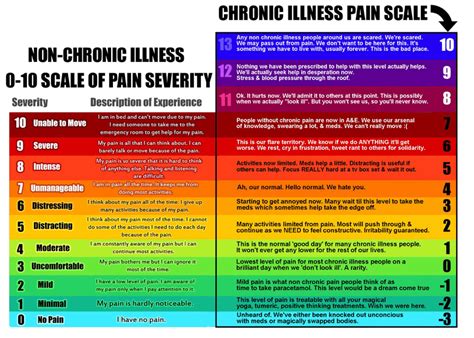
The pain level scale, typically ranging from 0 to 10, with 0 indicating no pain and 10 representing the worst possible pain, is widely used in clinical settings to assess pain intensity. Patients are often asked to rate their pain level, which helps healthcare providers determine the severity of their condition and develop an appropriate treatment plan. However, the accuracy of this scale has been a topic of ongoing debate among medical professionals and researchers.
One of the primary concerns with the pain level scale is its reliance on patient self-reporting. Patients may have different thresholds for pain, and their ratings can be influenced by various factors, such as emotional state, past experiences, and cultural background. For instance, a patient who has experienced chronic pain for an extended period may rate their current pain level as a 6, while another patient with a similar condition may rate it as an 8. This disparity highlights the subjective nature of pain perception and the potential limitations of the pain level scale.
Furthermore, the pain level scale does not account for the complex characteristics of pain, such as its quality, location, and duration. Pain can be sharp, dull, throbbing, or burning, and it can be localized to a specific area or radiate to other parts of the body. The scale also fails to capture the emotional and psychological aspects of pain, which can significantly impact an individual’s overall pain experience.
Research has shown that the pain level scale has limited accuracy in certain populations, such as older adults, children, and individuals with cognitive impairments. These groups may have difficulty understanding the scale or expressing their pain in a way that accurately reflects their experience. Additionally, the scale may not be sensitive enough to detect subtle changes in pain intensity, which can lead to inadequate treatment and poor patient outcomes.
Despite these limitations, the pain level scale remains a valuable tool in pain assessment. It provides a simple and practical way to initiate conversations about pain and facilitates communication between patients and healthcare providers. Moreover, the scale can be used in conjunction with other assessment tools, such as the McGill Pain Questionnaire or the Brief Pain Inventory, to gain a more comprehensive understanding of an individual’s pain experience.
To improve the accuracy of pain assessment, healthcare professionals are exploring alternative methods, such as behavioral observation, physiological measures, and technological innovations. For example, wearable devices and mobile apps can track pain levels, physical activity, and sleep patterns, providing a more objective and nuanced understanding of an individual’s pain experience.
In addition to these advancements, researchers are investigating the role of neuroscience and neuroimaging in pain assessment. Functional magnetic resonance imaging (fMRI) and electroencephalography (EEG) can help identify specific brain regions and networks involved in pain processing, potentially leading to the development of more accurate and personalized pain assessment tools.
In conclusion, while the pain level scale has its limitations, it remains a useful tool in pain assessment. By acknowledging its shortcomings and exploring alternative methods, healthcare professionals can work towards developing more accurate and comprehensive pain assessment strategies. Ultimately, the goal is to provide effective relief and improve the quality of life for individuals suffering from pain.
Getting Relief from Pain
If you are experiencing pain, there are several steps you can take to get relief:
- Consult a healthcare professional: Schedule an appointment with your primary care physician or a pain management specialist to discuss your pain and develop a treatment plan.
- Keep a pain journal: Record your pain levels, triggers, and any factors that exacerbate or relieve your pain. This information can help your healthcare provider understand your pain experience and make informed treatment decisions.
- Explore non-pharmacological interventions: Consider alternative therapies, such as acupuncture, massage, or cognitive-behavioral therapy, which can help manage pain and improve overall well-being.
- Stay active: Engage in regular physical activity, such as walking or yoga, to reduce pain and improve mood.
- Practice stress-reducing techniques: Stress can exacerbate pain; try techniques like meditation, deep breathing, or progressive muscle relaxation to manage stress and promote relaxation.
It's essential to remember that pain is a unique and complex experience, and what works for one person may not work for another. By working closely with your healthcare provider and exploring various treatment options, you can develop a personalized plan to manage your pain and improve your quality of life.
FAQs
What is the most accurate way to measure pain?
+Currently, there is no single, universally accepted method for measuring pain. However, a combination of self-reporting, behavioral observation, and physiological measures can provide a more comprehensive understanding of an individual's pain experience.
Can pain be managed without medication?
+Yes, many non-pharmacological interventions, such as acupuncture, massage, and cognitive-behavioral therapy, can help manage pain. Additionally, lifestyle modifications, such as regular exercise, stress reduction, and sleep hygiene, can also alleviate pain.
How can I communicate my pain effectively to my healthcare provider?
+Keep a pain journal to track your pain levels, triggers, and any factors that exacerbate or relieve your pain. Be open and honest with your healthcare provider about your pain experience, and ask questions to ensure you understand your treatment plan.
In the quest for effective pain management, it’s crucial to recognize the complexities of pain and the limitations of current assessment tools. By embracing a multifaceted approach to pain assessment and treatment, healthcare professionals can provide more accurate diagnoses and develop personalized plans to help individuals achieve relief from pain and improve their overall quality of life.