Erythropoietin, commonly referred to as Epo, is a hormone that plays a crucial role in the production of red blood cells in the human body. Understanding how Epo works is essential for grasping its significance in both medical treatments and its controversial use in sports doping. Let’s dive into the mechanics of Epo, its natural production, its medical applications, and the implications of its use in enhancing athletic performance.
Natural Production of Epo
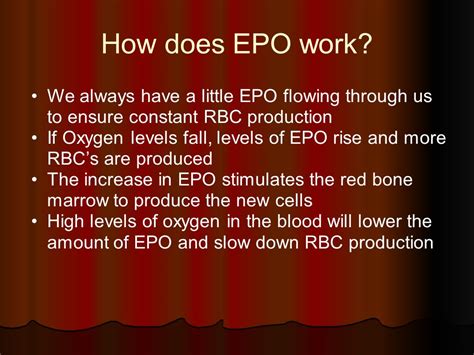
Naturally, Epo is produced by the kidneys in response to low oxygen levels in the blood, a condition known as hypoxia. This hormone then travels to the bone marrow, where it stimulates the production of red blood cells. Red blood cells are vital for carrying oxygen from the lungs to the body’s tissues. The more red blood cells there are, the more oxygen can be delivered, which is particularly important for muscle function during exercise.
Mechanism of Action
The mechanism of action of Epo involves binding to specific receptors on the surface of red blood cell precursors in the bone marrow. This binding triggers a cascade of signals that promote the proliferation, differentiation, and survival of these precursor cells, eventually leading to the production and release of mature red blood cells into the bloodstream. This process is tightly regulated under normal conditions to ensure that the body produces the appropriate number of red blood cells based on its oxygen needs.
Medical Applications of Epo
Recombinant human Epo (rhEpo) has been developed for medical use, particularly in the treatment of anemia associated with chronic kidney disease and some types of cancer. By administering rhEpo, patients can stimulate their bone marrow to produce more red blood cells, reducing the need for blood transfusions and improving their quality of life. This application of Epo is a prime example of how understanding the body’s natural processes can lead to the development of life-improving therapies.
Use of Epo in Sports
The use of Epo in sports, particularly in endurance events like distance running and cycling, has been a subject of controversy. Athletes may use rhEpo to increase their red blood cell count artificially, which can enhance oxygen delivery to the muscles and improve performance. However, this practice is considered doping and is banned by most sports organizations due to its potential health risks, including blood clots, stroke, and heart attack, as well as the unfair advantage it provides over competitors who do not use such substances.
Detection and Prevention
Detecting Epo doping is challenging due to the similarities between natural and synthetic Epo. However, advances in testing methods, including the use of blood tests to measure the ratio of reticulocytes (immature red blood cells) to mature red blood cells, and indirect markers of blood manipulation, have helped in identifying athletes who use rhEpo. Educational campaigns and strict anti-doping regulations also play crucial roles in preventing the use of Epo and other performance-enhancing substances in sports.
Future Perspectives
As research continues, there is growing interest in understanding the full potential of Epo beyond its role in red blood cell production. Studies are exploring its effects on other tissues and its potential protective role in conditions such as heart disease and stroke. Additionally, the development of new, safer therapies that mimic the action of Epo without its risks is an area of active investigation.
Expert Insights: Balancing Performance and Health
Experts in the field of sports medicine and anti-doping emphasize the importance of maintaining a balance between athletic performance and health. While the temptation to use substances like Epo to gain a competitive edge is understandable, the long-term health consequences can be severe. Instead, athletes are encouraged to focus on evidence-based training methods, nutrition, and recovery techniques that enhance performance without compromising health.
Conclusion
Epo plays a vital role in the human body, regulating red blood cell production in response to oxygen needs. Its medical applications have revolutionized the treatment of certain types of anemia, while its use in sports doping has raised significant ethical and health concerns. As we continue to learn more about Epo and its functions, it’s clear that this hormone holds many secrets to improving human health and performance, secrets that must be uncovered and applied responsibly.
What is the primary function of Epo in the human body?
+The primary function of Epo is to stimulate the production of red blood cells in the bone marrow, which is crucial for delivering oxygen to the body's tissues.
How is Epo used medically?
+Epo is used medically to treat anemia associated with chronic kidney disease and certain types of cancer by stimulating the production of red blood cells, reducing the need for blood transfusions.
Why is the use of Epo in sports considered doping?
+The use of Epo in sports is considered doping because it provides an unfair advantage by artificially increasing red blood cell count, enhancing oxygen delivery to muscles, and potentially leading to serious health risks.
By exploring the complex role of Epo in both medical treatments and sports, we gain insights into the delicate balance between enhancing human performance and preserving health. As our understanding of Epo and its mechanisms deepens, so too does our appreciation for the intricate systems that govern human physiology and our responsibility to use this knowledge wisely.