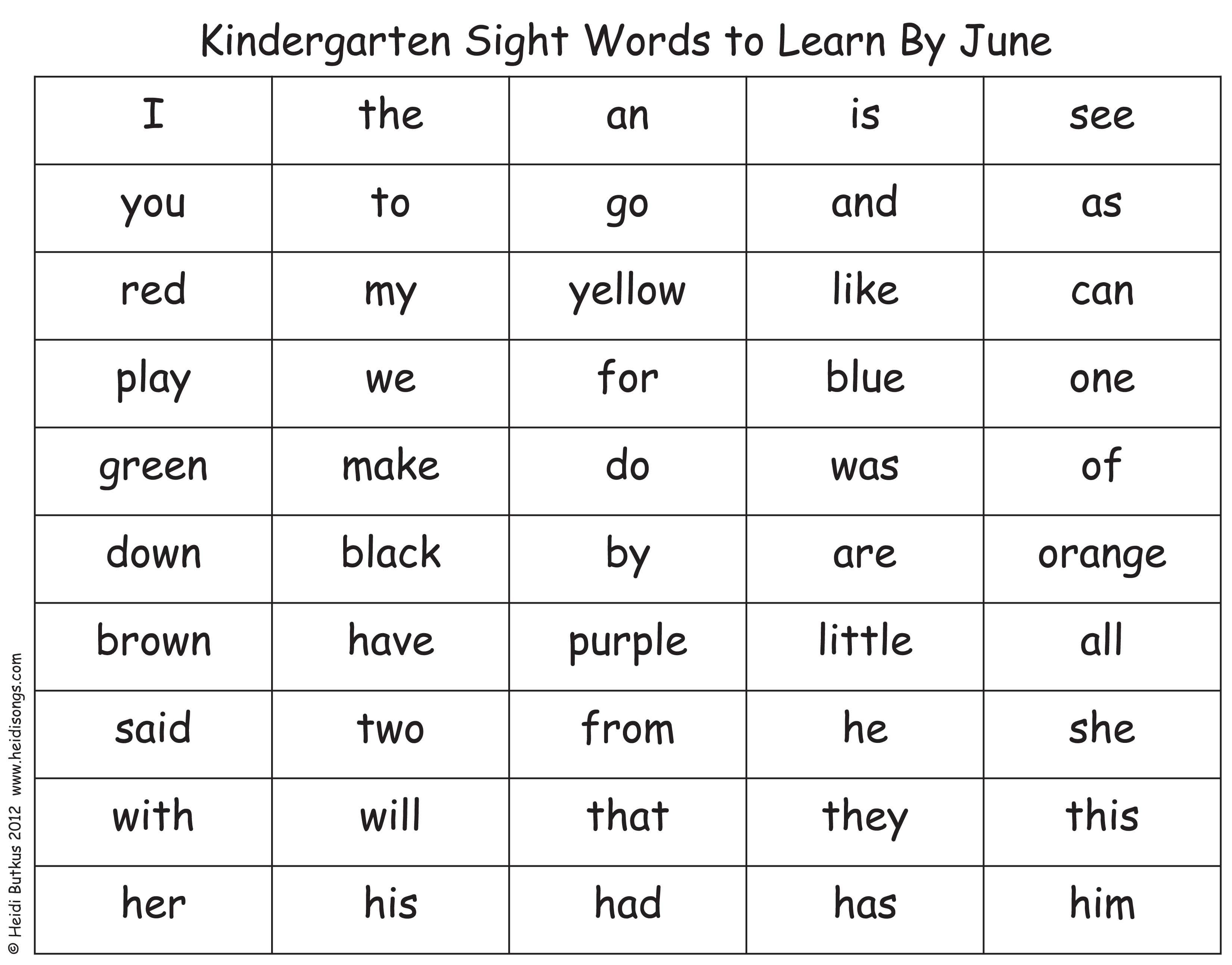
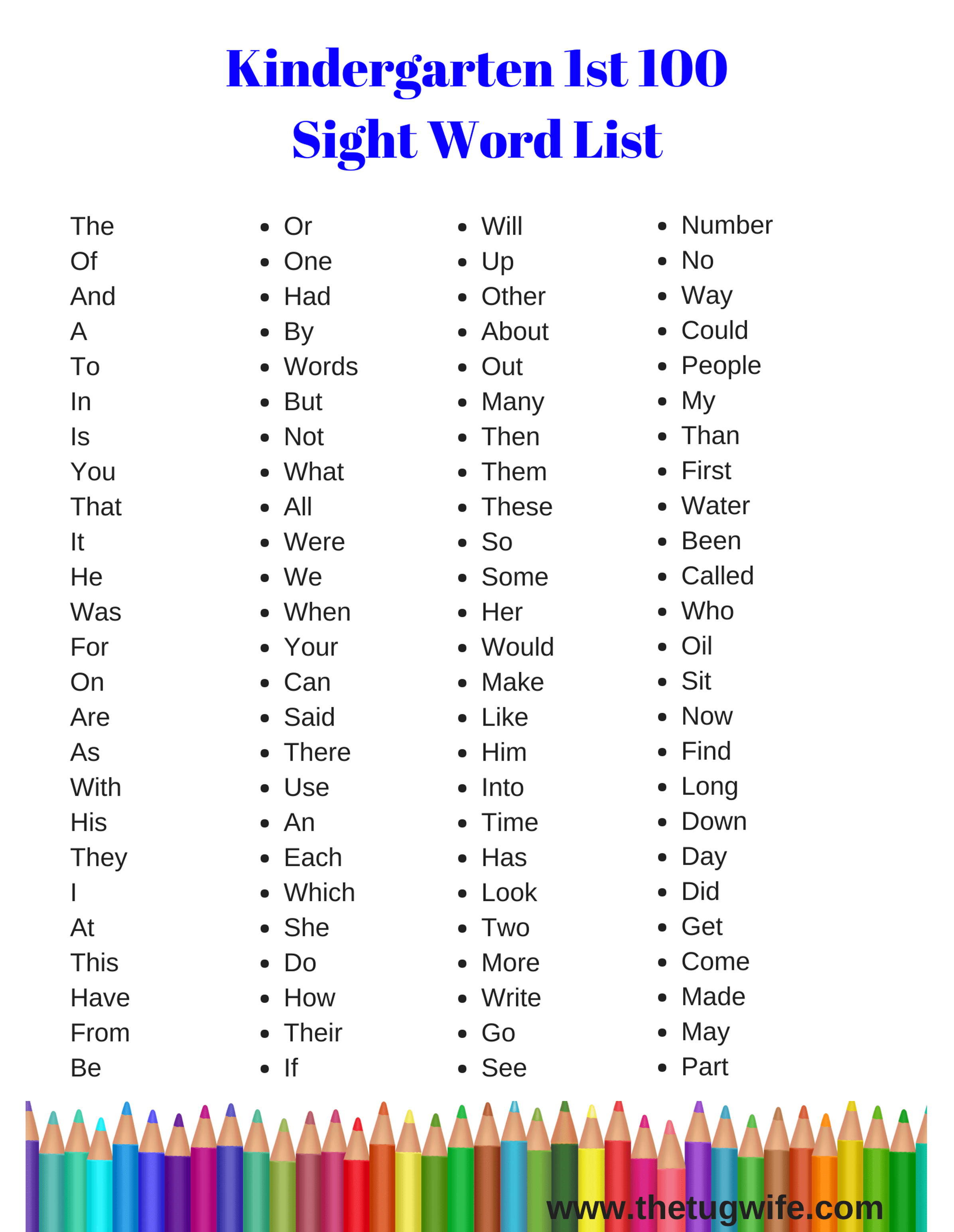
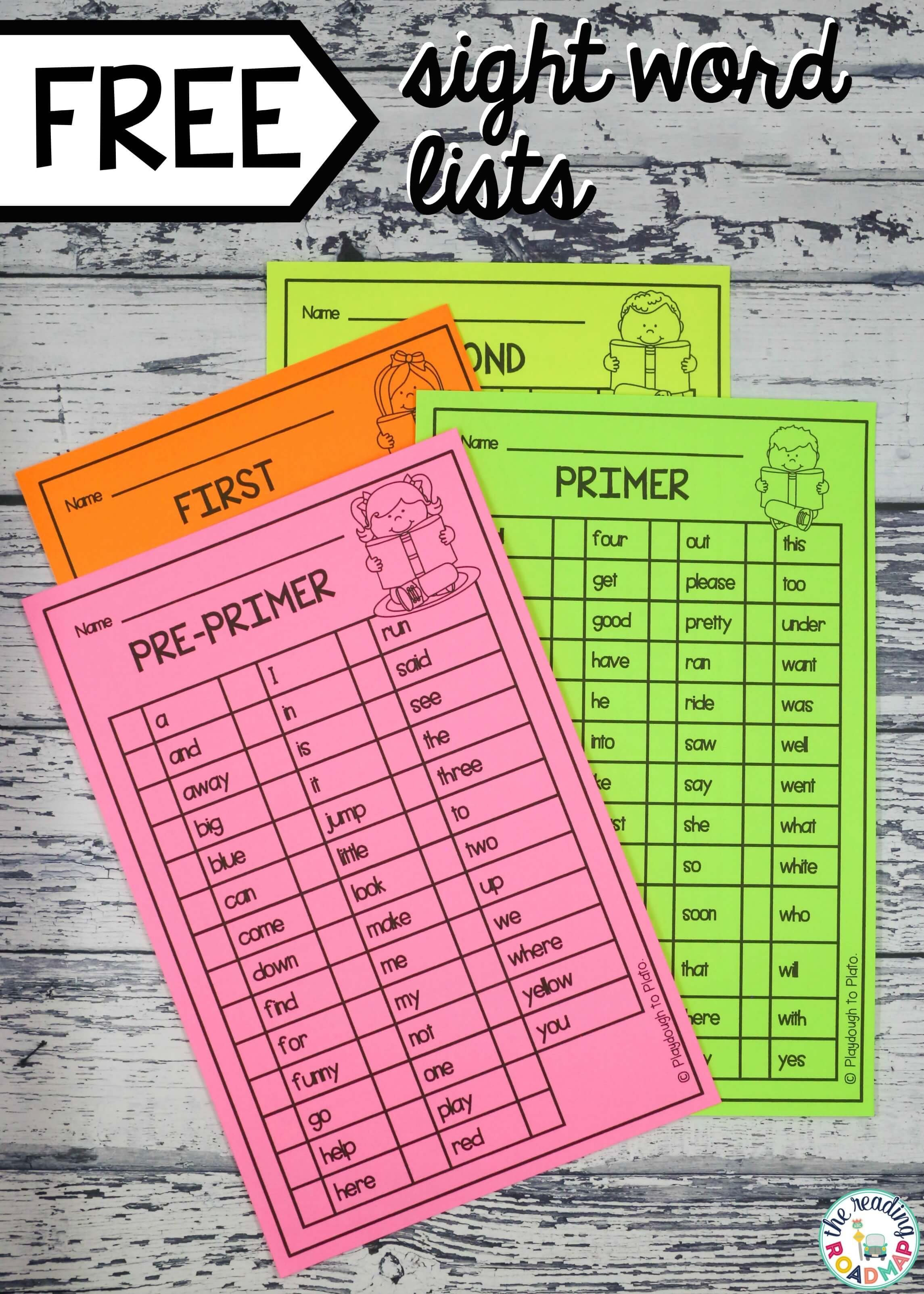
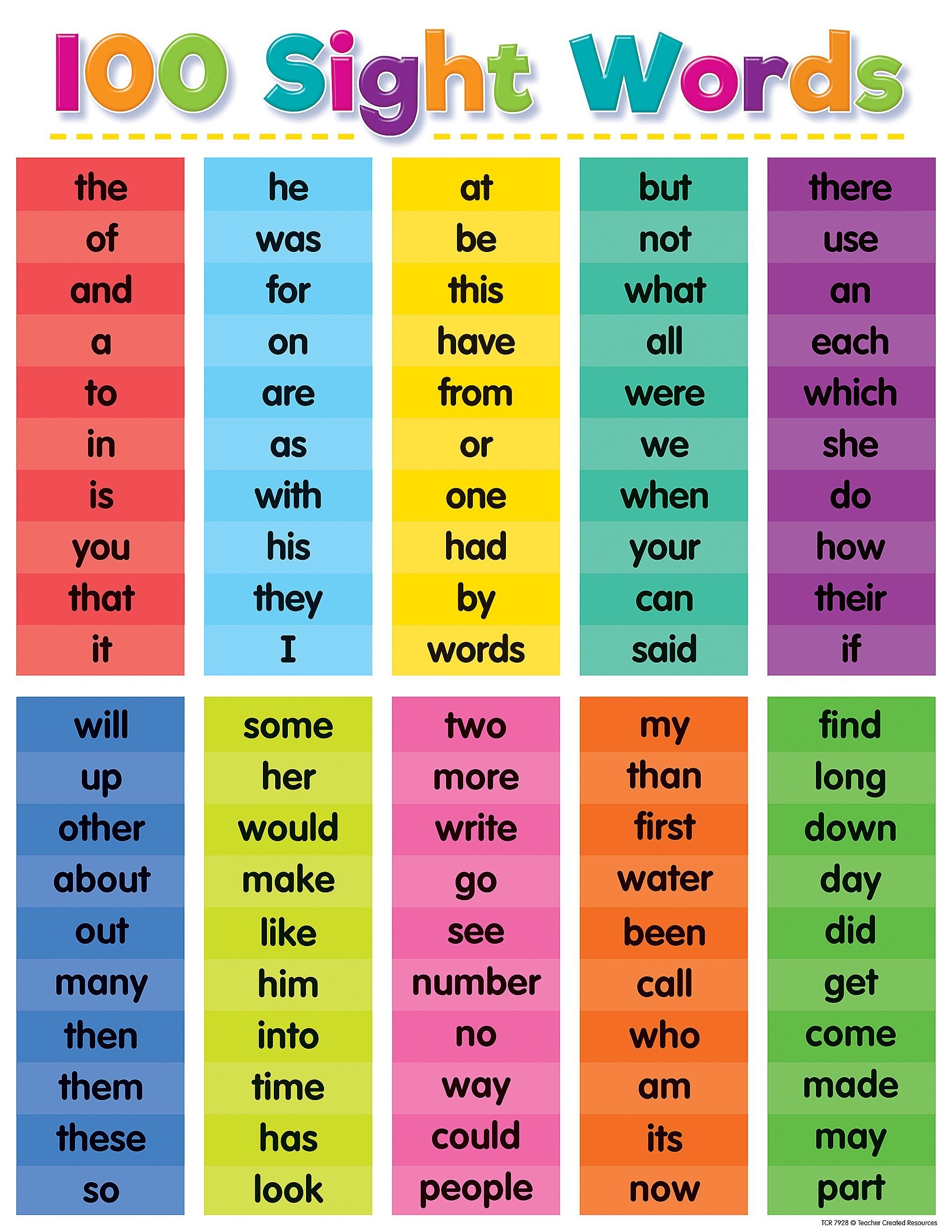
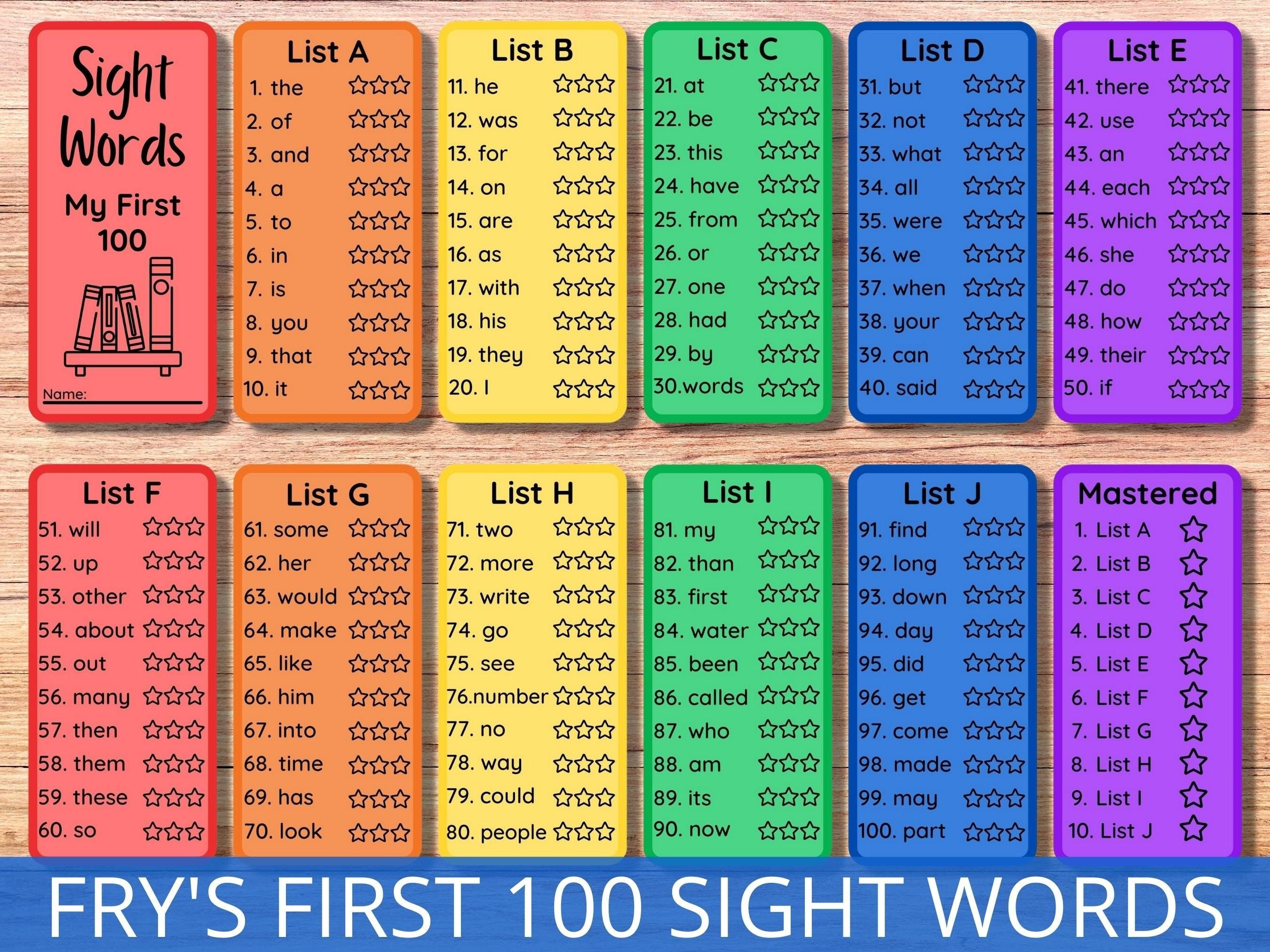
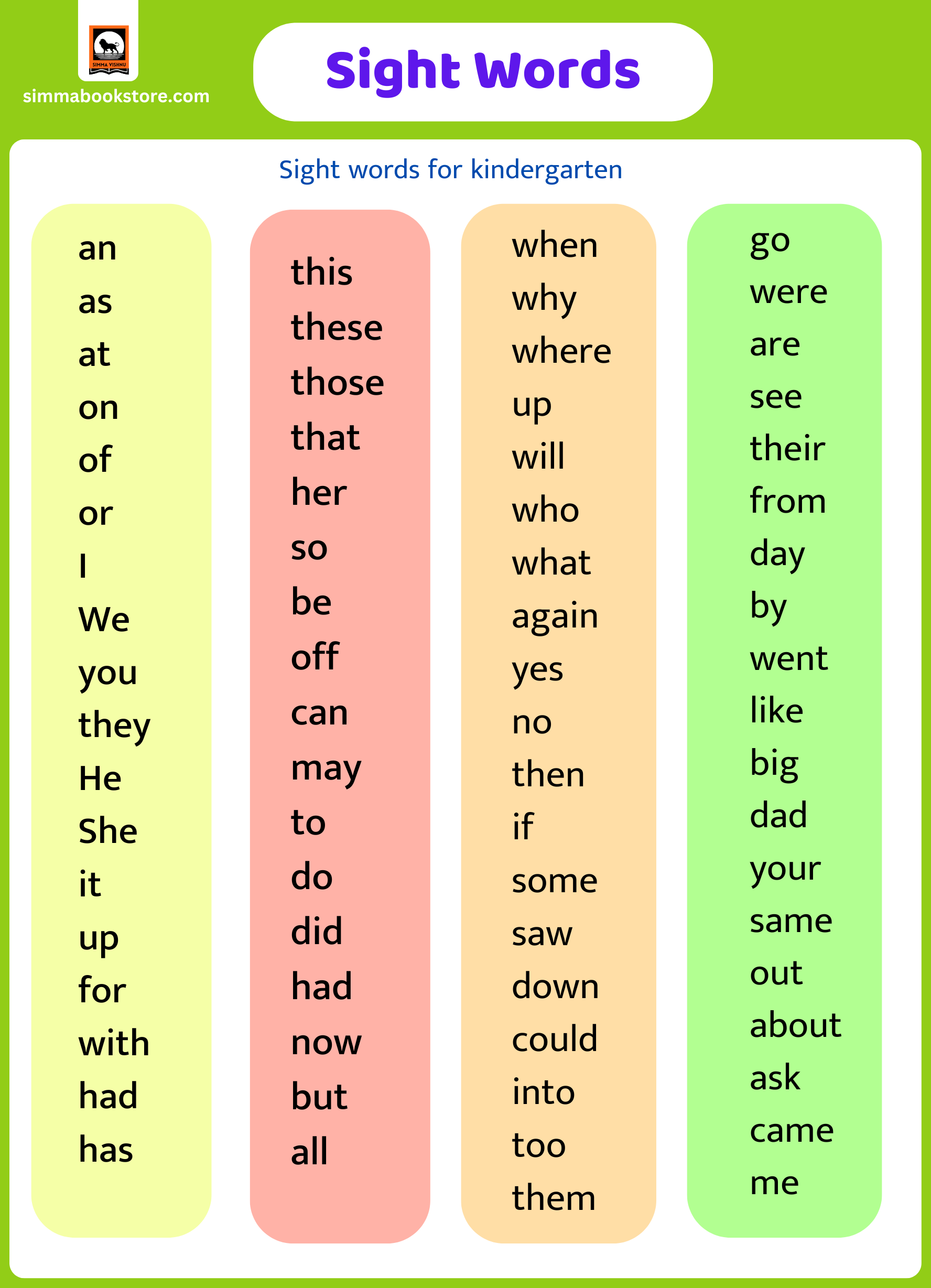
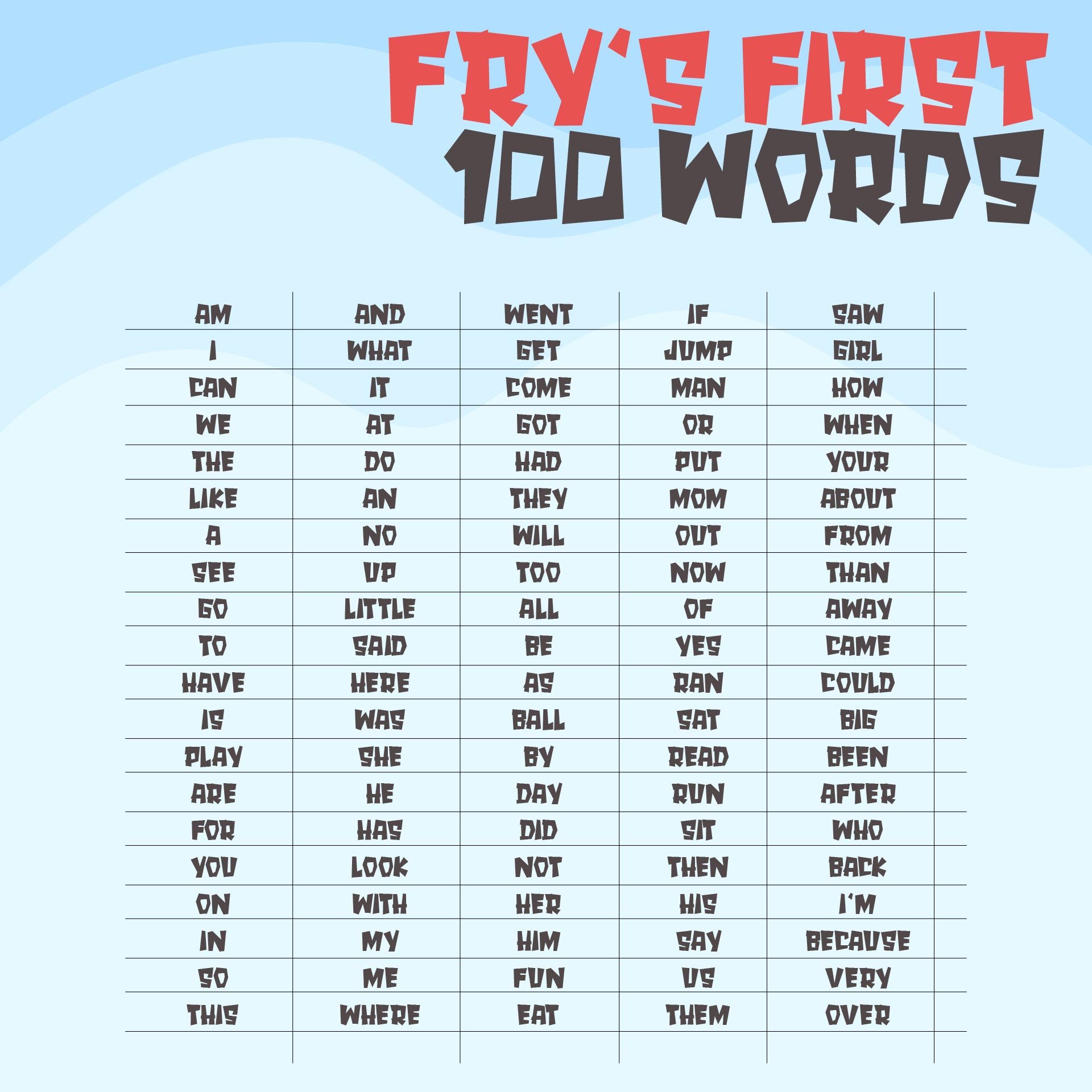
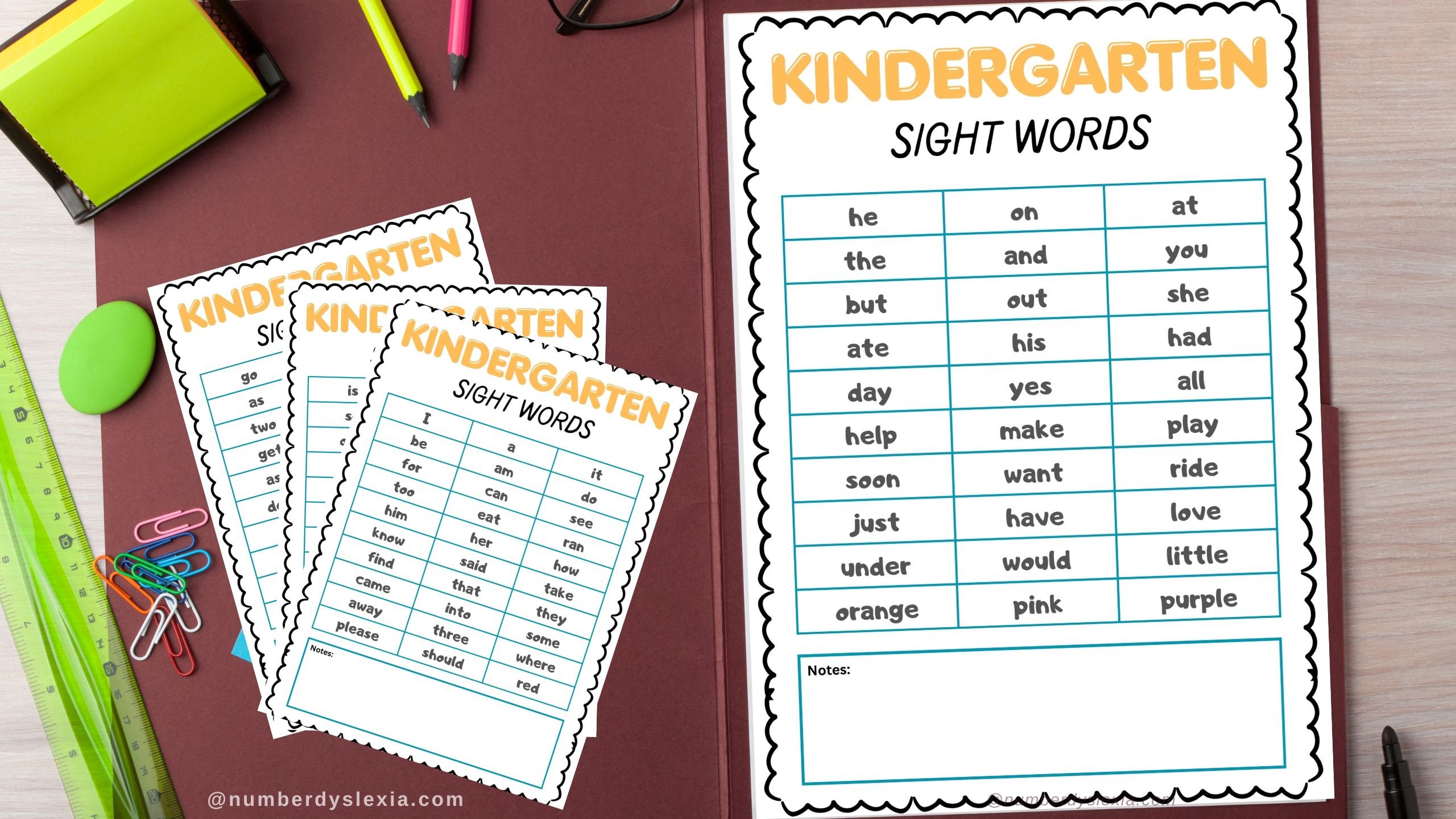
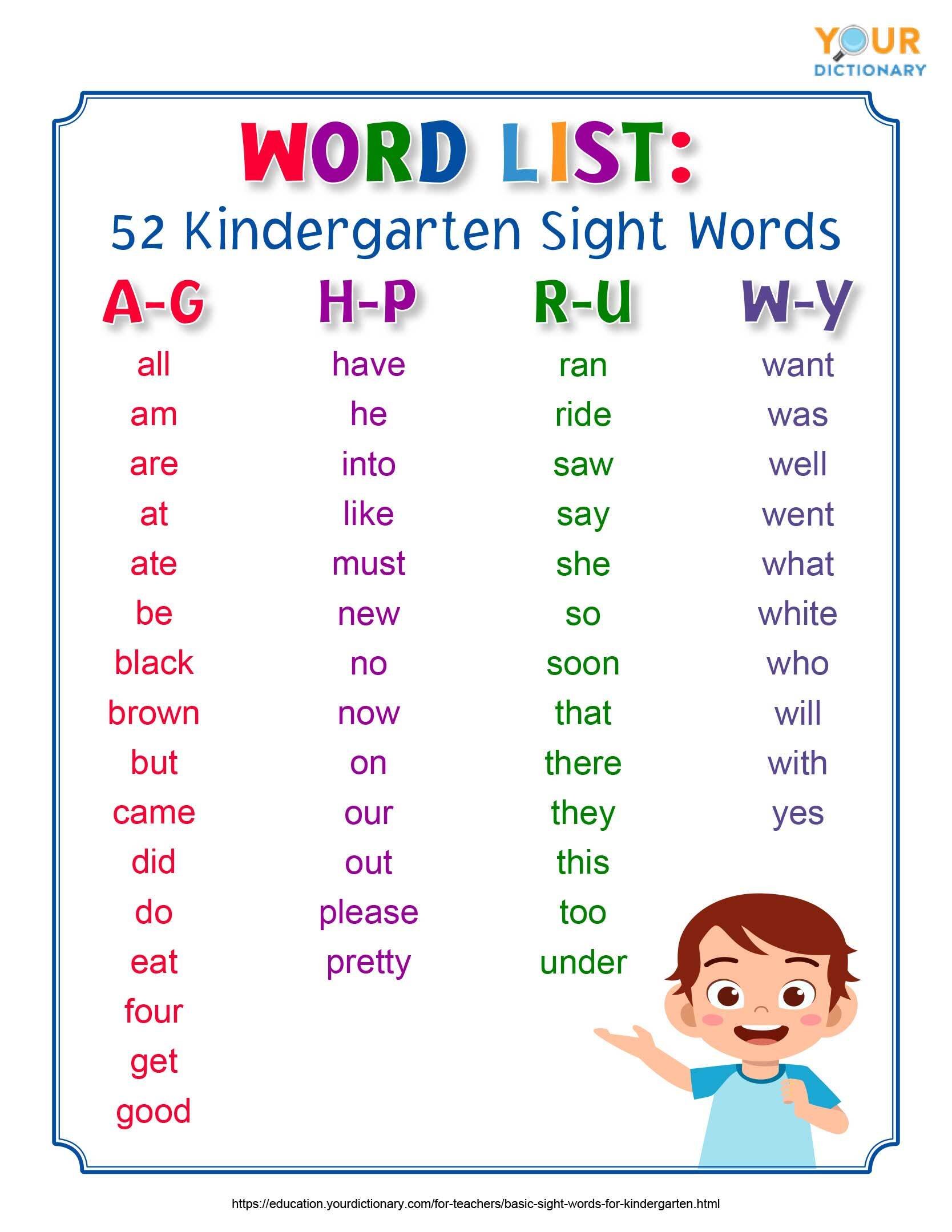
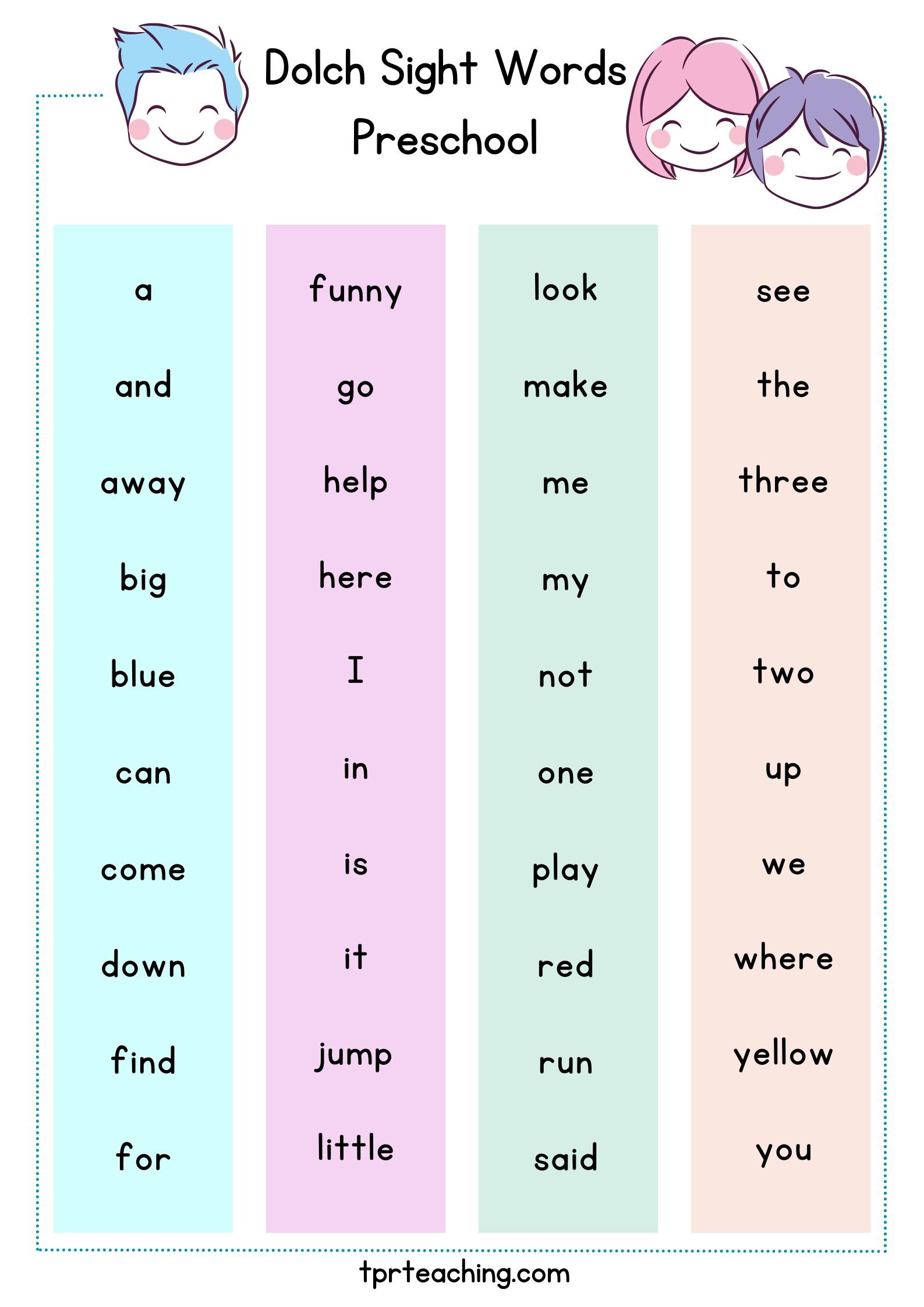
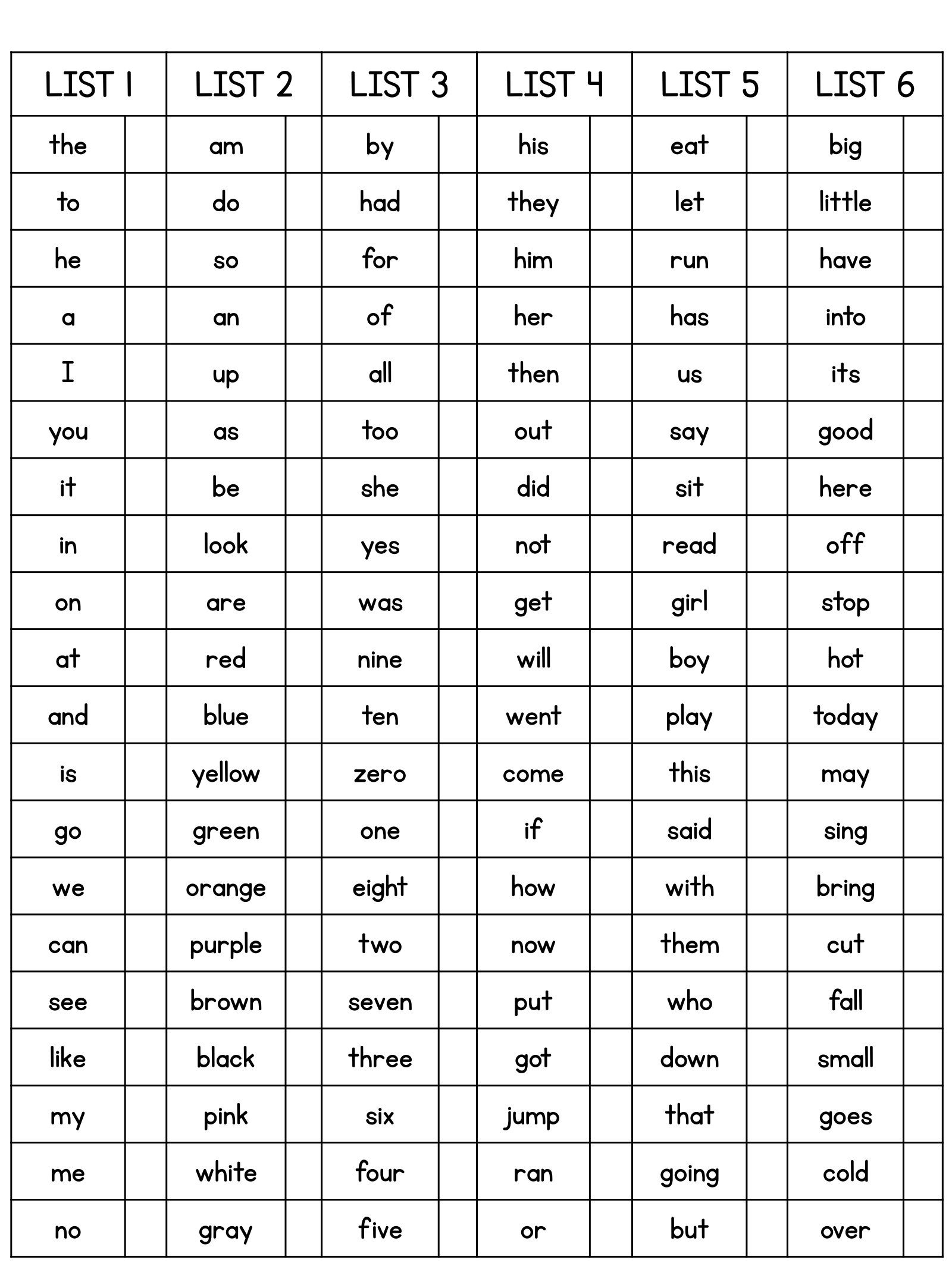
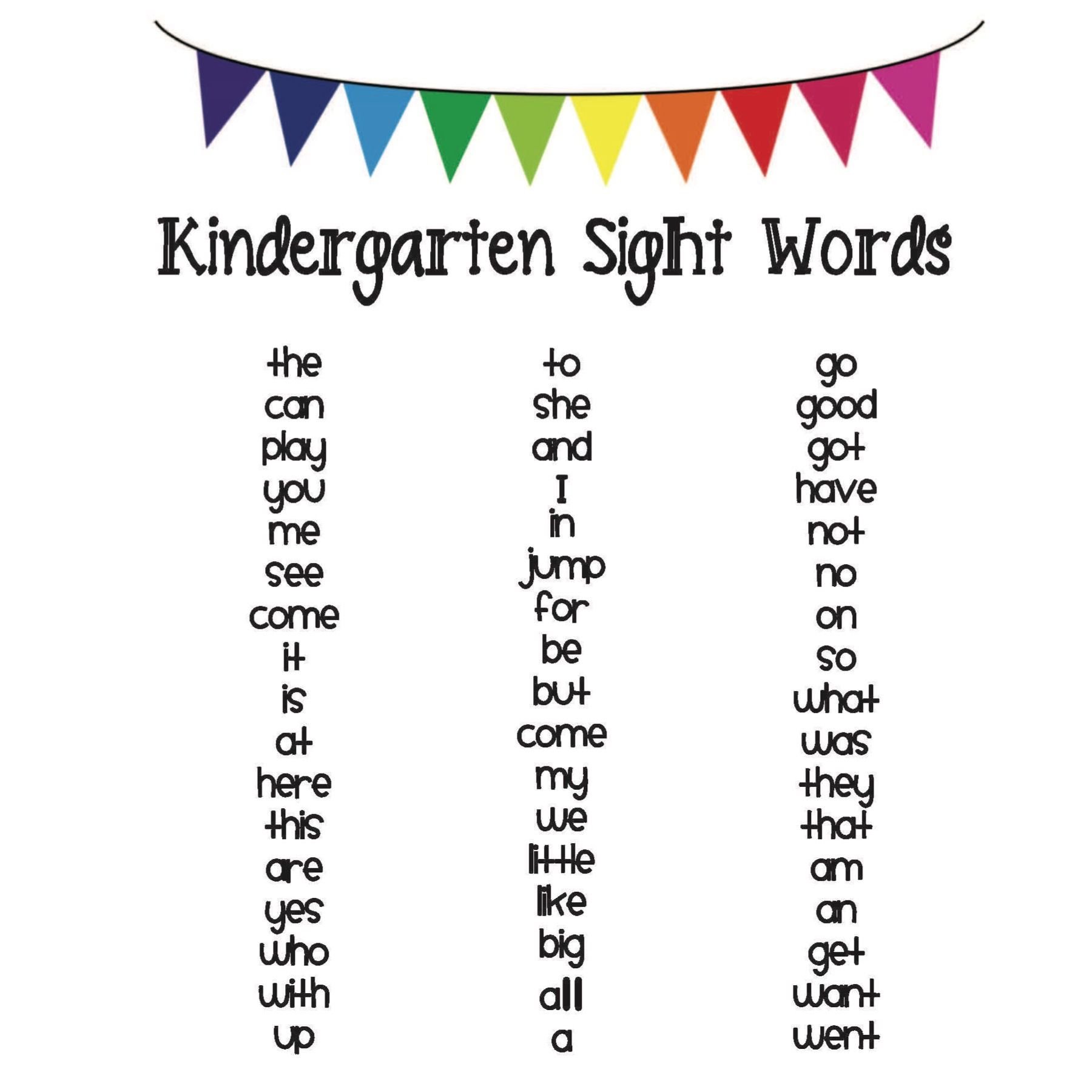
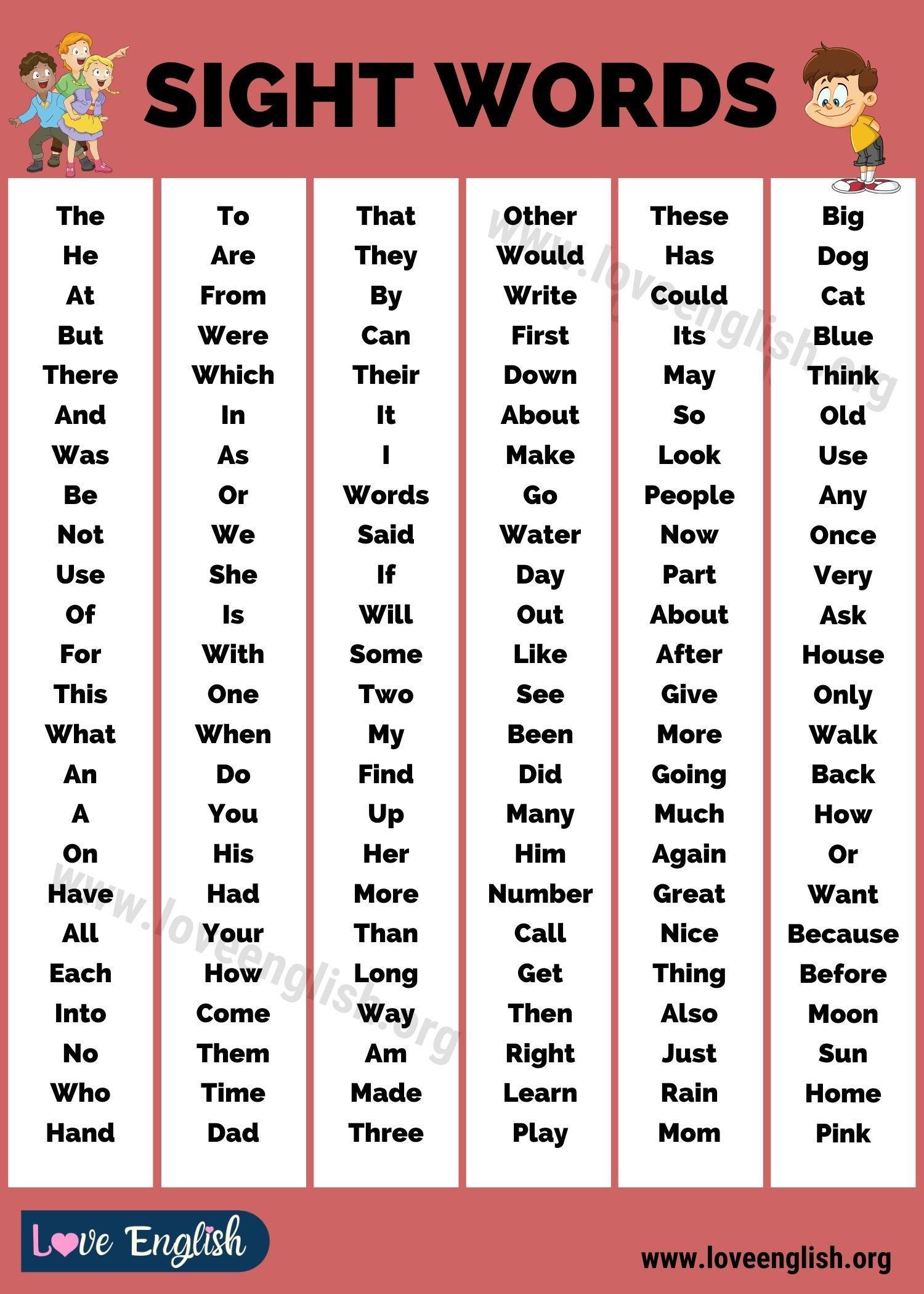
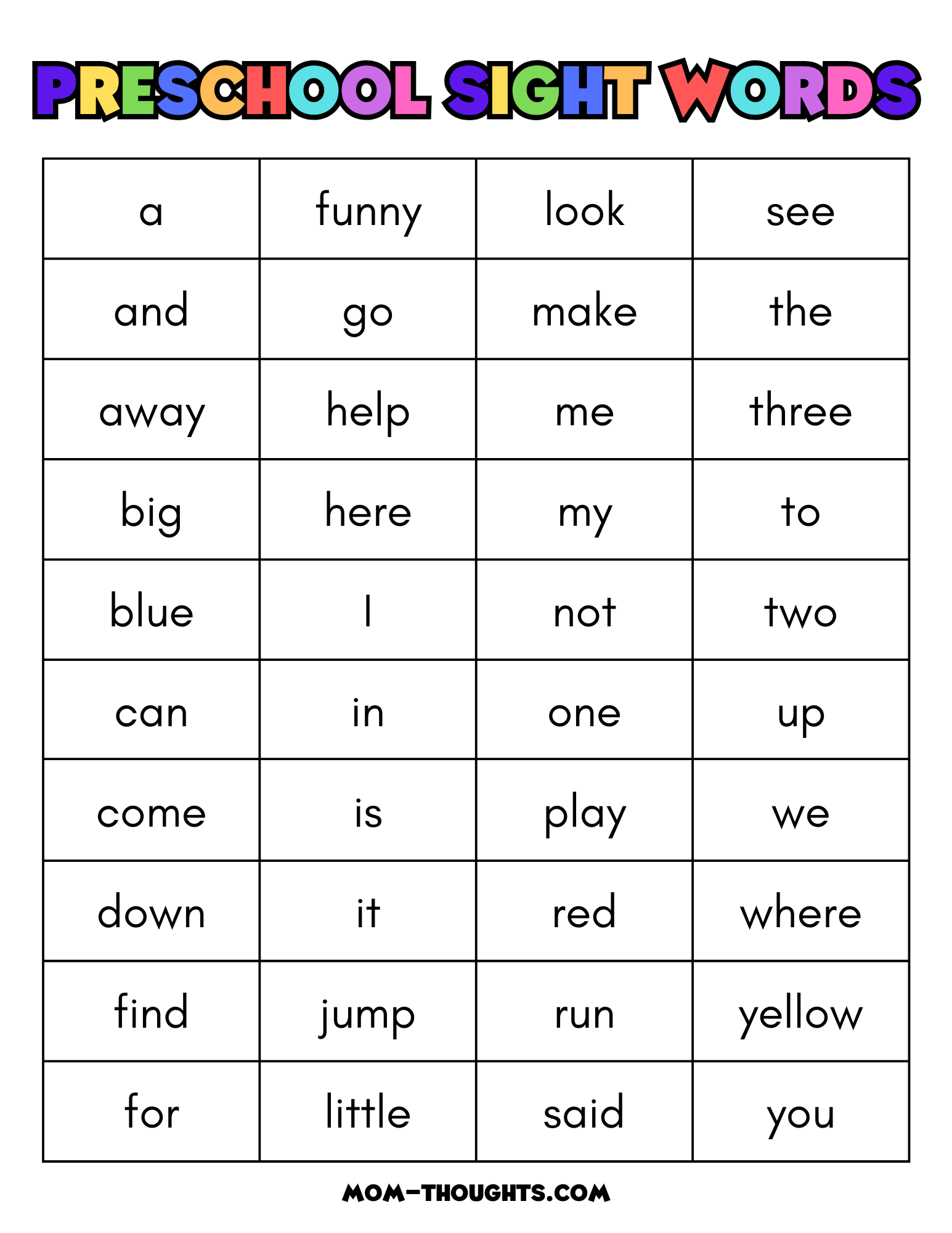
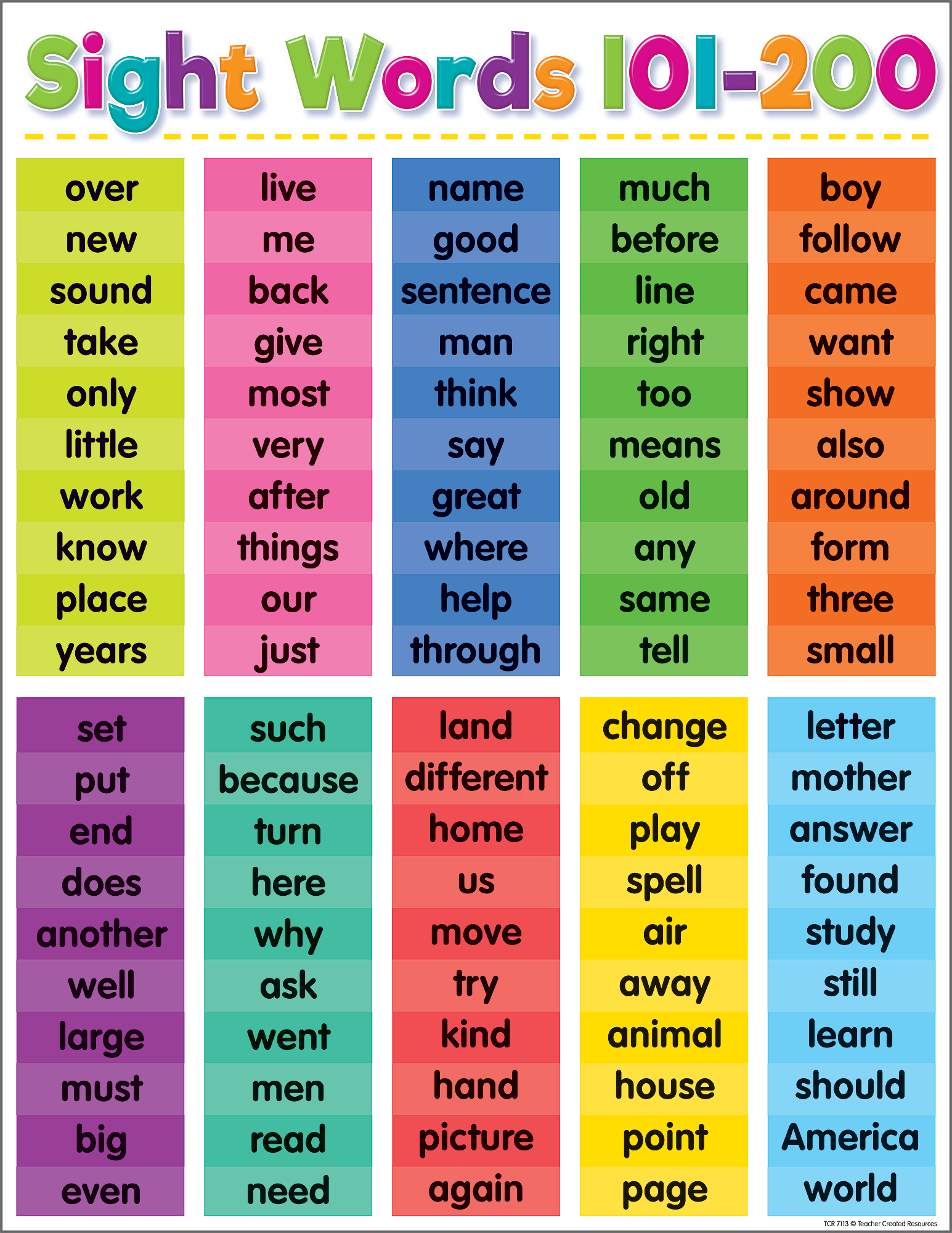
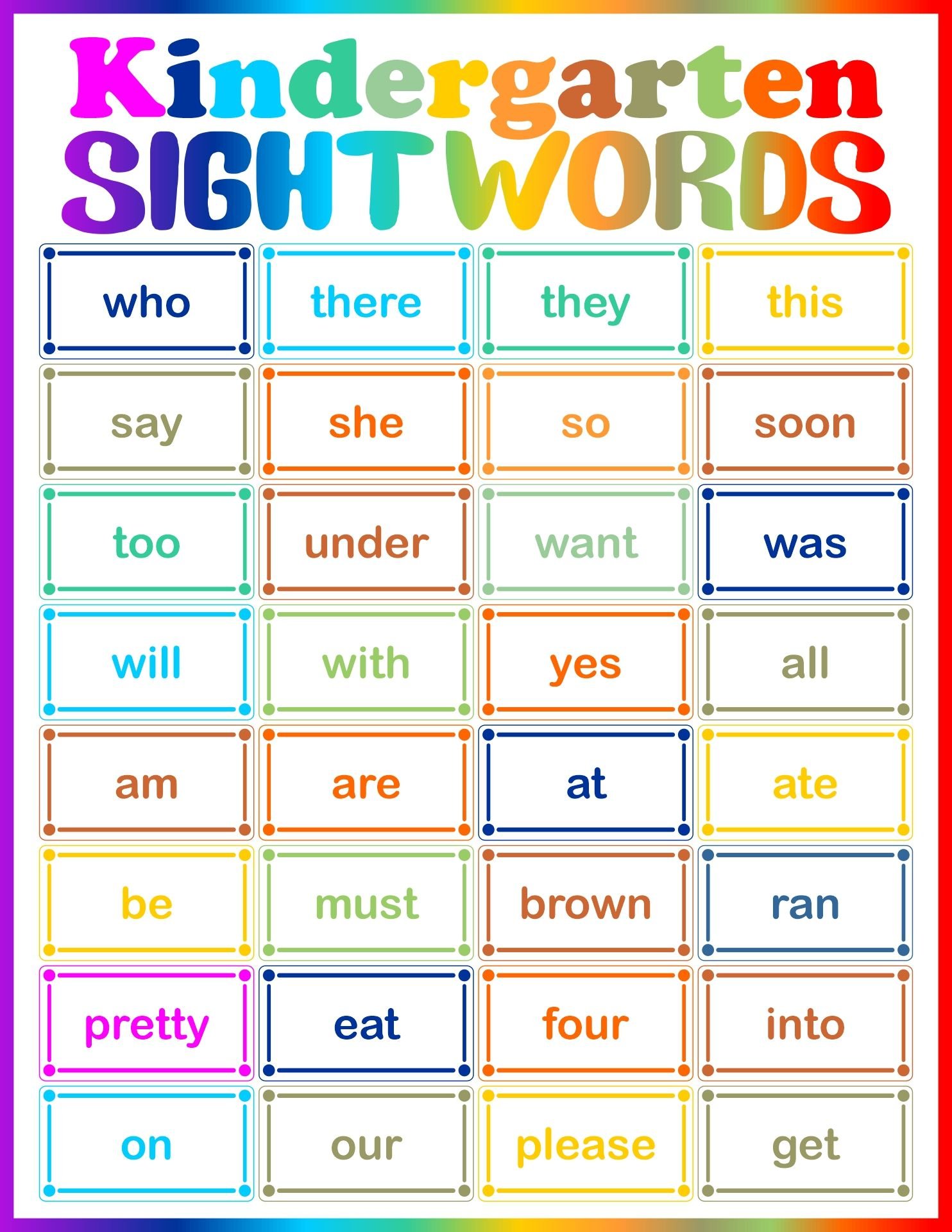
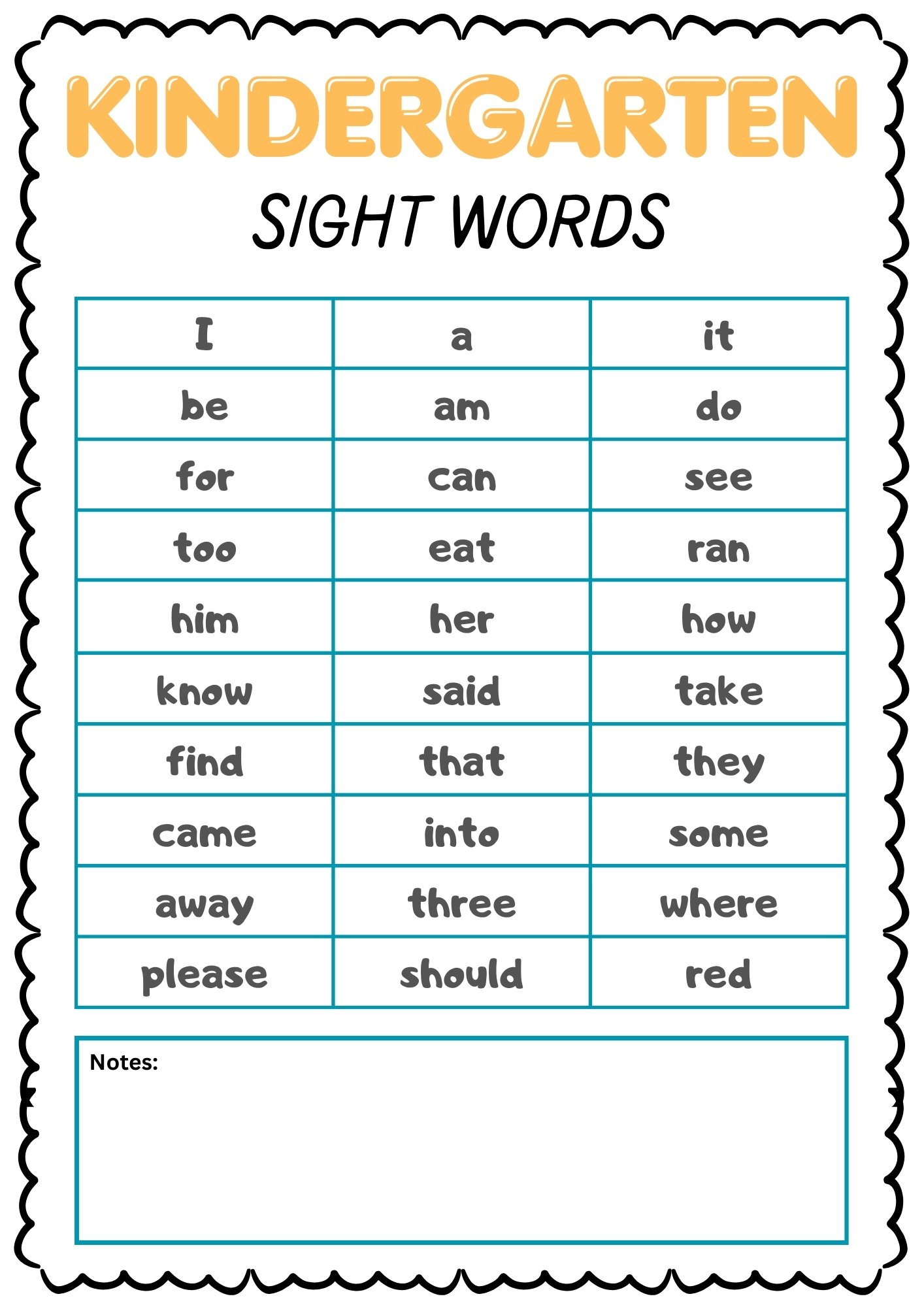
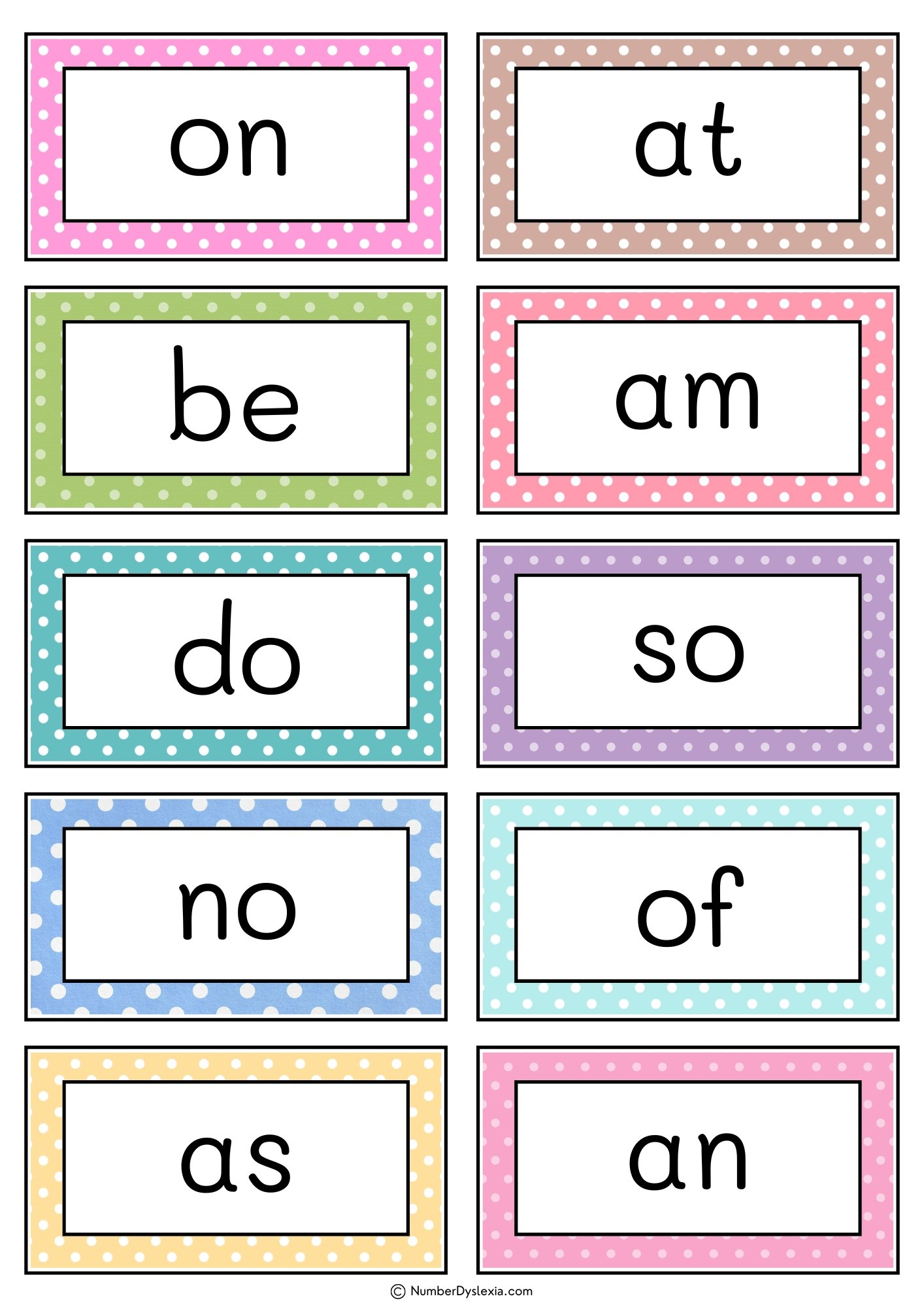
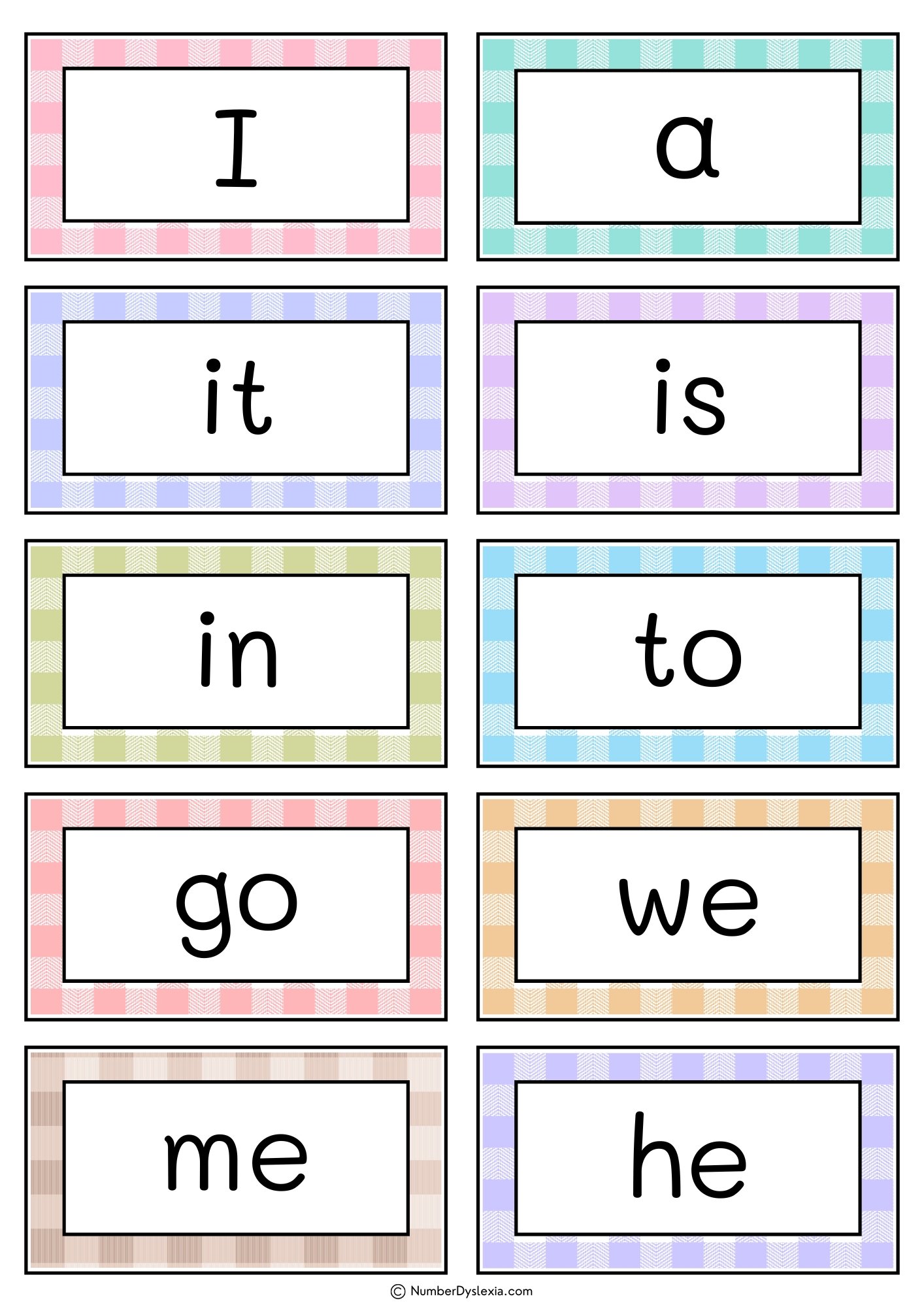


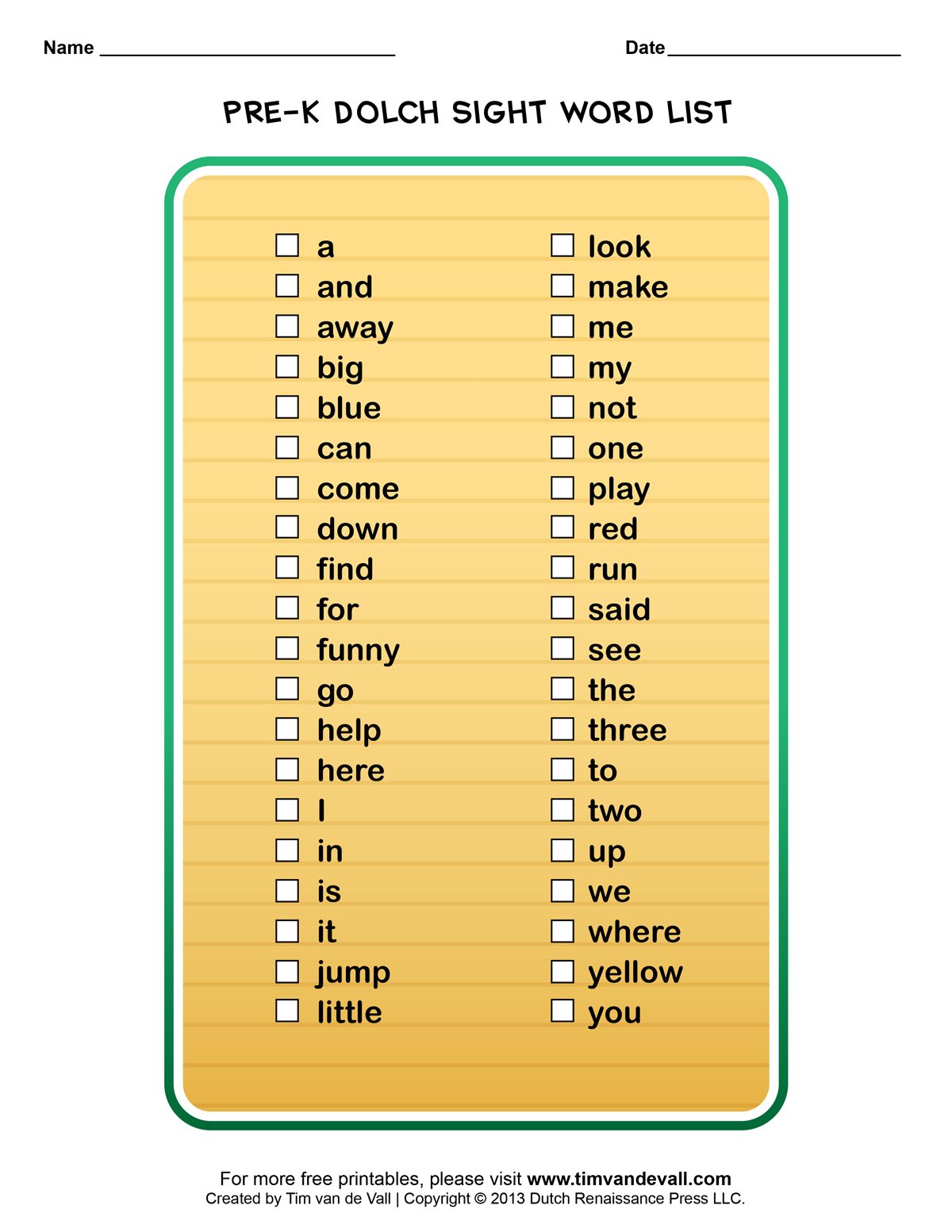

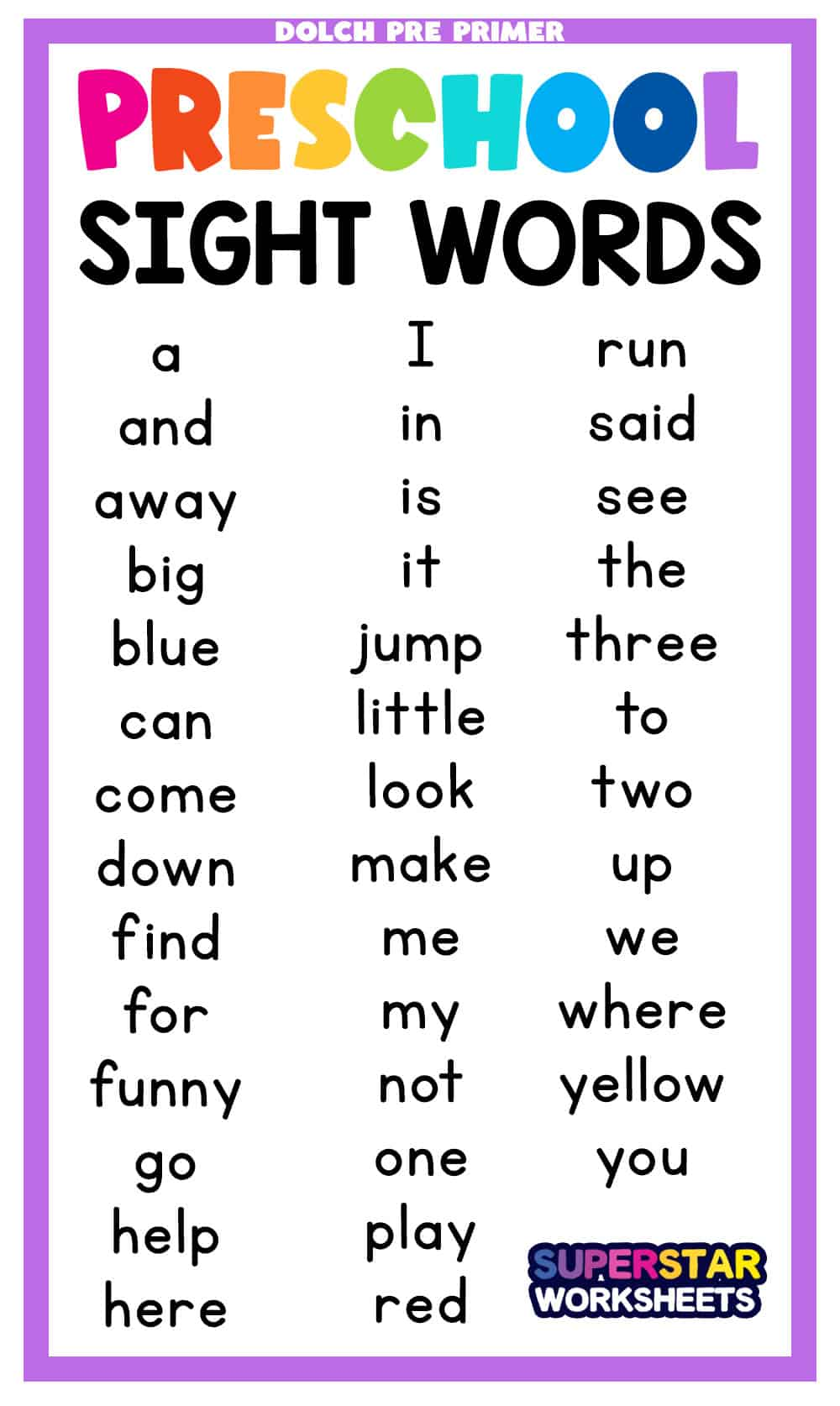
Popular Kindergarten Sight Word Lists:
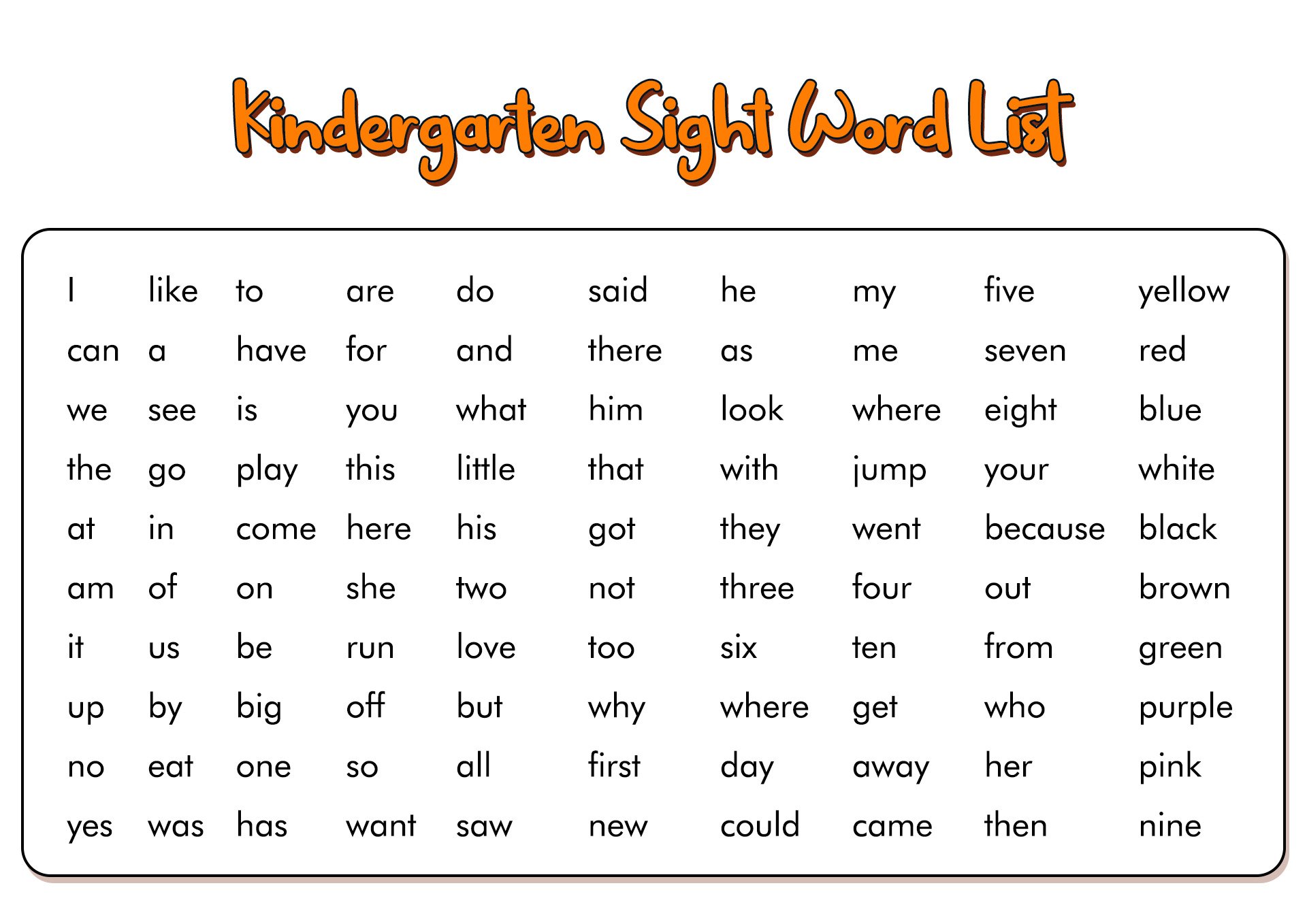
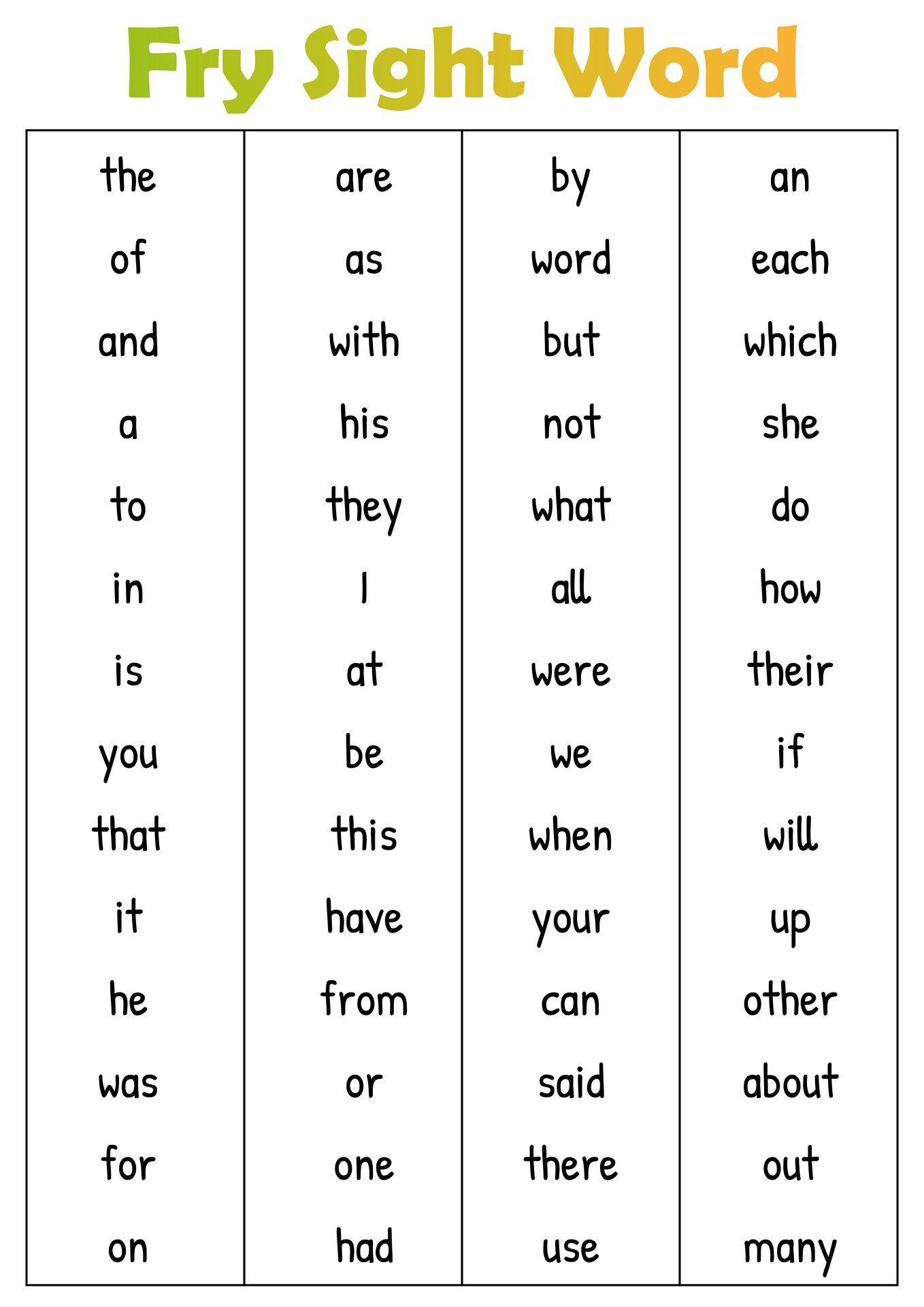
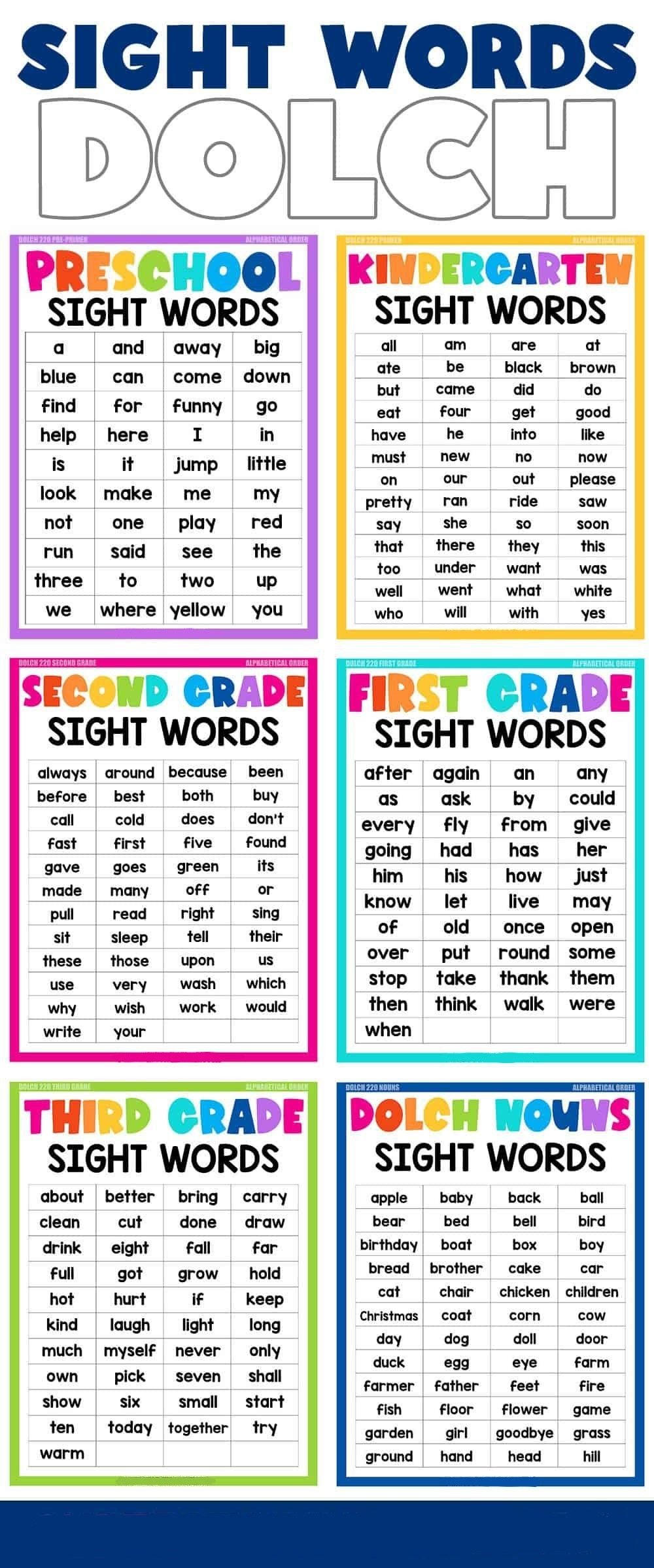
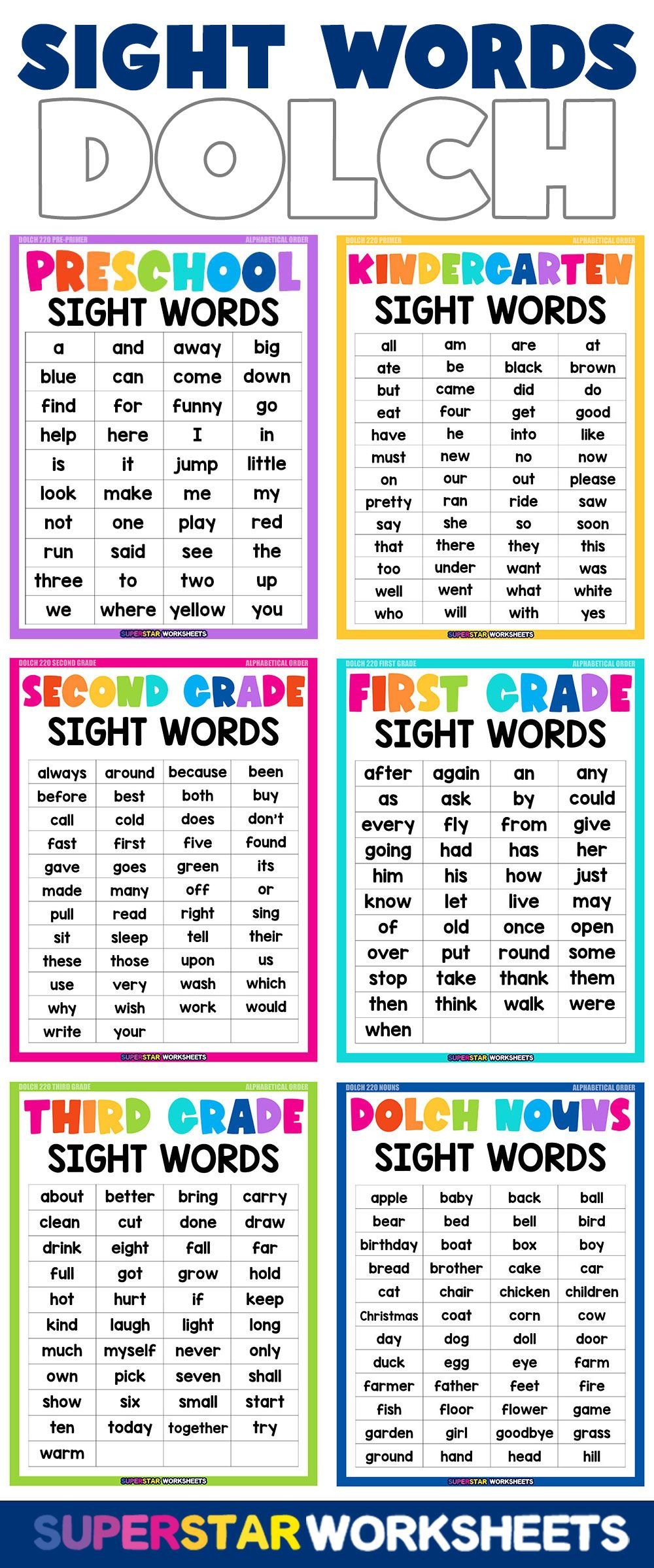
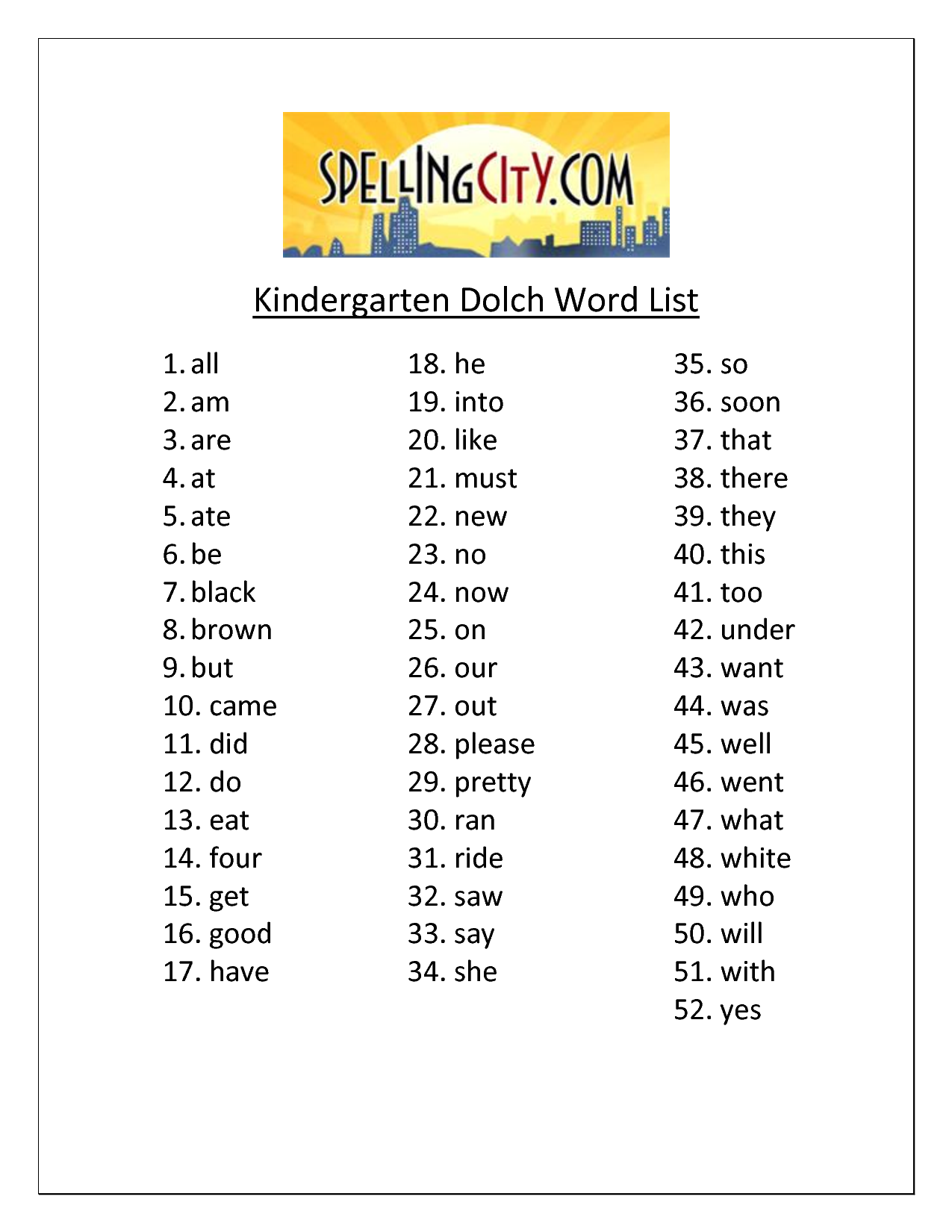
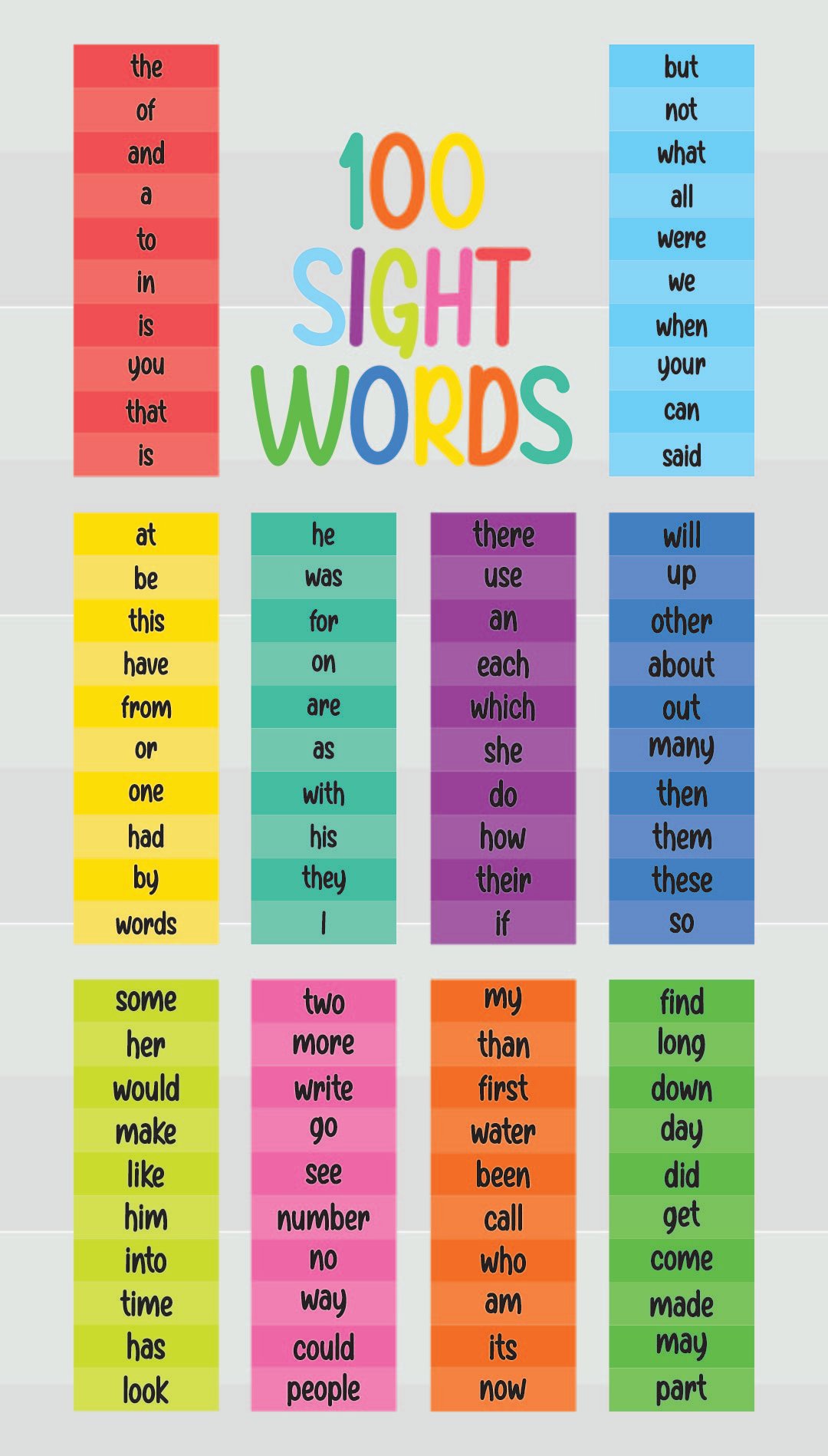
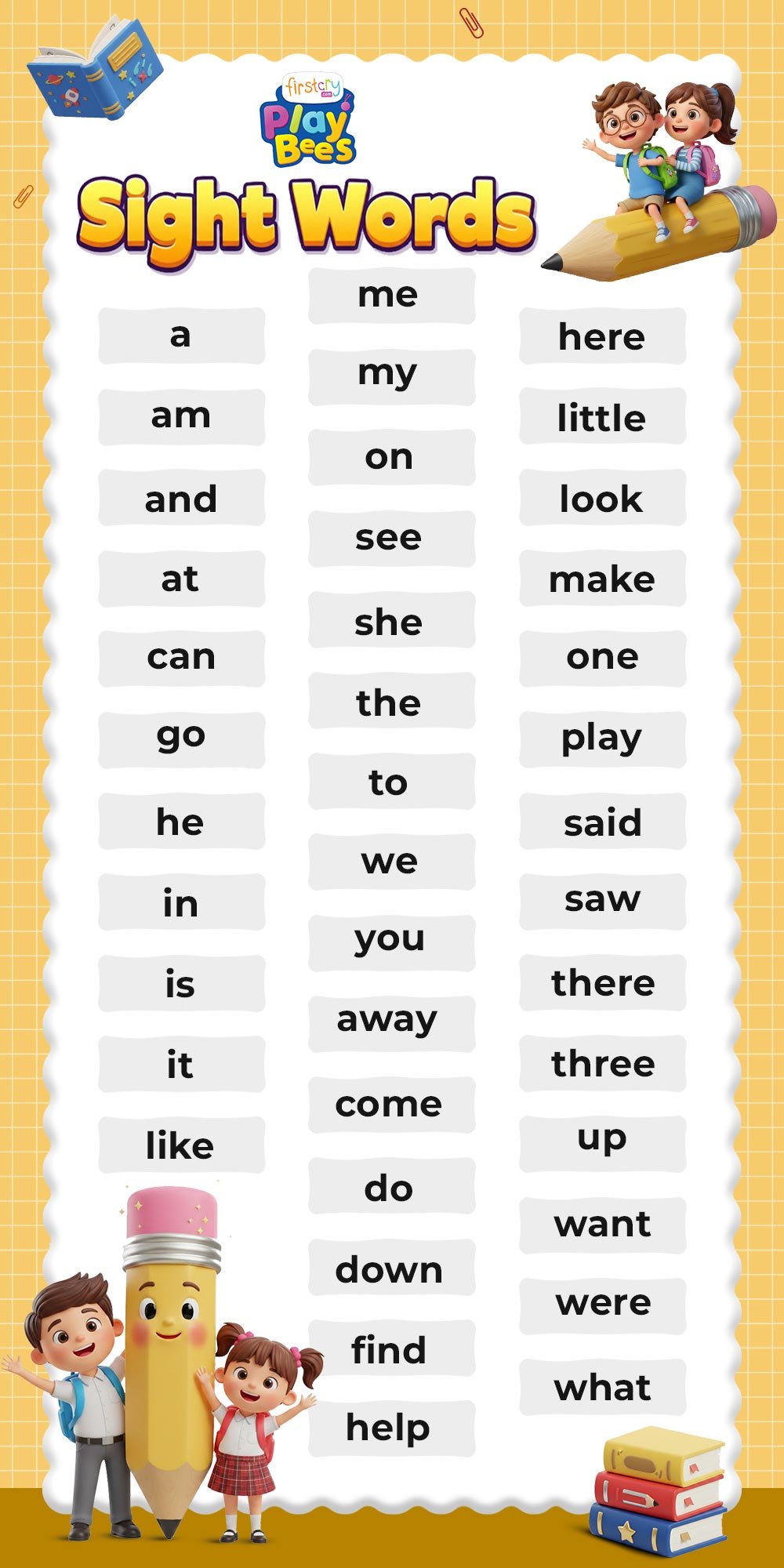
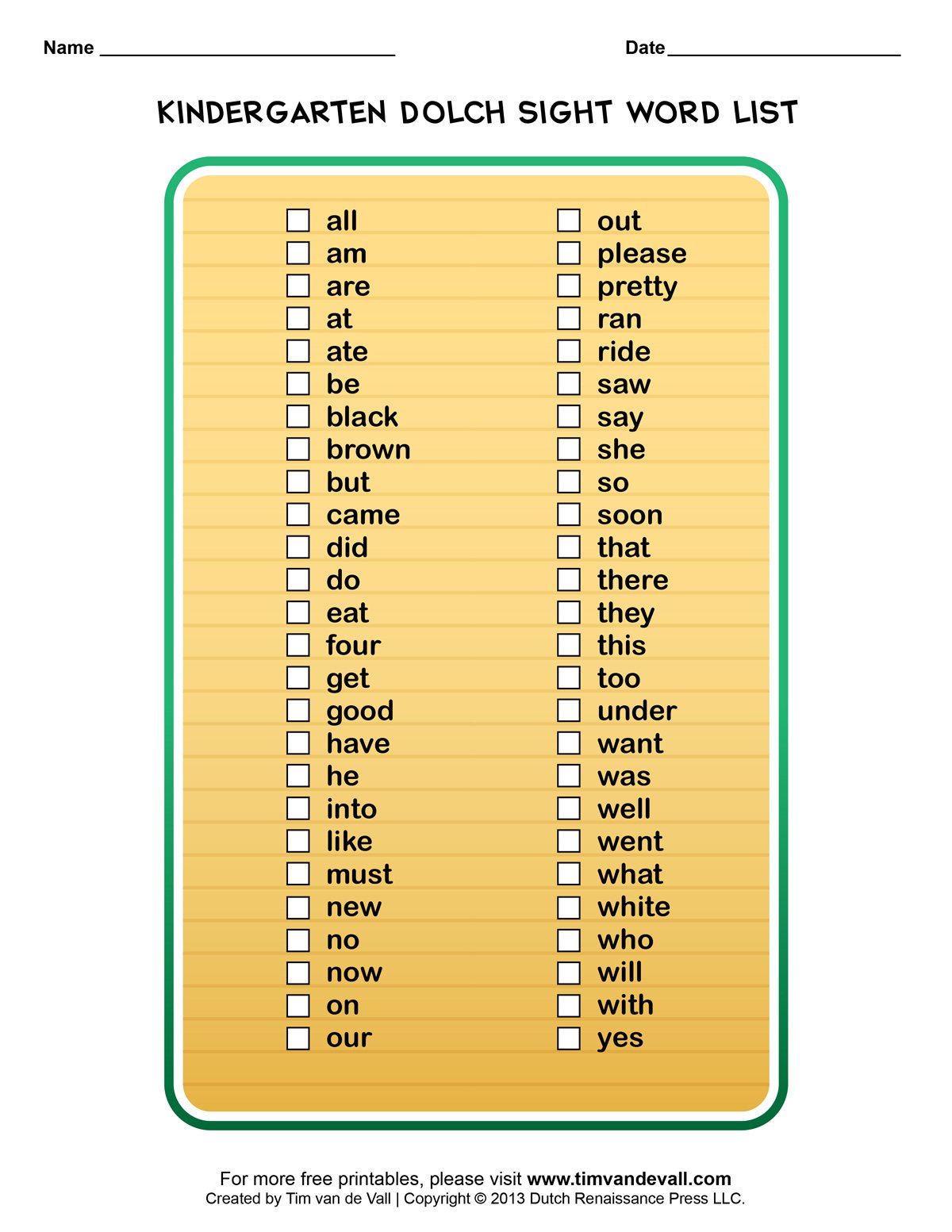
There are several well-known sight word lists used in early education. Two of the most common are the Dolch and Fry sight word lists. The Dolch list, created by Edward William Dolch, is a widely recognized set of 220 words, including nouns and high-frequency words, divided into levels suitable for different grades.
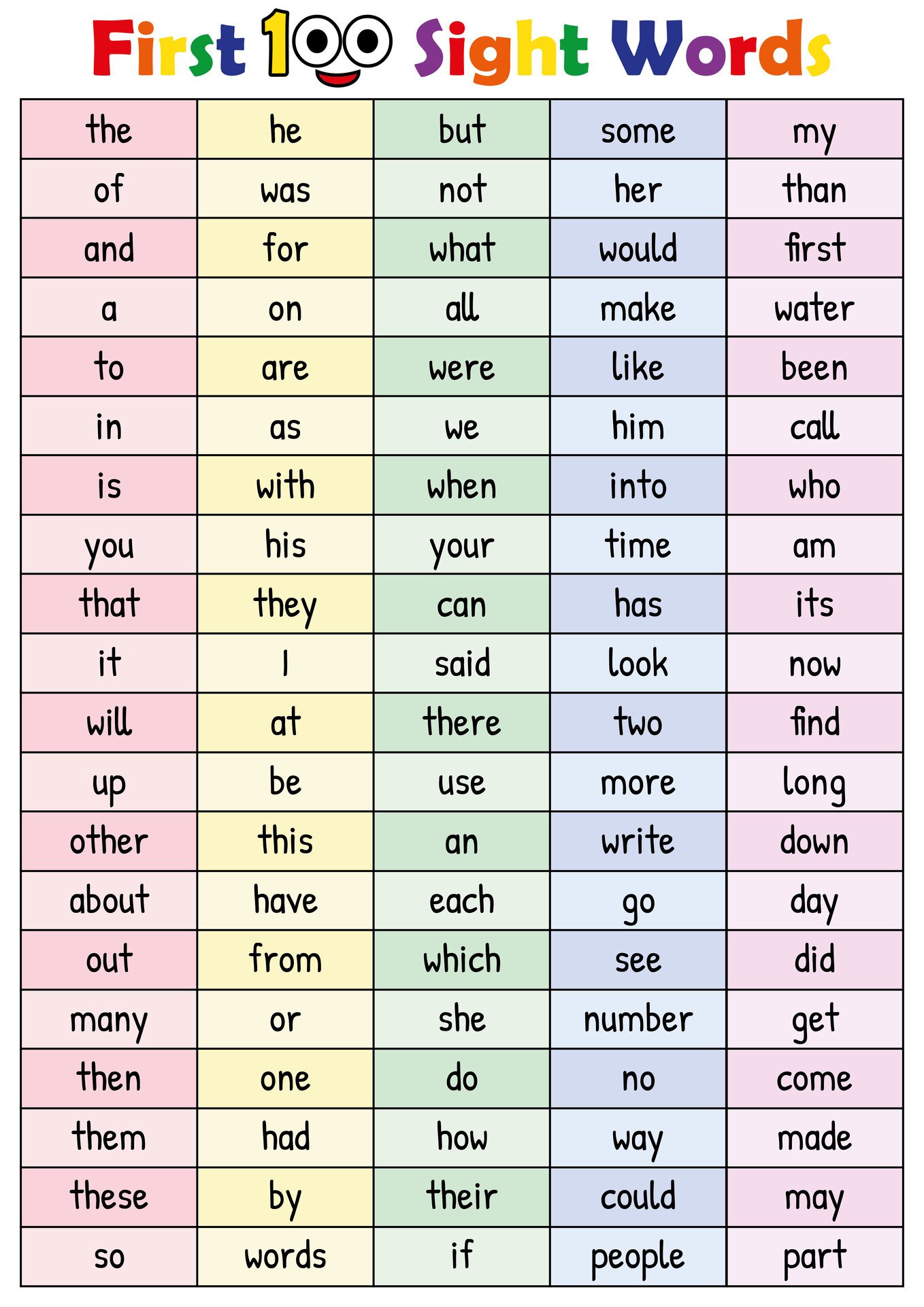
The Fry list, developed by Dr. Edward Fry, expands on this with a more extensive collection of words, offering a comprehensive resource for building reading fluency.
Sizing and Specs:
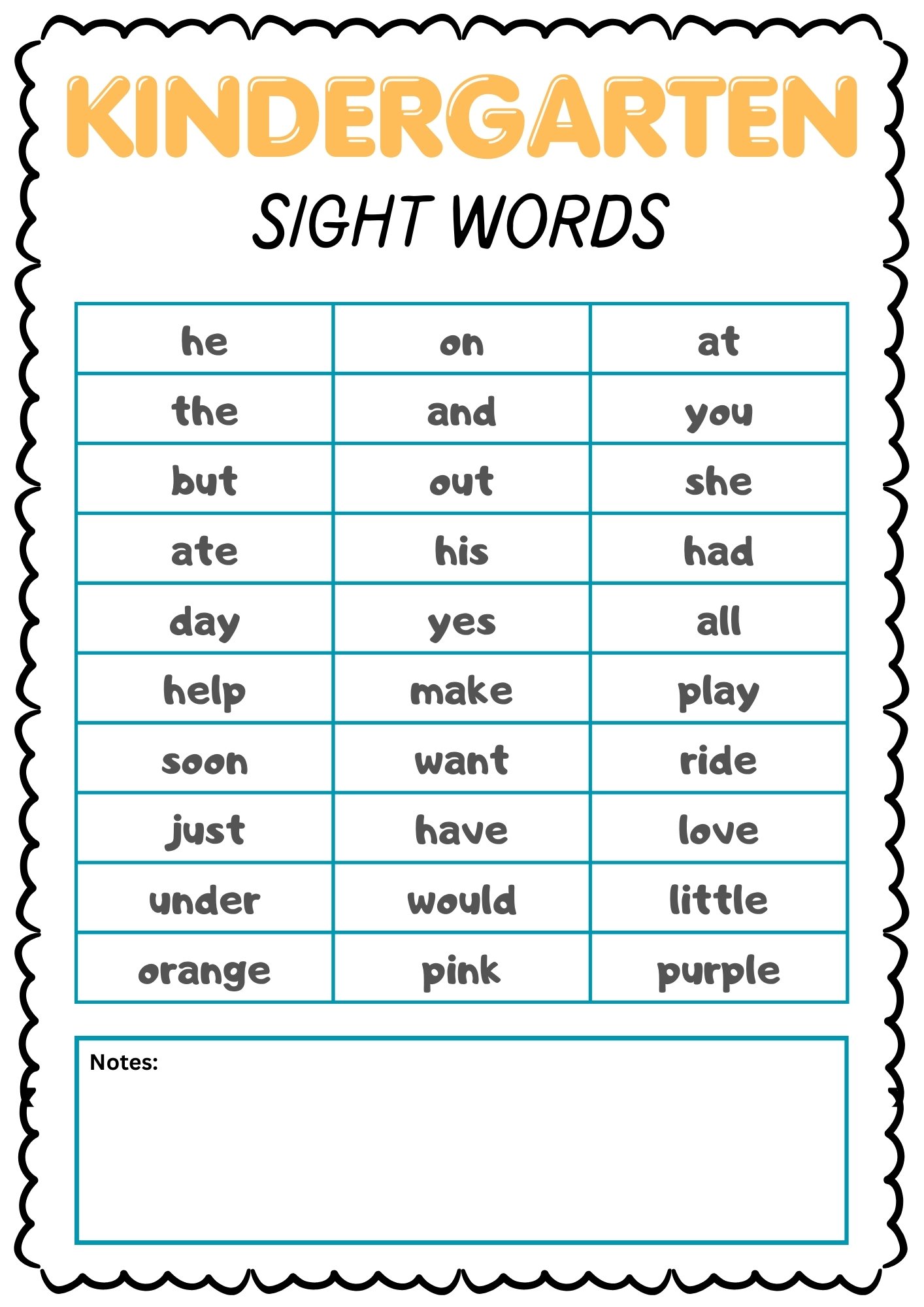
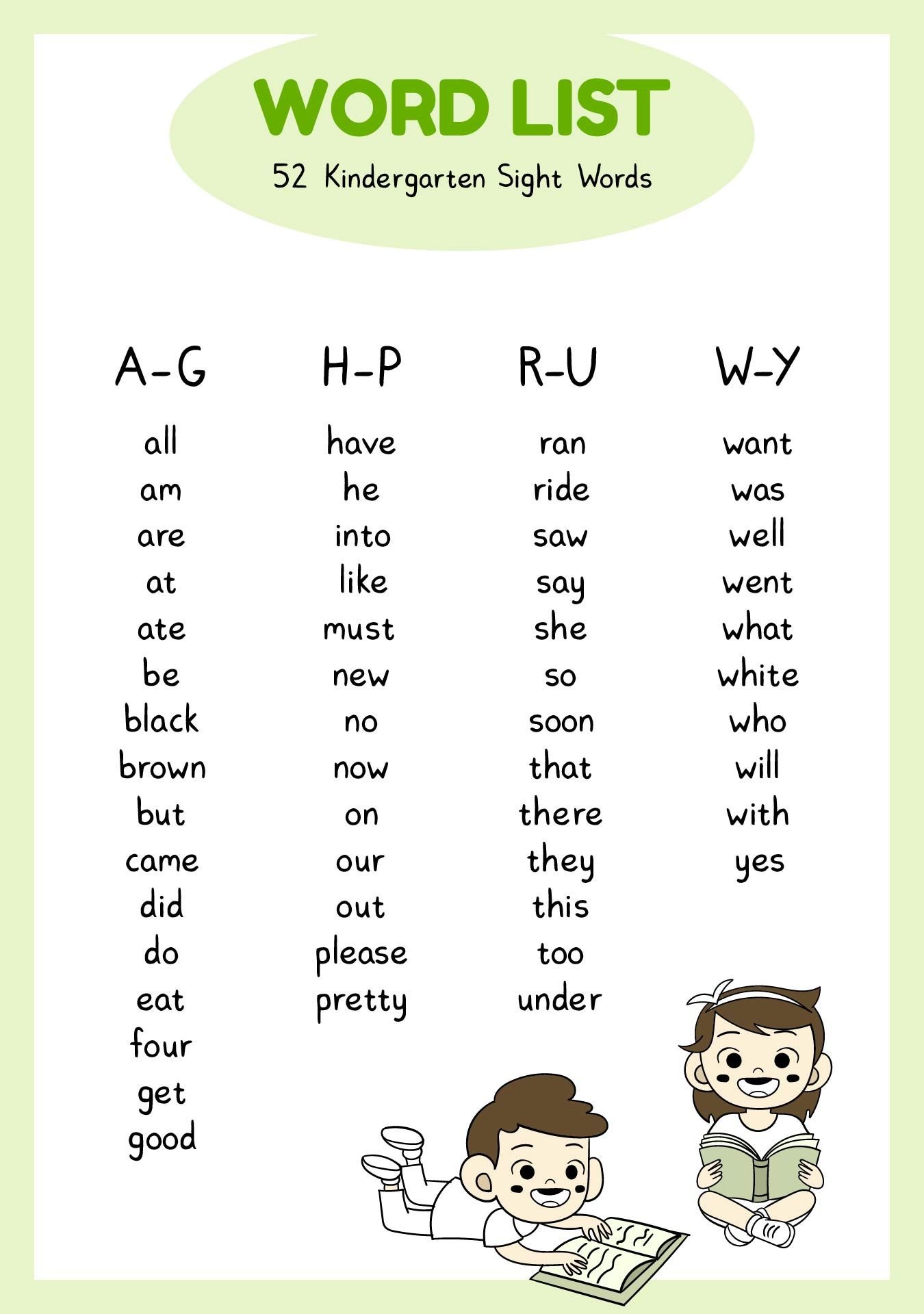
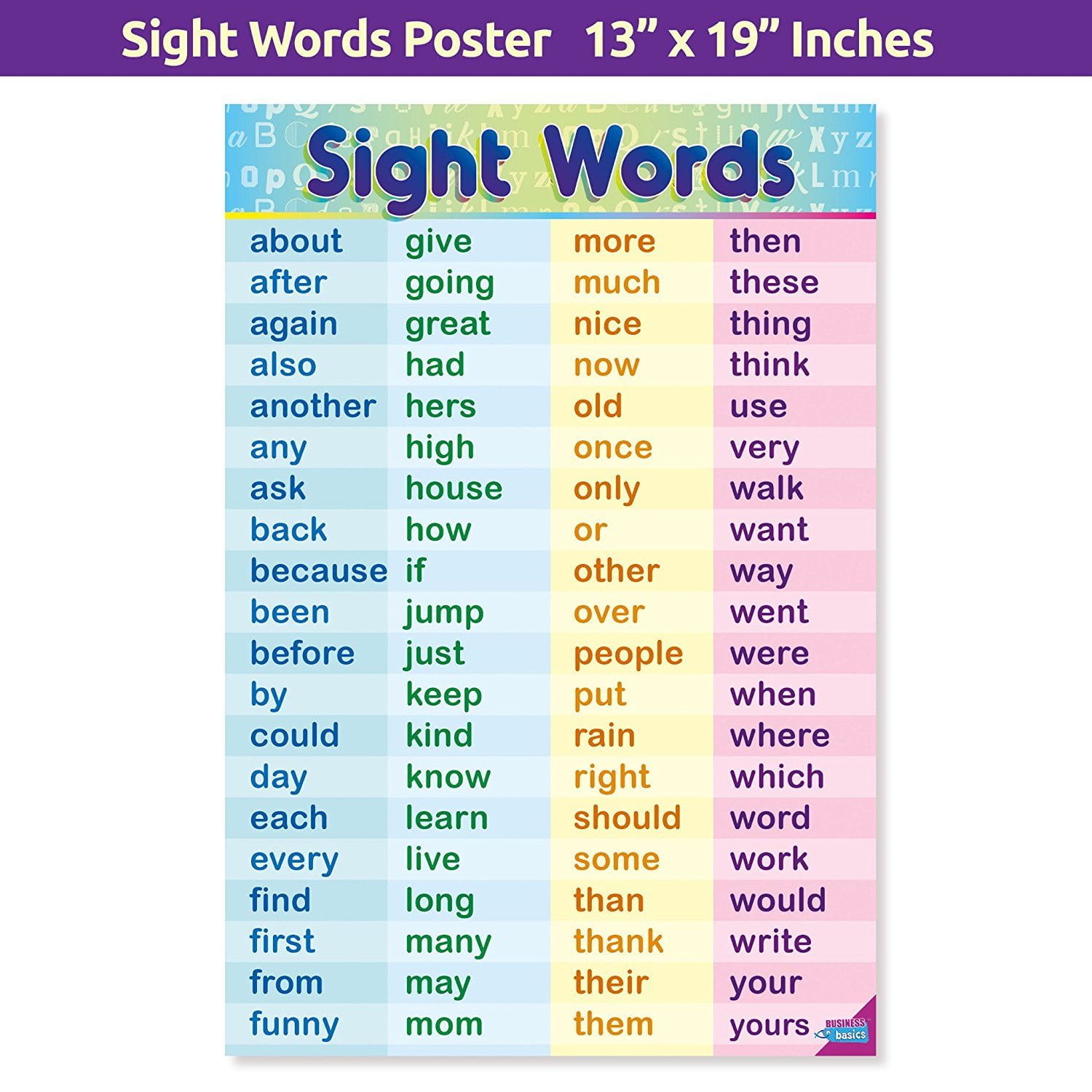
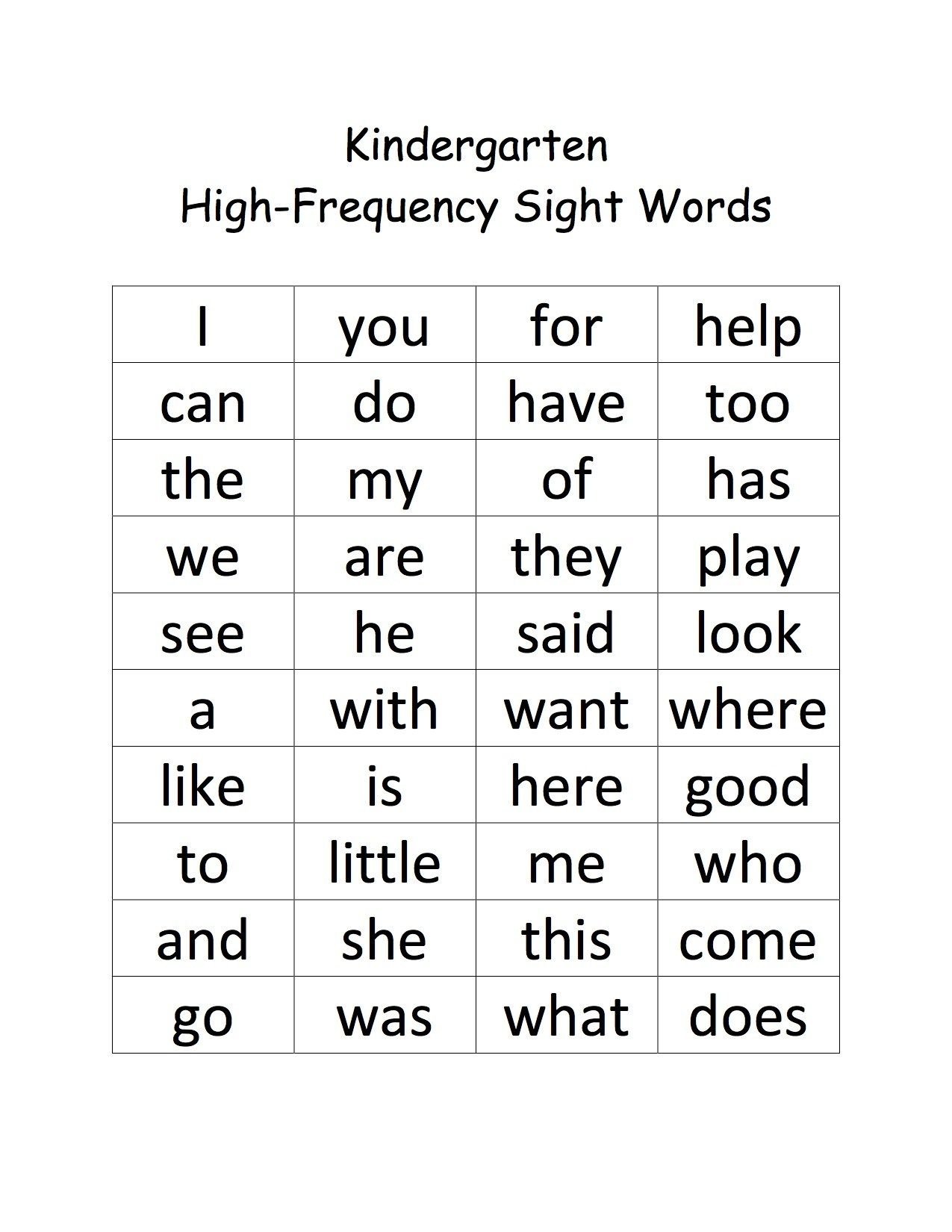
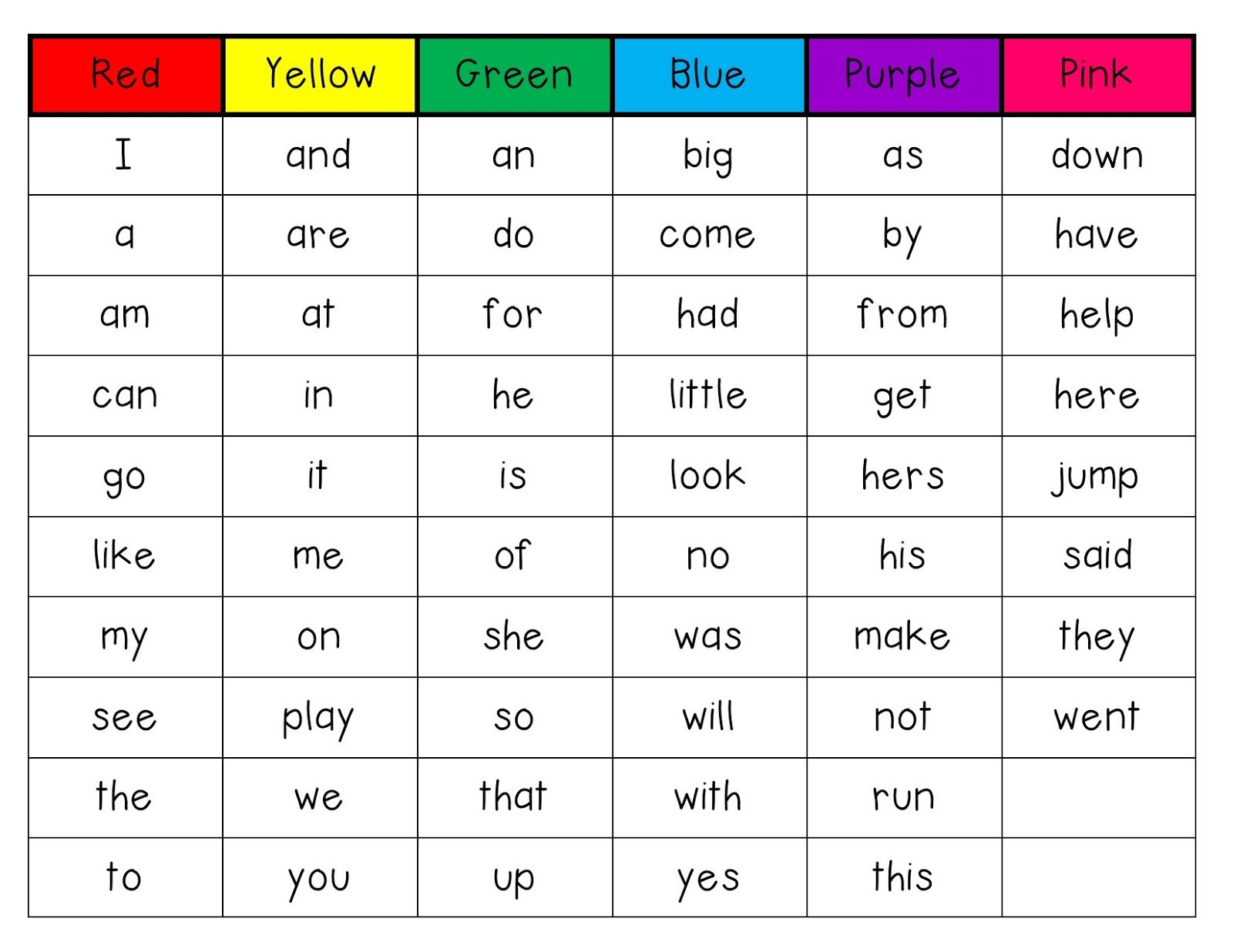
Kindergarten sight word lists are designed to be age-appropriate and developmentally suitable. They typically contain around 50 to 100 words, focusing on the most common and essential words encountered in early reading materials. These lists are often divided into smaller subsets or levels, making it easier for children to learn and master a manageable number of words at a time.

Materials and Presentation:
Sight word lists can be presented in various formats to engage young learners. Common materials include:

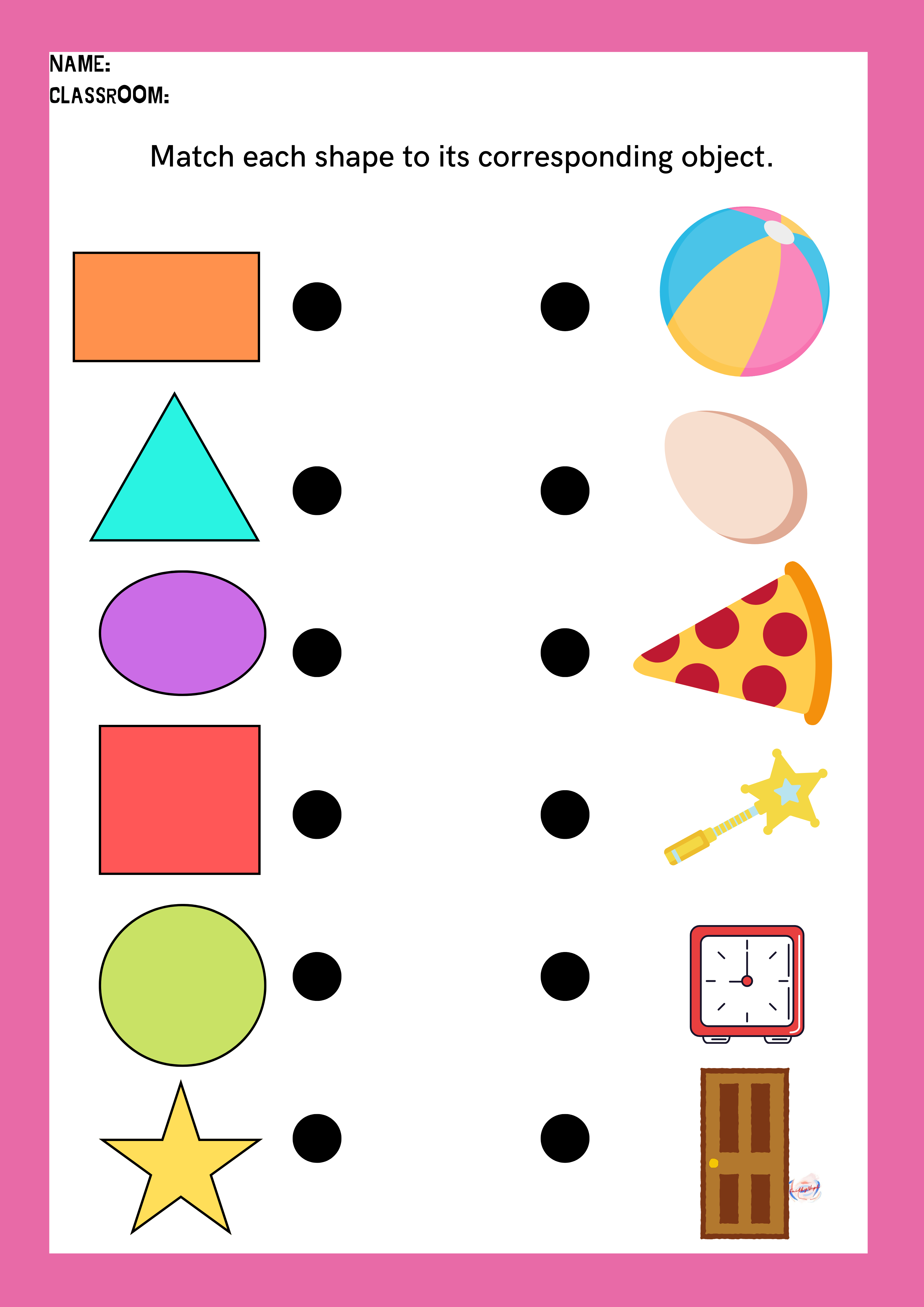
- Printable Worksheets: These provide a traditional approach, allowing children to practice writing and recognizing words.
- Digital Activities: Interactive games and online resources offer a fun and engaging way to learn sight words.
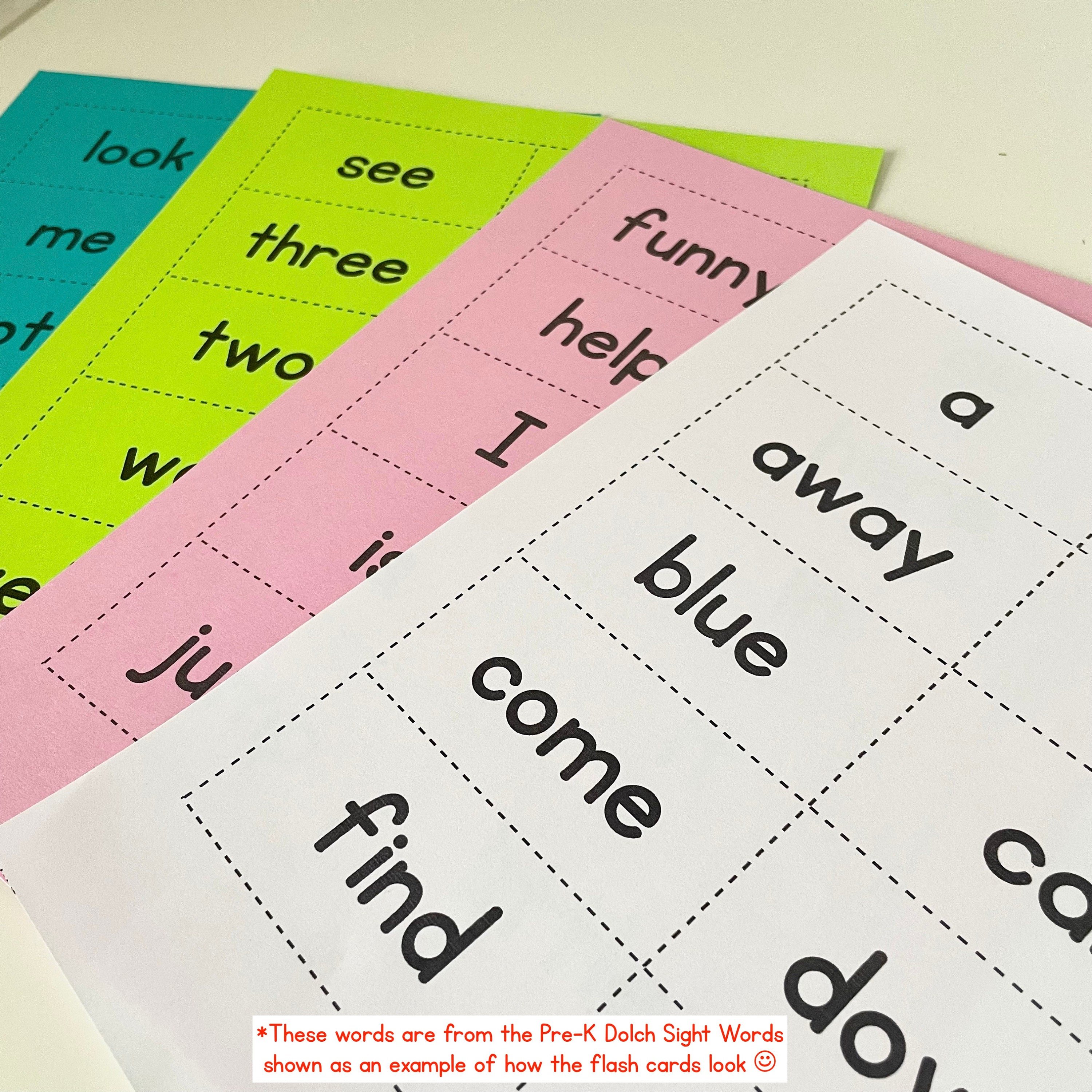
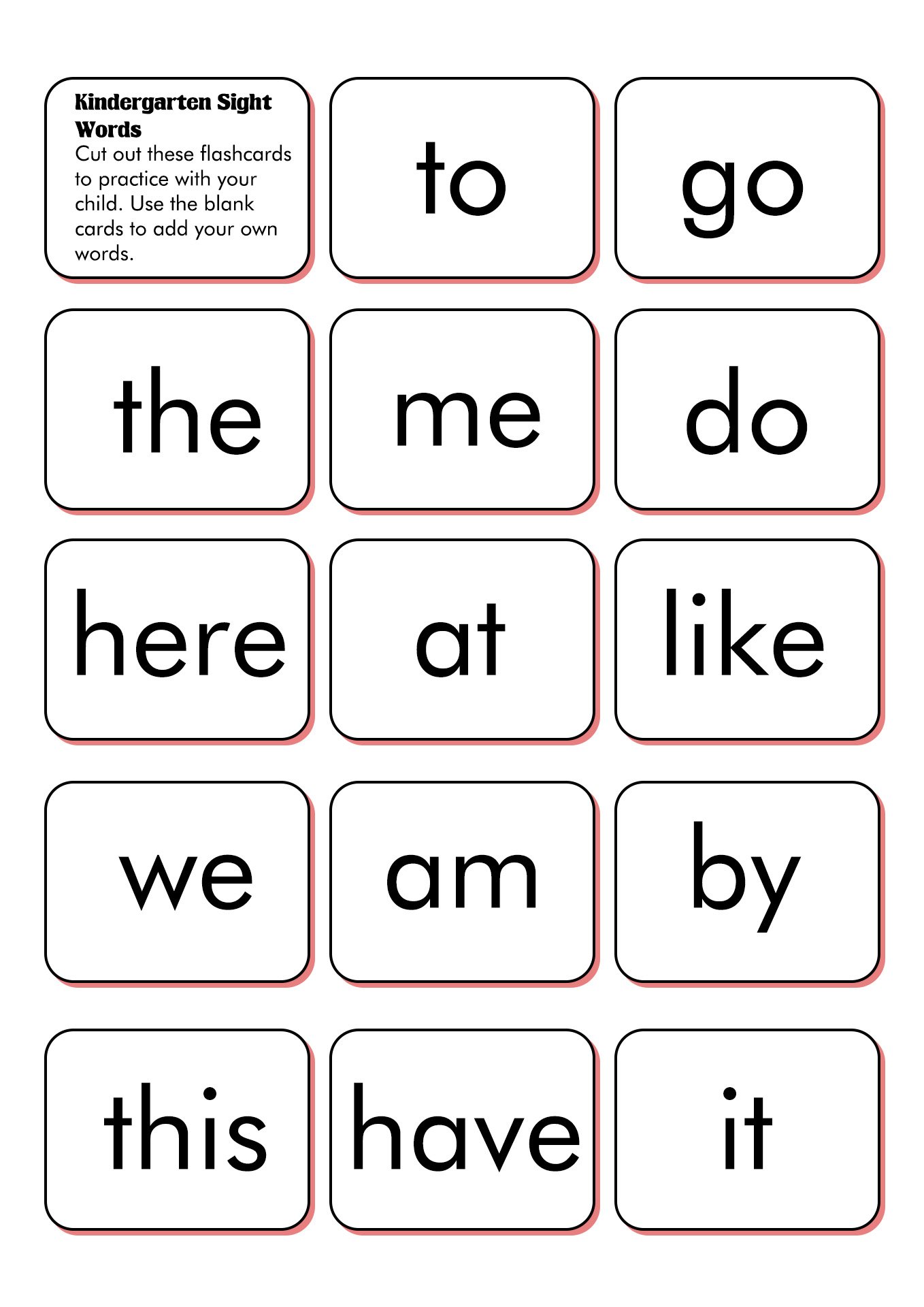
- Flashcards: Portable and versatile, flashcards are a popular choice for on-the-go learning and quick practice sessions.
Placement and Usage:
Integrating sight word lists into daily routines is key for effective learning. Here are some ideas:

- Morning Work: Start the day with a quick sight word review to reinforce memory. Kindergarten morning work can include word searches, matching games, or simple writing exercises.
- Games: Make learning fun with games kindergarteners play like "Sight Word Bingo" or "Sight Word Memory Match." These activities engage children and encourage active participation.
- Flash Cards: Kindergarten sight words flash cards are a versatile tool. Use them for individual practice, small group activities, or even as a classroom display to reinforce learning.
What to Check Before Getting Started:
When selecting a kindergarten sight word list, consider the following:
- Relevance: Ensure the list aligns with your child's or student's reading level and curriculum.
- Variety: Look for lists that offer a mix of high-frequency words, nouns, and verbs to provide a well-rounded vocabulary foundation.
- Engagement: Opt for resources with colorful illustrations or interactive elements to capture young learners' attention.
- Teacher Recommendations: Consult with teacher kindergarten job experts or experienced educators for their insights and recommendations on effective sight word lists and teaching strategies.
Remember, the goal is to make learning sight words an enjoyable and accessible process, setting a strong foundation for future literacy skills.