The complexity of Lyme disease diagnosis has been a longstanding challenge for healthcare professionals. As the most common vector-borne illness in the United States, Lyme disease affects thousands of people each year, with its incidence expected to rise due to climate change and increased outdoor activities. The disease, caused by the bacterium Borrelia burgdorferi and transmitted to humans through the bite of infected black-legged ticks (Ixodes scapularis), manifests in various stages, making its diagnosis a multifaceted process. This guide aims to provide a comprehensive overview of the current state of Lyme disease diagnosis, focusing on the most accurate testing methods available.
Understanding Lyme Disease
Before diving into the diagnostic techniques, it’s essential to understand the stages of Lyme disease and their corresponding symptoms. The disease progresses through three stages: early localized, early disseminated, and late disseminated.
- Early Localized Stage: Characterized by the appearance of a distinctive rash, known as erythema migrans, at the site of the tick bite. This stage is also accompanied by flu-like symptoms such as fever, headache, and fatigue.
- Early Disseminated Stage: If left untreated, the infection can spread to other parts of the body, leading to symptoms like multiple erythema migrans rashes, neurological issues (e.g., meningitis, Bell’s palsy), and cardiac problems.
- Late Disseminated Stage: Months after the initial infection, untreated Lyme disease can cause severe symptoms such as arthritis, neurological problems, and cognitive difficulties.
Diagnostic Challenges
Diagnosing Lyme disease can be challenging due to its nonspecific symptoms, which often mimic those of other diseases. Furthermore, the early stages of the disease might not always present with the characteristic rash, and some individuals may not recall being bitten by a tick. Therefore, accurate testing is crucial for confirming the diagnosis.
Current Diagnostic Tests
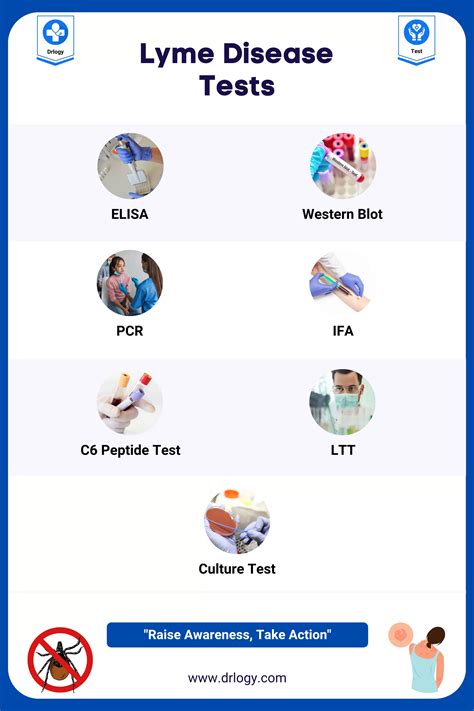
Several tests are available for diagnosing Lyme disease, each with its own advantages and limitations. The choice of test depends on the stage of the disease and the clinical presentation of the patient.
1. Enzyme-Linked Immunosorbent Assay (ELISA)
ELISA is the most commonly used test for detecting Lyme disease. It measures the levels of antibodies against B. burgdorferi in the blood. However, ELISA can produce false-negative results in the early stages of the disease, as it takes time for the body to develop antibodies. Moreover, false positives can occur due to cross-reactivity with other bacteria.
2. Western Blot Test
For patients with a positive or equivocal ELISA result, a Western blot test is often performed to confirm the diagnosis. This test can identify specific proteins (antigens) of B. burgdorferi and is more specific than ELISA. However, interpreting Western blot results requires expertise, and standardization of the test is lacking.
3. PCR (Polymerase Chain Reaction)
PCR is a highly sensitive method that directly detects the genetic material of B. burgdorferi in bodily fluids. While it is particularly useful in the early stages of the disease when antibody levels are not yet detectable, its application is limited due to the scarcity of the bacterium in patient samples.
4. C6 Peptide ELISA
This test detects antibodies against a specific peptide of the VlsE protein of B. burgdorferi. The C6 peptide ELISA is considered more sensitive and specific than traditional ELISA, especially in the early stages of the disease.
Emerging Diagnostic Technologies
Research into Lyme disease diagnostics is ongoing, with scientists exploring more accurate and efficient testing methods, including:
- Next-Generation Sequencing (NGS): Offers the potential for identifying B. burgdorferi directly from clinical samples with high sensitivity and specificity.
- Nanotechnology-Based Assays: Could provide rapid, point-of-care testing with improved accuracy.
Conclusion
Diagnosing Lyme disease accurately is critical for initiating timely treatment and preventing long-term complications. While current diagnostic tests have their limitations, combining clinical assessment with judicious use of available tests can lead to an accurate diagnosis. As research progresses, the hope is that future diagnostic methods will offer even greater precision and ease of use, ultimately improving patient outcomes.
What are the early symptoms of Lyme disease?
+The early symptoms of Lyme disease include a distinctive rash (erythema migrans) at the site of the tick bite, accompanied by flu-like symptoms such as fever, headache, and fatigue.
Why is diagnosing Lyme disease challenging?
+Diagnosing Lyme disease can be challenging due to its nonspecific symptoms, which often mimic those of other diseases, and the fact that not everyone develops the characteristic rash or remembers being bitten by a tick.
What tests are available for diagnosing Lyme disease?
+Available tests include Enzyme-Linked Immunosorbent Assay (ELISA), Western Blot Test, PCR (Polymerase Chain Reaction), and C6 Peptide ELISA. Each test has its own advantages and limitations, and the choice of test depends on the stage of the disease and clinical presentation.
In the pursuit of improving Lyme disease diagnosis, it’s crucial to stay updated on the latest advancements in testing technologies and methodologies. By combining clinical acumen with the best available diagnostic tools, healthcare providers can offer patients the most effective care possible.