The human body is equipped with an incredible ability to respond to stress, but prolonged tension can lead to a myriad of issues, from anxiety and insomnia to chronic pain and digestive problems. One effective technique to combat this is Progressive Muscle Relaxation (PMR), a method that has been used for decades to help individuals release physical tension and promote overall well-being.
At its core, PMR involves a systematic approach to tensing and relaxing different muscle groups in the body. By consciously tightening and then releasing each major muscle group, individuals can become more aware of their physical state and learn to voluntarily relax, leading to a decrease in stress and anxiety. This technique, developed by American physician Edmund Jacobson in the 1920s, is based on the premise that muscle tension is the physical manifestation of anxiety and that by learning to control and release this tension, one can manage anxiety and achieve a deeper state of relaxation.
How to Practice Progressive Muscle Relaxation
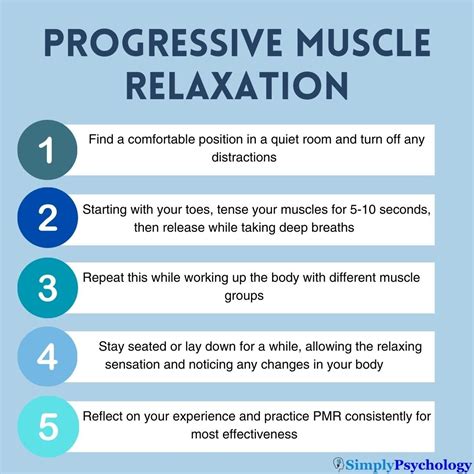
To start practicing PMR, find a quiet and comfortable place to sit or lie down, free from distractions. It’s essential to wear loose, comfortable clothing and to remove any tight jewelry or accessories that might cause discomfort during the exercise. Begin by taking a few deep breaths, inhaling through the nose and exhaling through the mouth, feeling the breath move in and out of the body.
Start with the toes: Tense the muscles in your toes, holding for about 5-10 seconds. You should feel a sensation of tightness or tension. Then, release the tension and feel the relaxation spread through your toes. Take a deep breath and as you exhale, feel any remaining tension melt away.
Move up the body: Progressively tense and then relax each major muscle group in turn, moving up the body. This includes the feet, calves, thighs, hips, back, shoulders, arms, hands, neck, and head. For each area, follow the same pattern: tense for 5-10 seconds and then release.
Focus on the sensation: As you tense each muscle group, pay close attention to the sensations in your body. Notice the feeling of tension and then the release. If your mind begins to wander, gently bring your focus back to the sensations in your body.
Breathe deeply: Throughout the exercise, maintain deep, rhythmic breathing. This helps in relaxing the body further and aids in focusing your mind on the process.
End with a moment of calm: After you’ve tensed and relaxed all the major muscle groups, take a few moments to notice how you feel. Often, individuals report feeling more relaxed, calm, and centered. Remain in this state for as long as you wish, breathing deeply and feeling the tranquility spread through your body.
Benefits of Progressive Muscle Relaxation
The benefits of PMR are multifaceted and well-documented. Regular practice can lead to a significant reduction in anxiety and stress levels, improved sleep quality, and enhanced overall physical and mental well-being. By learning to manage and release physical tension, individuals can also experience a decrease in chronic pain, improved mood, and increased feelings of relaxation and calmness.
Moreover, PMR can be particularly beneficial for individuals dealing with specific health issues, such as hypertension, as it helps in lowering blood pressure and reducing the risk of heart disease. It’s also a valuable tool for managing symptoms of anxiety disorders, including panic attacks and social anxiety, by providing a portable and accessible method for achieving relaxation and reducing stress in any situation.
Incorporating PMR into Daily Life
Incorporating PMR into your daily routine can be as simple as dedicating 10-15 minutes each day to the practice. It can be done at any time, but many find it beneficial to practice PMR before bed to promote better sleep or during particularly stressful moments as a quick relaxation technique.
For those who find it challenging to set aside dedicated time, it’s possible to integrate elements of PMR into daily activities. For example, tensing and relaxing the muscles while waiting in line, sitting at a desk, or during commercials while watching TV can help in reducing overall tension and increasing feelings of calm.
Advanced Techniques and Variations
As individuals become more comfortable with the basic technique of PMR, they can explore advanced techniques and variations to deepen their practice. This might include:
- Mindfulness Meditation: Combining elements of mindfulness meditation with PMR can enhance the practice, encouraging a greater awareness of the present moment and the sensations within the body.
- Visualization: Using visualization techniques alongside PMR, such as imagining a warm, soothing light spreading through the body as each muscle group relaxes, can enhance the relaxation response.
- Breathing Techniques: Incorporating specific breathing patterns, such as the 4-7-8 method, can further reduce stress and promote relaxation.
Conclusion
Progressive Muscle Relaxation offers a powerful tool for managing stress, anxiety, and physical tension. By incorporating this simple yet effective technique into daily life, individuals can experience profound benefits, from improved sleep and reduced anxiety to enhanced overall well-being. Whether practiced in its traditional form or adapted to fit individual needs and preferences, PMR stands as a testament to the body’s incredible ability to heal and relax, given the right cues and care.
What is Progressive Muscle Relaxation?
+Progressive Muscle Relaxation (PMR) is a technique used to help manage stress and anxiety by tensing and relaxing different muscle groups in the body. It was developed by American physician Edmund Jacobson and is based on the premise that muscle tension is the physical manifestation of anxiety.
How do I practice Progressive Muscle Relaxation?
+To practice PMR, start by finding a quiet and comfortable place. Begin with your toes and progressively tense and then relax each major muscle group in turn, moving up the body. Focus on the sensations in your body, breathe deeply, and maintain a systematic approach to tensing and relaxing.
What are the benefits of Progressive Muscle Relaxation?
+The benefits of PMR include reduced anxiety and stress levels, improved sleep quality, enhanced overall physical and mental well-being, and decreased chronic pain. It can also help in managing symptoms of anxiety disorders and lowering blood pressure.
Can I incorporate Progressive Muscle Relaxation into my daily activities?
+Yes, you can incorporate elements of PMR into your daily activities. This can be as simple as tensing and relaxing your muscles while waiting in line or during breaks at work. Regular practice, even in short intervals, can lead to significant reductions in stress and anxiety.
Are there any advanced techniques or variations of Progressive Muscle Relaxation?
+Yes, there are advanced techniques and variations. These can include combining PMR with mindfulness meditation, visualization, or specific breathing techniques to deepen the practice and enhance the relaxation response.