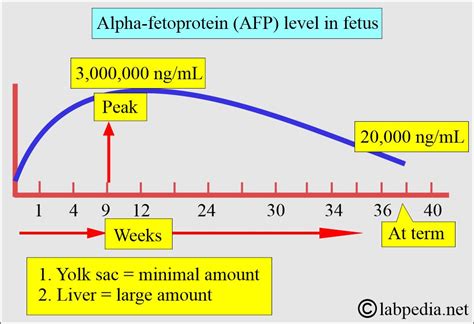
The significance of serum Alpha Fetoprotein (AFP) levels extends beyond the realm of obstetrics, reaching into the fields of oncology, hepatology, and pediatrics. AFP, a protein produced by the liver and yolk sac of a fetus, serves as a vital biomarker for various medical conditions. Understanding AFP levels is crucial for the diagnosis, management, and prognosis of several diseases.
Introduction to AFP
AFP is one of the most abundant proteins in the human fetus, playing a critical role in the development of the fetus’s liver, digestive system, and immune system. After birth, AFP levels decrease rapidly as the liver matures and other proteins become more dominant in the bloodstream. In adults, elevated AFP levels can indicate liver regeneration, liver cancer, or other conditions such as cirrhosis or hepatitis.
Clinical Significance of Elevated AFP Levels
Elevated AFP levels can be indicative of several conditions, including:
- Hepatocellular Carcinoma (HCC): AFP is used as a tumor marker for HCC, the most common type of liver cancer. While not all HCC cases have elevated AFP levels, significantly high levels are often associated with this condition.
- Germ Cell Tumors: Certain types of testicular and ovarian cancers can cause an increase in AFP levels.
- Liver Regeneration: After liver injury or surgery, the liver may produce more AFP as part of the regeneration process.
- Chronic Liver Disease: Conditions like cirrhosis can lead to elevated AFP levels due to liver regeneration attempts.
AFP in Pregnancy
During pregnancy, AFP levels are monitored as part of prenatal care to assess fetal health. The maternal serum AFP (MSAFP) test measures the level of AFP in the mother’s blood, which reflects the level of AFP produced by the fetus. Abnormal levels can indicate potential issues:
- Low AFP Levels: May be associated with an increased risk of Down syndrome or other chromosomal abnormalities.
- High AFP Levels: Can indicate the presence of more than one fetus, a fetal abdominal wall defect, or other complications.
Diagnostic and Prognostic Value
The diagnostic and prognostic value of AFP levels varies depending on the clinical context:
- Screening Tool: For hepatocellular carcinoma, especially in high-risk populations like those with chronic hepatitis B or C.
- Monitoring Disease Progression: In patients with known liver disease or cancer, AFP levels can help monitor the effectiveness of treatment or disease progression.
- Prenatal Screening: Part of the triple or quad screen tests to assess fetal health during pregnancy.
Limitations and Considerations
While AFP is a valuable biomarker, its interpretation must be done with caution:
- False Positives and Negatives: AFP levels can be influenced by various factors, leading to false-positive or false-negative results.
- Interpretation in Context: AFP levels should be considered alongside other diagnostic tools, clinical findings, and patient history for accurate interpretation.
- Ethnic and Individual Variability: Baseline AFP levels can vary among individuals and ethnic groups, affecting the interpretation of test results.
Management and Treatment Based on AFP Levels
Management strategies based on AFP levels depend on the underlying condition:
- Liver Cancer: Elevated AFP levels may guide the decision for more intensive surveillance or the initiation of specific treatments.
- Pregnancy: Abnormal AFP levels may lead to further diagnostic testing, such as ultrasound or amniocentesis, to determine fetal health and guide pregnancy management.
- Chronic Liver Disease: Monitoring AFP levels can help assess disease progression and the need for intervention.
Future Directions and Research
Research continues to explore the role of AFP in various diseases, including its potential as a therapeutic target for certain cancers. Advances in biomarker technology may also lead to more sensitive and specific tests for diagnosing and monitoring conditions associated with abnormal AFP levels.
Conclusion
Serum Alpha Fetoprotein levels serve as a critical biomarker for a range of medical conditions, from liver diseases and certain cancers to fetal health during pregnancy. Understanding the clinical significance of AFP levels, their diagnostic and prognostic value, and the limitations of AFP as a biomarker is essential for healthcare providers and patients alike. As medical science evolves, the role of AFP in diagnosis, management, and research is likely to expand, offering new insights into disease mechanisms and potential therapeutic strategies.
What does an elevated Alpha Fetoprotein (AFP) level indicate?
+Elevated AFP levels can indicate various conditions, including liver cancer, germ cell tumors, liver regeneration, and certain complications during pregnancy. The specific indication depends on the clinical context and patient history.
How is AFP used in prenatal care?
+During prenatal care, the maternal serum AFP (MSAFP) test is used to assess fetal health. Abnormal AFP levels can indicate potential fetal complications or chromosomal abnormalities, prompting further diagnostic testing.
What are the limitations of using AFP as a biomarker?
+AFP levels can be influenced by various factors, leading to false-positive or false-negative results. Interpretation must consider the patient’s clinical context, other diagnostic findings, and individual variability in baseline AFP levels.