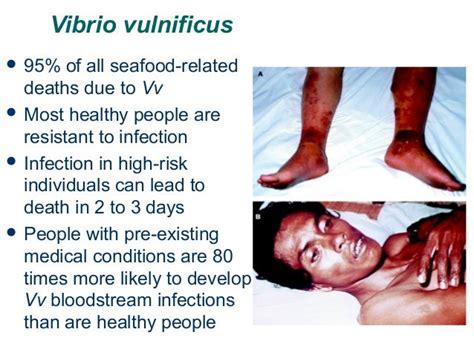
Vibrio vulnificus, a bacterium found in warm seawater, can cause severe illness in humans, particularly those with weakened immune systems. Infections can occur through open wounds exposed to contaminated water or by consuming undercooked or raw shellfish, especially oysters. Recognizing the early warning signs of Vibrio vulnificus infection is crucial for seeking prompt medical attention, which can significantly improve outcomes. The symptoms can vary depending on the mode of infection but generally include:
Initial Symptoms
- Wound Infections: For individuals who come into contact with Vibrio vulnificus through open wounds, initial symptoms may include redness, swelling, and pain around the wound site. These symptoms can escalate rapidly, sometimes within hours.
- Gastrointestinal Illness: Those who ingest the bacterium may experience gastrointestinal symptoms such as vomiting, diarrhea, and abdominal pain. These symptoms can resemble food poisoning but may progress to more severe conditions.
Systemic Infection
If the bacteria enter the bloodstream, a systemic infection can occur, leading to more severe and life-threatening conditions. Symptoms may include: - Fever and Chills: An elevated body temperature and chills are common indicators of a systemic infection. - Skin Lesions: The appearance of skin lesions or blisters, which can turn black and become necrotic, is a distinctive and severe sign of Vibrio vulnificus infection. - Septicemia: The presence of bacteria in the blood can lead to septicemia, characterized by symptoms such as confusion, decreased urine output, and a rapid heart rate.
High-Risk Groups
Certain individuals are at a higher risk of developing severe Vibrio vulnificus infections, including those with liver disease, iron overload conditions (like hemochromatosis), or compromised immune systems due to conditions such as HIV/AIDS or undergoing chemotherapy. For these groups, even mild initial symptoms can quickly escalate into life-threatening conditions.
Importance of Early Recognition
Early recognition of Vibrio vulnificus symptoms is critical. Prompt medical attention can reduce the risk of severe outcomes, including amputation of infected limbs and death. If you or someone you know has been exposed to potentially contaminated water or shellfish and begins to exhibit these symptoms, seek immediate medical care.
Prevention Strategies
While the risk of infection can be minimized, it cannot be entirely eliminated. Prevention strategies include avoiding the consumption of raw or undercooked shellfish, especially for those in high-risk groups, and immediately cleaning and covering any open wounds exposed to seawater. Awareness of the risks associated with Vibrio vulnificus and taking preventative measures can significantly reduce the incidence of infections.
Diagnostic Approaches
Diagnosing Vibrio vulnificus infection typically involves a combination of physical examination, laboratory tests (such as blood cultures and wound cultures), and sometimes imaging studies to assess the extent of the infection. Prompt diagnosis is essential for initiating appropriate treatment, which may include antibiotics and, in severe cases, surgical intervention to manage or prevent further complications.
Treatment and Management
The treatment of Vibrio vulnificus infections usually involves aggressive antibiotic therapy, supportive care, and in some cases, surgical debridement of necrotic tissue. The choice of antibiotics may be guided by susceptibility testing to ensure the most effective treatment. In severe cases, hospitalization in an intensive care unit may be necessary to manage complications such as septic shock and organ failure.
Conclusion
Vibrio vulnificus infections are medical emergencies that require immediate attention. Understanding the early warning signs and being aware of the risks associated with exposure to contaminated water or shellfish are critical for preventing severe outcomes. By recognizing the symptoms early and seeking prompt medical care, individuals can significantly improve their chances of recovery from this potentially deadly infection.
What are the common sources of Vibrio vulnificus infection?
+Vibrio vulnificus infections commonly occur through exposure to contaminated seawater, particularly through open wounds, or by consuming undercooked or raw shellfish, especially oysters.
Who is at a higher risk of developing severe Vibrio vulnificus infections?
+Individuals with liver disease, iron overload conditions, or compromised immune systems are at a higher risk of developing severe Vibrio vulnificus infections.
What are the initial symptoms of a Vibrio vulnificus infection?
+The initial symptoms can include wound infections characterized by redness, swelling, and pain, or gastrointestinal illness with symptoms like vomiting, diarrhea, and abdominal pain, depending on the mode of infection.