Antidepressants are a type of medication designed to help alleviate symptoms of depression, anxiety, and other mood disorders. They work by influencing the levels and activity of certain neurotransmitters in the brain, which are chemicals that transmit signals between brain cells. The primary neurotransmitters targeted by antidepressants are serotonin, norepinephrine, and dopamine.
To understand how antidepressants function, it’s essential to have a basic understanding of the neurotransmitters they affect. Serotonin is involved in regulating mood, appetite, sleep, and other functions. Norepinephrine plays a role in attention and arousal, while dopamine is crucial for reward, motivation, and pleasure. In individuals with depression, the levels and activity of these neurotransmitters can be altered, leading to the characteristic symptoms of the disorder, such as persistent sadness, loss of interest in activities, changes in appetite or sleep, and difficulty concentrating.
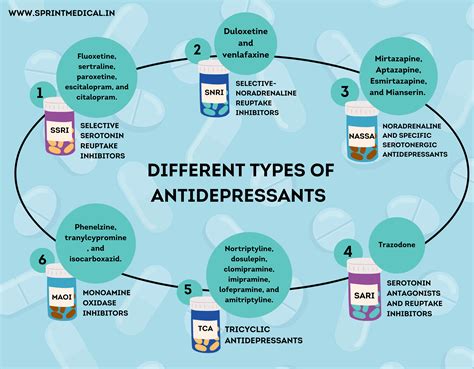
Antidepressants can be broadly categorized into several types based on their mechanism of action:
Selective Serotonin Reuptake Inhibitors (SSRIs): These are the most commonly prescribed antidepressants. They work by preventing the reabsorption of serotonin into the neurons that released it, thus increasing the availability of serotonin in the synaptic cleft (the gap between two neurons) and improving mood. Examples of SSRIs include fluoxetine (Prozac), sertraline (Zoloft), and paroxetine (Paxil).
Serotonin-Norepinephrine Reuptake Inhibitors (SNRIs): These medications inhibit the reuptake of both serotonin and norepinephrine, thereby increasing the levels of both neurotransmitters in the brain. This can be beneficial for individuals who do not respond to SSRIs. Examples of SNRIs include venlafaxine (Effexor) and duloxetine (Cymbalta).
Tricyclic Antidepressants (TCAs): These older antidepressants also increase the levels of serotonin and norepinephrine by blocking their reuptake, but they have a broader mechanism of action that affects other neurotransmitter systems as well. Due to their side effects and toxicity, they are less commonly prescribed today. Examples include amitriptyline (Elavil) and imipramine (Tofranil).
Monoamine Oxidase Inhibitors (MAOIs): These are among the oldest antidepressants and work by blocking the enzyme monoamine oxidase, which breaks down serotonin, norepinephrine, and dopamine in the brain, thereby increasing their availability. MAOIs can have significant dietary restrictions to avoid hypertensive crises and are thus generally reserved for treatment-resistant cases. Examples include phenelzine (Nardil) and tranylcypromine (Parnate).
Atypical Antidepressants: This category includes medications that do not fit neatly into the other classes, often because their mechanisms of action are more complex or not fully understood. Examples include bupropion (Wellbutrin), which affects dopamine and norepinephrine, and mirtazapine (Remeron), which influences serotonin and norepinephrine but in a distinct manner compared to SSRIs and SNRIs.
While antidepressants are effective for many people, they can also have side effects, which vary depending on the specific medication. Common side effects include nausea, changes in appetite or sleep, dry mouth, and sexual dysfunction. It’s also important to note that antidepressants can take several weeks to start having a noticeable effect, and it may be necessary to try more than one medication to find the one that works best for an individual.
The decision to prescribe antidepressants should be made by a healthcare provider, considering the individual’s specific condition, medical history, and other factors. Furthermore, antidepressants are most effective when used in conjunction with psychotherapy, as this combination can address both the biological and psychological aspects of depression and anxiety disorders.
How long does it take for antidepressants to start working?
+Antidepressants typically take several weeks to start having a noticeable effect. It can range from 2 to 8 weeks before significant improvements in mood and other symptoms are observed. However, some people may experience benefits sooner, and it's essential to continue the medication as prescribed by a healthcare provider even if immediate effects are not noticed.
Can antidepressants be used to treat conditions other than depression?
+Yes, antidepressants are used to treat a variety of mental health conditions beyond depression, including anxiety disorders (such as generalized anxiety, panic disorder, and social anxiety disorder), post-traumatic stress disorder (PTSD), obsessive-compulsive disorder (OCD), eating disorders, and certain chronic pain conditions. Their application depends on the specific type of antidepressant and the individual's health profile.
Are there any lifestyle changes that can enhance the effectiveness of antidepressants?
+Yes, making certain lifestyle changes can complement the effects of antidepressants. Regular exercise, a balanced diet, avoiding alcohol and drugs, getting sufficient sleep, and engaging in stress-reducing activities (such as yoga, meditation, or deep breathing exercises) can all contribute to improved mental health. Additionally, maintaining a consistent routine and staying socially connected can also be beneficial.
In conclusion, antidepressants are a crucial tool in the management of depression, anxiety, and related disorders. By understanding how they work and their potential benefits and drawbacks, individuals can make informed decisions about their mental health treatment in consultation with healthcare professionals. Remember, while medication can provide significant relief, it is often most effective when combined with psychotherapy and lifestyle modifications.


