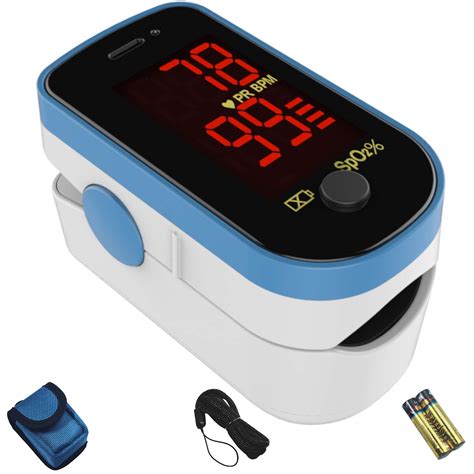
A finger pulse oximeter is a compact, non-invasive medical device used to monitor the oxygen saturation of a patient’s blood, as well as their heart rate. It is a crucial tool in the medical field, allowing healthcare professionals to quickly and easily assess a patient’s oxygenation status. The device is typically clipped onto a patient’s finger, and it works by emitting light through the skin to detect changes in blood oxygen levels.
The science behind the finger pulse oximeter is based on the principle of light absorption. Hemoglobin in red blood cells absorbs and reflects different wavelengths of light, depending on whether it is bound to oxygen. The oximeter emits two different wavelengths of light - red and infrared - through the skin, and a sensor on the other side of the finger detects the amount of light that is absorbed by the hemoglobin. By analyzing the differences in light absorption, the device can calculate the percentage of oxygen-bound hemoglobin in the blood, which is expressed as a percentage (SpO2).
In addition to monitoring oxygen saturation, finger pulse oximeters also measure heart rate by detecting the changes in blood volume that occur with each heartbeat. This information is essential for assessing a patient’s overall cardiovascular health and can help healthcare professionals diagnose and manage conditions such as arrhythmias, heart failure, and respiratory diseases.
The benefits of using a finger pulse oximeter are numerous. For one, it is a non-invasive and painless procedure, making it an attractive option for patients who are anxious or fearful of more invasive medical procedures. The device is also relatively inexpensive and easy to use, making it a valuable tool for healthcare professionals in a variety of settings, from hospitals and clinics to nursing homes and patient homes.
Finger pulse oximeters have a wide range of applications in the medical field. They are commonly used in emergency medicine to quickly assess a patient’s oxygenation status and guide treatment decisions. They are also used in critical care settings, such as intensive care units, to continuously monitor patients who are at risk for respiratory or cardiac complications. Additionally, finger pulse oximeters are used in outpatient settings, such as doctor’s offices and clinics, to monitor patients with chronic respiratory diseases, such as chronic obstructive pulmonary disease (COPD) or asthma.
In recent years, finger pulse oximeters have become increasingly popular among athletes and individuals who engage in high-altitude activities, such as mountain climbing or skiing. These devices can help individuals monitor their oxygen levels and adjust their activity levels accordingly, reducing the risk of altitude sickness and other complications.
When selecting a finger pulse oximeter, there are several factors to consider. One of the most important factors is accuracy, as some devices may be more prone to errors than others. Look for devices that have been clinically validated and have a high level of accuracy, particularly in patients with dark skin tones or low perfusion. Other factors to consider include the device’s ease of use, battery life, and durability.
In terms of how to use a finger pulse oximeter, the process is relatively straightforward. First, turn on the device and ensure that it is properly calibrated. Next, place the sensor on the patient’s finger, making sure that it is securely attached and that the finger is warm and well-perfused. The device will then begin to take readings, which will be displayed on the screen. It is essential to follow the manufacturer’s instructions for use and to ensure that the device is properly maintained and cleaned to prevent errors and ensure accuracy.
Overall, finger pulse oximeters are valuable tools that can provide healthcare professionals and individuals with quick and easy access to vital information about oxygen saturation and heart rate. By understanding how these devices work and how to use them effectively, individuals can take a more active role in their healthcare and make informed decisions about their treatment.
It's essential to note that while finger pulse oximeters are valuable tools, they are not without limitations. For example, they may not be accurate in patients with certain medical conditions, such as anemia or carbon monoxide poisoning. Additionally, they may not be suitable for patients with poor circulation or cold hands.
In conclusion, finger pulse oximeters are powerful tools that can provide valuable insights into a patient’s oxygenation status and heart rate. By understanding how these devices work and how to use them effectively, healthcare professionals and individuals can make informed decisions about treatment and take a more active role in their healthcare.
What is the normal range for oxygen saturation?
+The normal range for oxygen saturation is typically between 95% and 100%. However, this can vary depending on the individual and their medical condition.
How accurate are finger pulse oximeters?
+Finger pulse oximeters are generally accurate, but their accuracy can depend on a variety of factors, including the device’s quality, the patient’s skin tone, and the presence of certain medical conditions.
Can finger pulse oximeters be used on patients with dark skin tones?
+Yes, finger pulse oximeters can be used on patients with dark skin tones, but their accuracy may be affected. It’s essential to choose a device that has been clinically validated for use in patients with dark skin tones.