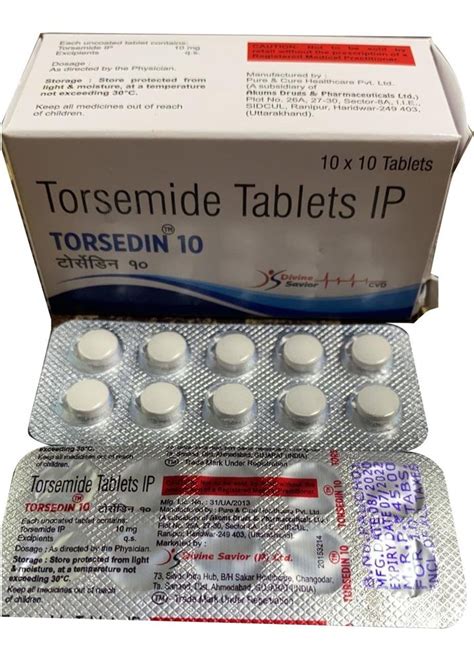
Torsemide, a loop diuretic, is utilized in the treatment of various medical conditions, primarily those associated with excessive fluid retention in the body. Its mechanism of action involves inhibiting the sodium-potassium-chloride cotransporter in the ascending limb of the loop of Henle, leading to increased urine production and subsequent reduction in fluid volume. This makes torsemide an effective medication for managing conditions such as edema and hypertension.
Treatment of Edema
Edema, which is characterized by swelling caused by excess fluid trapped in the body’s tissues, is a common condition treated with torsemide. This swelling can occur in various parts of the body, including the legs, feet, ankles, and hands, and can be associated with liver disease, kidney disease, or heart failure. Torsemide helps to alleviate edema by promoting the excretion of sodium and water, thereby reducing fluid accumulation in the tissues and decreasing swelling.
Management of Hypertension
Torsemide is also used in the management of hypertension, or high blood pressure. By reducing the volume of fluid in the blood vessels, torsemide decreases the pressure against the vessel walls, which helps to lower blood pressure. This is particularly beneficial in patients with hypertension secondary to fluid overload, as reducing fluid volume can significantly improve blood pressure control and reduce the risk of cardiovascular complications.
Heart Failure Treatment
In the context of heart failure, torsemide plays a crucial role in managing symptoms associated with fluid overload, such as shortness of breath (dyspnea) and swelling (edema). By enhancing diuresis, torsemide helps to reduce the workload on the heart, improve respiratory function, and increase patient comfort. Its potent diuretic effect makes it especially useful in acute decompensated heart failure, where rapid reduction of fluid volume is necessary.
Nephrotic Syndrome
Nephrotic syndrome, a collection of symptoms resulting from severe damage to the kidneys’ glomeruli, leading to significant loss of protein in the urine, is another condition where torsemide may be prescribed. The substantial proteinuria (protein loss in urine) associated with nephrotic syndrome can lead to hypoalbuminemia (low blood albumin levels), which in turn causes edema. Torsemide helps to reduce edema by promoting diuresis, although the underlying renal issue requires separate management.
Cirrhotic Ascites
Torsemide can be used in the management of ascites, the accumulation of fluid in the peritoneal cavity, often seen in patients with cirrhosis of the liver. The mechanism involves the reduction of fluid volume, thereby decreasing the amount of ascitic fluid. However, the use of torsemide in this context must be carefully managed to avoid over-diuresis, which can lead to hypovolemia (decreased blood volume) and further complications.
Comparison with Other Diuretics
While torsemide shares some similarities with other loop diuretics like furosemide, its pharmacokinetic profile, including its longer half-life and possibly more linear dose-response curve, may offer advantages in certain clinical scenarios. This can make torsemide a preferable choice for some patients, especially those requiring a more predictable and sustained diuretic effect.
Potential Side Effects and Considerations
Despite its efficacy, torsemide can cause several side effects, including increased urination, dehydration, hypokalemia (low potassium levels), hypomagnesemia (low magnesium levels), and potentially ototoxicity (ear damage) at very high doses. Monitoring of electrolyte levels, renal function, and adjustment of dosages as needed are critical components of torsemide therapy to minimize these risks.
Dosage and Administration
The dosage of torsemide varies depending on the specific condition being treated and the patient’s response. For edema, the typical starting dose is 20 mg once daily, which can be adjusted based on patient response. In hypertension, lower doses are often initiated, with gradual increases as necessary and tolerated. The administration of torsemide should be tailored to the individual patient’s needs, with careful monitoring for both therapeutic efficacy and potential adverse effects.
FAQ Section
What is the primary mechanism of action of torsemide?
+Torsemide works by inhibiting the sodium-potassium-chloride cotransporter in the ascending limb of the loop of Henle, leading to increased urine production and subsequent reduction in fluid volume.
How does torsemide help in managing hypertension?
+Torsemide helps to alleviate hypertension by reducing the volume of fluid in the blood vessels, which decreases the pressure against the vessel walls and helps to lower blood pressure.
What are the potential side effects of torsemide therapy?
+Potential side effects include increased urination, dehydration, hypokalemia (low potassium levels), hypomagnesemia (low magnesium levels), and potentially ototoxicity (ear damage) at very high doses.
How is torsemide dosed for the treatment of edema?
+The typical starting dose for edema is 20 mg once daily, which can be adjusted based on patient response.
Can torsemide be used in patients with cirrhotic ascites?
+Yes, torsemide can be used in the management of ascites in patients with cirrhosis, but its use must be carefully managed to avoid over-diuresis and further complications.
How does torsemide compare to other loop diuretics like furosemide?
+Torsemide has a longer half-life and possibly a more linear dose-response curve compared to furosemide, which may offer advantages in certain clinical scenarios.
In conclusion, torsemide is a valuable medication in the management of conditions associated with fluid overload, including edema, hypertension, heart failure, nephrotic syndrome, and cirrhotic ascites. Its effectiveness, combined with a careful management of potential side effects, makes it a preferred choice for many clinicians. However, the use of torsemide should always be tailored to the individual patient’s needs, with close monitoring of both therapeutic efficacy and potential adverse effects.