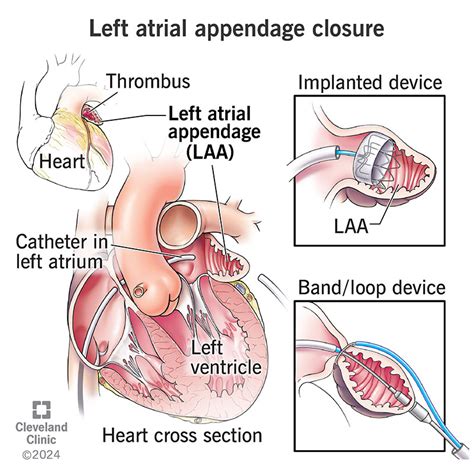
The heart is a complex and vital organ, responsible for pumping blood throughout the body. One of its four chambers, the left atrium, has a small, ear-shaped pouch called the left atrial appendage (LAA). While the LAA is a normal part of the heart’s anatomy, it can sometimes become a source of trouble, particularly for individuals with atrial fibrillation (AFib). In this condition, the heart beats irregularly, increasing the risk of blood clots forming in the LAA. These clots can then break loose, travel to the brain, and cause a stroke. Atrial appendage closure (AAC) is a minimally invasive procedure designed to prevent such strokes by sealing off the LAA. This innovative approach has been gaining attention for its potential to reduce the risk of stroke in AFib patients, offering a lasting solution with minimal downtime.
Understanding Atrial Fibrillation and Stroke Risk
Atrial fibrillation is a common heart condition characterized by an irregular and often rapid heart rate. It can lead to blood pooling and clotting in the LAA, significantly increasing the risk of ischemic stroke. Traditional management of stroke risk in AFib patients involves anticoagulation therapy, which, while effective, comes with its own set of risks, including bleeding complications. The search for alternative strategies to mitigate stroke risk has led to the development of AAC devices and procedures.
The AAC Procedure: How It Works
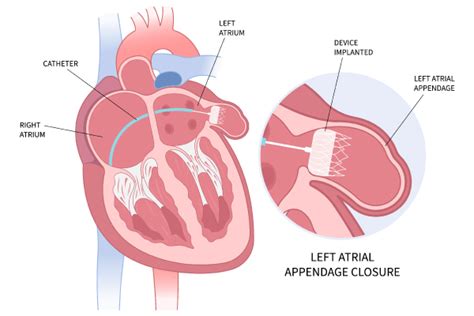
Atrial appendage closure is performed under general anesthesia or conscious sedation. The procedure involves making a small incision in the groin to insert a catheter, which is then guided through the blood vessels to the heart. Once in position, a small device is deployed to seal off the LAA, preventing blood from entering or leaving the appendage. This effectively eliminates the LAA as a source of blood clots, thereby reducing the risk of stroke. The procedure typically takes about an hour, and most patients can go home the next day.
Types of AAC Devices
Several types of devices are available for AAC, each with its unique design and deployment mechanism. The Watchman device, one of the most widely used, is a small, umbrella-like device made of permeable fabric. It is deployed through the catheter and expanded to fit snugly over the opening of the LAA, sealing it off. Other devices, such as the Amplatzer Amulet, work on similar principles but may have different designs, such as a lobe-shaped structure. The choice of device often depends on the patient’s anatomy and the physician’s preference.
Benefits of Atrial Appendage Closure
The primary benefit of AAC is the significant reduction in stroke risk for patients with AFib. By eliminating the LAA as a source of clots, these patients can greatly decrease their likelihood of experiencing a stroke. Additionally, AAC offers an alternative to long-term anticoagulation therapy, which is particularly beneficial for patients at high risk of bleeding or those who have experienced bleeding complications while on blood thinners. The minimally invasive nature of the procedure and the short recovery time are also advantageous, allowing patients to quickly return to their normal activities.
Real-Life Implications
For many patients, the decision to undergo AAC is life-changing. It not only reduces the fear of stroke but also eliminates the constant worry about bleeding risks associated with anticoagulant therapy. The procedure’s success stories are numerous, with patients reporting improved quality of life and reduced anxiety about their heart health. As with any medical procedure, it’s essential for patients to discuss their individual situation with their healthcare provider to determine if AAC is the right choice for them.
Future Directions and Ongoing Research
While AAC has shown promising results, ongoing research is focused on improving device technology, enhancing procedural techniques, and expanding patient selection criteria. Studies are also exploring the potential benefits of AAC in other patient populations, such as those with other types of atrial fibrillation or heart conditions. As technology advances and more data becomes available, the role of AAC in the management of stroke risk is likely to evolve, offering even more effective and personalized treatment options for patients.
Conclusion
Atrial appendage closure represents a significant advancement in the prevention of stroke among patients with atrial fibrillation. By offering a minimally invasive, durable solution to the problem of LAA-associated thromboembolism, AAC has the potential to improve the lives of thousands of individuals worldwide. As medical science continues to advance, procedures like AAC underscore the importance of innovative treatments that can significantly impact patient outcomes, quality of life, and the future of cardiovascular health.
Frequently Asked Questions
What are the main benefits of atrial appendage closure for patients with atrial fibrillation?
+The main benefits include a significant reduction in stroke risk, an alternative to long-term anticoagulation therapy, and a minimally invasive procedure with a short recovery time.
How long does the atrial appendage closure procedure typically take, and what is the recovery time?
+The procedure usually takes about an hour, and most patients can return home the next day. Full recovery and return to normal activities may take a few days to a week.
Are there any specific criteria for patient selection for atrial appendage closure, and how is eligibility determined?
+Eligibility is typically determined on a case-by-case basis, considering factors such as the presence of atrial fibrillation, stroke risk, bleeding risk, and the presence of any contraindications to the procedure. Patients should consult with their healthcare provider to discuss their individual situation and determine if AAC is a suitable option.
What are the potential risks and complications associated with atrial appendage closure, and how common are they?
+Potential risks include procedural complications such as bleeding, infection, and damage to the heart or blood vessels. However, these risks are relatively rare, and the overall safety profile of AAC is considered good. It’s essential for patients to discuss potential risks and benefits with their healthcare provider.
Is atrial appendage closure covered by insurance, and what are the typical out-of-pocket costs for patients?
+Coverage and out-of-pocket costs can vary depending on the patient’s insurance plan and location. Patients should contact their insurance provider to determine the extent of coverage and any potential costs associated with the procedure.