The significance of creatine kinase (CK) in the human body, particularly in relation to muscle health and function, cannot be overstated. CK is an enzyme found in various tissues and cells, with the highest concentrations in skeletal muscle, heart muscle, and the brain. Its primary role is in energy production and storage, facilitating the conversion of creatine and ATP (adenosine triphosphate) into phosphocreatine and ADP (adenosine diphosphate), a process critical for muscle contraction.
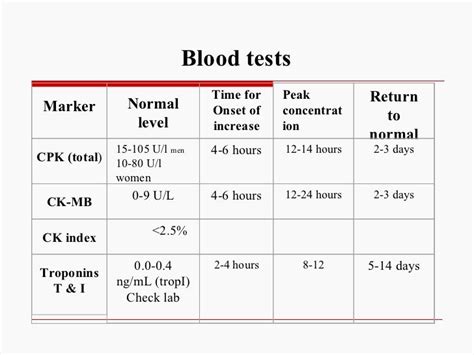
Understanding normal creatine kinase levels is essential for diagnosing and managing conditions that affect muscle health. The normal range for CK can vary slightly between laboratories but generally falls within specific parameters. For adults, normal CK levels typically range from 22 to 269 U/L (units per liter), though this can vary based on the individual’s sex, age, and physical condition. For example, individuals with greater muscle mass or those who are more physically active may have higher baseline CK levels due to increased muscle turnover.
Factors Influencing Creatine Kinase Levels
Several factors can influence CK levels, leading to variations in what is considered “normal.” These include:
- Sex: Males generally have higher CK levels than females due to greater muscle mass.
- Age: Older adults may have slightly lower CK levels due to the natural decline in muscle mass with age.
- Physical Activity: Engaging in strenuous exercise, especially within 24 hours of a blood test, can elevate CK levels temporarily.
- Muscle Trauma: Injuries such as muscle strains or direct blows to muscle tissue can cause significant increases in CK levels.
- Medical Conditions: Certain conditions like muscular dystrophy, myasthenia gravis, and hypothyroidism can affect CK levels.
Clinical Significance of Elevated Creatine Kinase
Elevated CK levels often indicate muscle damage or disease. The degree of elevation can provide valuable information about the extent of muscle injury. For instance, mild elevations might be seen after strenuous exercise, while significantly higher levels could indicate severe muscle damage, such as that seen in rhabdomyolysis, a condition where muscle tissue breaks down rapidly.
In clinical practice, CK levels are used in conjunction with other diagnostic tools, such as electromyography (EMG), muscle biopsy, and imaging studies, to diagnose and manage muscle and neuromuscular disorders. The pattern of CK elevation, along with clinical symptoms and other laboratory findings, helps in narrowing down the differential diagnosis.
Measurement and Interpretation
CK is typically measured through a blood test. The interpretation of CK levels requires careful consideration of the clinical context, including the patient’s symptoms, physical findings, and other laboratory results. For example, a patient with chest pain and elevated CK levels might suggest myocardial infarction (heart attack), while similar elevations in the context of muscle weakness could indicate a neuromuscular disorder.
Variations in Measurement
It’s essential to note that different laboratories might use different units of measurement or have slightly varying reference ranges for CK. Moreover, the timing of the blood sample in relation to the onset of symptoms or the performance of strenuous exercise can significantly impact the results.
Practical Applications and Considerations
For individuals undergoing CK testing, it’s crucial to follow pre-test instructions carefully, such as avoiding strenuous exercise for 24 hours before the test. Additionally, understanding the factors that can influence CK levels helps in interpreting the results more accurately.
In conclusion, creatine kinase levels serve as a valuable diagnostic tool in assessing muscle health and function. Understanding what constitutes normal levels and the factors that can influence these levels is critical for accurate interpretation and diagnosis. As with any medical test, the results must be considered within the context of the individual’s overall clinical picture.
What are normal creatine kinase levels in adults?
+Normal creatine kinase (CK) levels in adults typically range from 22 to 269 U/L, but can vary based on the individual's sex, age, and physical condition.
What can cause elevated creatine kinase levels?
+Elevated CK levels can be caused by muscle trauma, strenuous exercise, and certain medical conditions such as muscular dystrophy and hypothyroidism.
How are creatine kinase levels measured and interpreted?
+CK levels are measured through a blood test and interpreted based on the clinical context, including symptoms, physical findings, and other laboratory results.
Understanding and managing creatine kinase levels is a complex process that requires a comprehensive approach, considering both the clinical context and the various factors that can influence these levels. By doing so, healthcare providers can better diagnose and treat conditions related to muscle health, improving patient outcomes and quality of life.