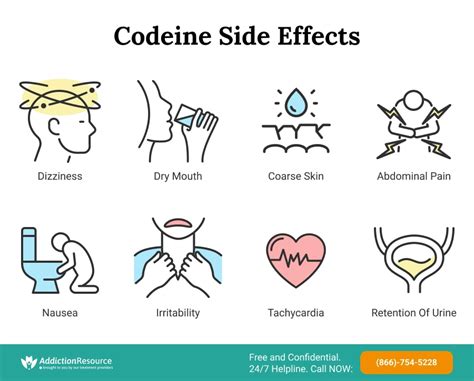
The combination of codeine and acetaminophen is a widely prescribed medication for managing moderate to severe pain. Codeine, an opioid analgesic, works by binding to opioid receptors in the brain, altering the perception of pain. Acetaminophen, on the other hand, is a non-opioid analgesic and antipyretic that helps to reduce fever and relieve pain. While this combination is effective for pain relief, it is not without potential side effects. Understanding these side effects is crucial for safe and effective use.
Common Side Effects
Drowsiness and Dizziness: One of the most common side effects of codeine is drowsiness, which can range from mild to severe. This is due to its action on the central nervous system. Patients are often advised not to operate heavy machinery or drive while under the influence of this medication.
Nausea and Vomiting: Many people experience gastrointestinal side effects, including nausea and vomiting, especially when first starting the medication. Taking the medication with food can sometimes mitigate these effects.
Constipation: Codeine can cause constipation by reducing the movement of the intestines. This is a common side effect of opioids and can be managed with increased fluid intake, dietary changes, or sometimes the use of laxatives.
Headache: Ironically, some individuals may experience headaches as a side effect, which can be frustrating given the medication’s intended use for pain relief.
Fatigue: Feeling tired or weak is another potential side effect, likely due to the combination of codeine’s depressant effects on the central nervous system and acetaminophen’s impact on the body.
Less Common but Serious Side Effects
Liver Damage (from Acetaminophen): Acetaminophen is known to cause liver damage if taken in excess. The risk is higher in individuals who drink alcohol regularly or have existing liver conditions. It’s crucial to follow the recommended dosage to avoid liver injury.
Respiratory Depression: Codeine can slow down breathing rates, which in severe cases can lead to respiratory depression, a potentially life-threatening condition. This risk is higher at higher doses or when combined with other central nervous system depressants.
Dependency and Withdrawal: Codeine is an opioid, and like all opioids, it has the potential for dependency and addiction. Long-term use can lead to physical dependence, and stopping the medication abruptly can cause withdrawal symptoms.
Allergic Reactions: Though rare, some individuals may be allergic to either codeine or acetaminophen. Signs of an allergic reaction can include rash, itching, swelling, severe dizziness, and trouble breathing. If any of these symptoms occur, medical help should be sought immediately.
Rare but Serious Side Effects
Serotonin Syndrome: This is a rare but potentially life-threatening condition that can occur when certain medications, including some pain relievers, cause a buildup of too much serotonin in the body. Symptoms can include agitation, hallucinations, rapid heart rate, and changes in blood pressure.
Adrenal Insufficiency: Long-term use of opioids like codeine can lead to adrenal insufficiency, a condition where the adrenal glands do not produce adequate amounts of certain hormones.
Management of Side Effects
Managing side effects often involves a combination of medical supervision, lifestyle adjustments, and sometimes the addition of other medications to mitigate specific side effects. For example, medications to manage nausea or constipation might be prescribed. It’s also important for patients to be aware of the potential for dependency and to use the medication only as directed.
Conclusion
The combination of codeine and acetaminophen is an effective pain management tool but comes with potential side effects that range from mild to severe. Patients should be well-informed about these possibilities to ensure safe use. Regular communication with healthcare providers about any side effects experienced can help in managing them effectively and in making informed decisions about pain management strategies.
What are the most common side effects of codeine and acetaminophen?
+The most common side effects include drowsiness, dizziness, nausea, vomiting, and constipation. These can be managed with appropriate medical supervision and sometimes additional medications to mitigate specific side effects.
Can codeine and acetaminophen cause dependency?
+Yes, codeine, being an opioid, carries the risk of dependency and addiction, especially with long-term use. It’s crucial to follow the prescribed dosage and to discuss any concerns about dependency with a healthcare provider.
What should I do if I experience severe side effects from codeine and acetaminophen?
+If you experience severe side effects, such as difficulty breathing, severe dizziness, or signs of an allergic reaction, seek medical help immediately. For less severe side effects, consult with your healthcare provider for advice on how to manage them.


