Phosphorus, an essential mineral, plays a critical role in the human body, contributing to the formation of bones and teeth, facilitating the production of protein for cell and tissue growth, and supporting the body’s energy production. It is also involved in the process of nerve function and filter waste in the kidneys. Given its importance, consuming phosphorus-rich foods is vital for maintaining overall health. Phosphorus deficiency, although rare, can lead to weakened bones, fatigue, and other health issues, emphasizing the need for a balanced diet that includes a variety of phosphorus-rich foods.
Understanding Phosphorus Needs
The human body contains about 1% phosphorus, with the majority found in bones and teeth, in the form of phosphate. Phosphorus is also present in smaller amounts in cells and tissues throughout the body. The recommended dietary allowance (RDA) for phosphorus varies by age and sex, ranging from 400 milligrams per day for infants to 1,250 milligrams per day for adolescents and adults, highlighting the need for phosphorus intake tailored to individual needs.
Identifying Phosphorus-Rich Foods
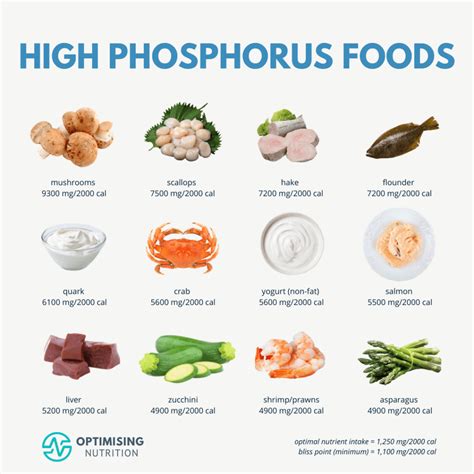
Fortunately, phosphorus is found in a wide variety of foods, making it relatively easy to meet daily phosphorus needs through diet alone. Foods rich in phosphorus include:
- Dairy Products: Milk, cheese, and yogurt are excellent sources of phosphorus. For example, one cup of milk contains about 230-250 milligrams of phosphorus.
- Meat and Poultry: Beef, chicken, and pork are all good sources. A 3-ounce serving of cooked beef can provide around 200 milligrams of phosphorus.
- Fish and Seafood: Fish like salmon and cod, as well as shellfish like shrimp and mussels, are rich in phosphorus. A 3-ounce serving of cooked salmon can offer approximately 260 milligrams.
- Eggs: Eggs are another good source, with a large egg providing about 86 milligrams of phosphorus.
- Legumes: Legumes such as lentils, chickpeas, and black beans are not only rich in protein but also in phosphorus. One cup of cooked lentils can contain around 356 milligrams of phosphorus.
- Nuts and Seeds: Almonds, pumpkin seeds, and sunflower seeds are among the nuts and seeds that are high in phosphorus. One ounce of almonds (about 23 nuts) provides approximately 136 milligrams.
- Whole Grains: Whole grain cereals, brown rice, and whole wheat bread are also good sources of phosphorus. One slice of whole wheat bread can contain about 57 milligrams.
The Importance of Phosphorus Balance
While it is crucial to consume enough phosphorus for optimal health, it is also important to maintain a balance between phosphorus and other nutrients, particularly calcium. An imbalance can lead to health problems, including an increased risk of kidney disease and the formation of kidney stones. Additionally, excessive phosphorus intake, often associated with the consumption of processed foods and certain additives, can have negative health effects, such as hardening of blood vessels.
Practical Considerations for Phosphorus Intake
For individuals looking to increase their phosphorus intake, incorporating a variety of the aforementioned foods into their diet can be beneficial. However, it’s also important to consider the source of phosphorus. Organic phosphorus, found naturally in foods, is generally better absorbed by the body than inorganic phosphorus, which is often added to processed foods and beverages.
Future Implications and Trends
As dietary trends evolve, there is a growing interest in understanding how different diets, such as vegan and vegetarian diets, can meet phosphorus needs. Plant-based diets, for instance, require careful planning to ensure adequate phosphorus intake, as some plant sources contain phytates that can inhibit phosphorus absorption. Ongoing research in nutritional science aims to provide clearer guidelines and recommendations for phosphorus intake across various demographic groups and dietary preferences.
Addressing Potential Phosphorus Deficiency
In cases where dietary phosphorus intake is insufficient, or there is an increased risk of phosphorus deficiency due to medical conditions or certain medications, supplementation might be considered under the guidance of a healthcare professional. However, for most people, a well-planned diet that includes a variety of whole foods can provide adequate phosphorus without the need for supplements.
Conclusion
Phosphorus, though often overlooked, is a vital nutrient that plays a central role in many bodily functions, from bone health to energy production. By understanding the importance of phosphorus and incorporating phosphorus-rich foods into one’s diet, individuals can take a proactive step towards maintaining optimal health and preventing potential phosphorus-related deficiencies. As with all nutrients, balance and awareness of dietary sources are key to harnessing the benefits of phosphorus.
What are the symptoms of phosphorus deficiency?
+Phosphorus deficiency can lead to a range of symptoms, including weakened bones, fatigue, muscle weakness, and in severe cases, neurological symptoms. It is essential to address any suspected deficiency with a healthcare professional for proper diagnosis and treatment.
Can you get too much phosphorus from food?
+While it is possible to consume too much phosphorus, this is more commonly associated with the consumption of processed foods and certain additives rather than whole, natural foods. Excessive phosphorus intake can strain kidney function and contribute to other health issues, emphasizing the importance of a balanced diet.
How does phosphorus affect bone health?
+Phosphorus is crucial for bone health as it combines with calcium to form hydroxyapatite, the main structural component of bones. Adequate phosphorus intake is necessary for the normal growth and development of bones and teeth, as well as for maintaining bone density and preventing conditions like osteoporosis.