Water retention, also known as edema, is a common issue that affects millions of people worldwide. It can be caused by a variety of factors, including hormonal changes, poor diet, and certain medical conditions. One medication that has been used to relieve water retention is spironolactone. In this article, we will delve into the world of spironolactone, exploring its uses, benefits, and potential side effects.
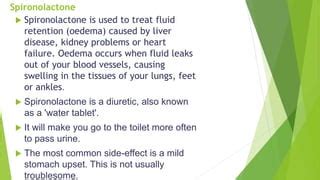
Spironolactone is a type of diuretic, also known as a “water pill.” It works by helping the body get rid of excess fluid and salt, which can help to reduce swelling and alleviate symptoms of water retention. But how does it do this? To understand the mechanism of action, let’s take a closer look at the science behind spironolactone.
How Spironolactone Works
Spironolactone is a potassium-sparing diuretic, which means that it helps the body retain potassium while still getting rid of excess fluid and salt. It does this by blocking the action of a hormone called aldosterone, which is produced by the adrenal glands. Aldosterone plays a crucial role in regulating the balance of fluids and electrolytes in the body. When aldosterone levels are high, the body retains more sodium and water, which can lead to swelling and water retention.
By blocking the action of aldosterone, spironolactone helps to increase the amount of sodium and water that is excreted in the urine. This can help to reduce swelling and alleviate symptoms of water retention. But spironolactone doesn’t just stop at relieving water retention. It has also been shown to have a number of other benefits, including reducing blood pressure and improving heart health.
Benefits of Spironolactone
So, what are the benefits of taking spironolactone? Here are just a few:
- Relieves water retention: Spironolactone is highly effective at relieving water retention and reducing swelling.
- Lowers blood pressure: Spironolactone has been shown to lower blood pressure in people with hypertension.
- Improves heart health: Spironolactone has been shown to reduce the risk of heart failure and improve overall heart health.
- Reduces acne: Spironolactone has been shown to reduce acne in people with polycystic ovary syndrome (PCOS).
- Treats hirsutism: Spironolactone has been shown to reduce excess hair growth in people with hirsutism.
Potential Side Effects
While spironolactone is generally well-tolerated, it can cause some side effects. Here are a few potential side effects to be aware of:
- Dizziness: Spironolactone can cause dizziness and lightheadedness, especially when standing up quickly.
- Headaches: Some people may experience headaches when taking spironolactone.
- Fatigue: Spironolactone can cause fatigue and weakness, especially when first starting the medication.
- Nausea and vomiting: Some people may experience nausea and vomiting when taking spironolactone.
- Menstrual changes: Spironolactone can cause changes in menstrual cycles, including irregular periods and breast tenderness.
Who Should Take Spironolactone?
So, who should take spironolactone? Here are a few scenarios where spironolactone may be prescribed:
- People with heart failure: Spironolactone is often prescribed to people with heart failure to help reduce swelling and improve heart health.
- People with high blood pressure: Spironolactone may be prescribed to people with high blood pressure to help lower blood pressure and reduce the risk of heart disease.
- People with polycystic ovary syndrome (PCOS): Spironolactone may be prescribed to people with PCOS to help reduce acne and excess hair growth.
- People with hirsutism: Spironolactone may be prescribed to people with hirsutism to help reduce excess hair growth.
Conclusion
In conclusion, spironolactone is a highly effective medication for relieving water retention and reducing swelling. It has also been shown to have a number of other benefits, including lowering blood pressure and improving heart health. While spironolactone can cause some side effects, it is generally well-tolerated and can be an effective treatment option for people with a range of medical conditions.
FAQ Section
What is spironolactone used for?
+Spironolactone is used to relieve water retention and reduce swelling. It is also used to lower blood pressure and improve heart health.
How does spironolactone work?
+Spironolactone works by blocking the action of a hormone called aldosterone, which helps the body retain potassium and get rid of excess fluid and salt.
What are the potential side effects of spironolactone?
+Spironolactone can cause dizziness, headaches, fatigue, nausea and vomiting, and menstrual changes.
Who should take spironolactone?
+Spironolactone may be prescribed to people with heart failure, high blood pressure, polycystic ovary syndrome (PCOS), and hirsutism.
Practical Applications
So, how can you apply the knowledge you’ve gained about spironolactone to your own life? Here are a few practical tips:
- Talk to your doctor: If you’re experiencing water retention or swelling, talk to your doctor about spironolactone. They can help you determine if it’s the right treatment option for you.
- Monitor your blood pressure: If you’re taking spironolactone, it’s essential to monitor your blood pressure regularly to ensure it’s not getting too low.
- Watch for side effects: If you’re taking spironolactone, be aware of potential side effects like dizziness, headaches, and fatigue. If you experience any of these side effects, talk to your doctor.
By following these practical tips and understanding the benefits and potential side effects of spironolactone, you can take control of your health and alleviate symptoms of water retention. Remember to always talk to your doctor before starting any new medication, and to monitor your body’s response to ensure you’re getting the best possible results.