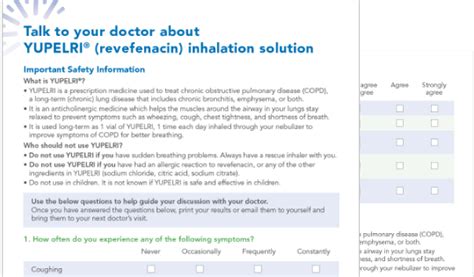
Yupelri, also known by its generic name revefenacin, is a medication used in the maintenance treatment of chronic obstructive pulmonary disease (COPD). It belongs to a class of drugs known as long-acting muscarinic antagonists (LAMAs), which work by helping to relax the airway muscles to improve breathing.
Chronic obstructive pulmonary disease (COPD) is a progressive lung disease characterized by long-term breathing problems and poor airflow. The symptoms of COPD can include wheezing, cough, chest tightness, and shortness of breath. Managing COPD involves a combination of lifestyle changes, medication, and in some cases, surgery.
Yupelri is administered via a nebulizer, a device that converts the medication into a mist that can be inhaled directly into the lungs, providing targeted relief. This method of administration can be particularly beneficial for patients who may have difficulty using handheld inhalers. The medication is designed for once-daily use, aiming to improve lung function and reduce symptoms in patients with COPD.
Mechanism of Action
As a LAMA, revefenacin works by blocking the action of acetylcholine, a neurotransmitter that can cause the airway muscles to constrict. By preventing this constriction, Yupelri helps to keep the airways open, facilitating easier breathing and potentially reducing the frequency of exacerbations.
Benefits and Side Effects
The primary benefit of Yupelri is its ability to provide significant and sustained improvements in lung function in patients with COPD. Clinical trials have shown that revefenacin can increase forced expiratory volume (FEV1), a measure of how much air a person can forcefully exhale in one second, indicating better lung function.
Like all medications, Yupelri can cause side effects. Common side effects include cough, nasopharyngitis (inflammation of the nose and throat), and back pain. More serious but less common side effects can include anterior uveitis (inflammation of the uvea in the eye) and narrow-angle glaucoma. Patients with a history of narrow-angle glaucoma or who are at risk for this condition should be monitored by their healthcare provider.
Patient Selection and Considerations
Yupelri is indicated for patients with COPD who require long-term control of symptoms. The decision to prescribe Yupelri should be based on the individual patient’s condition, including the severity of their symptoms, their ability to use a nebulizer, and their response to other treatments. Patients should discuss their medical history, including any allergies, kidney problems, or eye conditions like glaucoma, with their healthcare provider before starting treatment.
Conclusion
Yupelri offers a valuable treatment option for patients with COPD, providing effective, once-daily symptom control and improvement in lung function through its novel formulation and delivery method. As with any medication, patients should work closely with their healthcare provider to monitor the effectiveness of the treatment and manage any side effects that may arise.
FAQs
What is Yupelri used for?
+Yupelri is used for the maintenance treatment of chronic obstructive pulmonary disease (COPD) to improve lung function.
How is Yupelri administered?
+Yupelri is administered once daily via a nebulizer.
What are the common side effects of Yupelri?
+Common side effects include cough, nasopharyngitis, and back pain.
Should patients with glaucoma use Yupelri?
+Patients with narrow-angle glaucoma or at risk for this condition should be monitored closely by their healthcare provider if they are prescribed Yupelri.
How does Yupelri improve lung function in COPD patients?
+Yupelri, as a LAMA, blocks the action of acetylcholine, preventing airway constriction and thus keeping the airways open for easier breathing.
Can Yupelri be used in combination with other COPD treatments?
+Yes, Yupelri can be used in combination with other medications for COPD, but the treatment plan should be determined by a healthcare provider based on the patient's specific condition and needs.
Resources
For further information on Yupelri and its use in treating COPD, patients and healthcare providers can consult the official prescribing information, medical journals, and reputable health websites. Additionally, support groups and online forums can provide valuable insights and community support for individuals living with COPD.