Tetanus, a bacterial infection caused by Clostridium tetani, can lead to serious health complications, including muscle stiffness, spasms, and even death. The tetanus vaccine, often administered in combination with diphtheria and pertussis vaccines (Tdap), is crucial for preventing this infection. Understanding when you need a tetanus shot and adhering to the recommended booster schedule is essential for maintaining immunity.
At Birth and Childhood
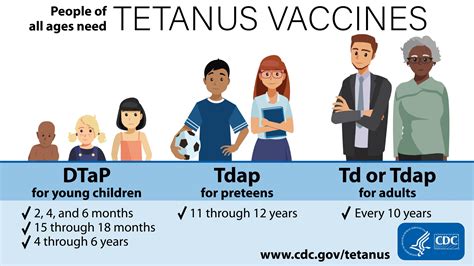
Newborns are not born with tetanus immunity, and their primary source of protection is through the transfer of antibodies from their mother during pregnancy. However, this passive immunity wanes over time. The Centers for Disease Control and Prevention (CDC) recommend a series of tetanus-containing vaccine doses starting at 2 months of age, followed by doses at 4 months, 6 months, and a fourth dose at 15 through 18 months. A fifth dose is recommended at 4 through 6 years of age. This series is typically administered as part of the DTaP (diphtheria, tetanus, and pertussis) vaccine.
Booster Shots for Adolescents and Adults
After completing the childhood series, a tetanus booster shot, known as Tdap (which includes protection against pertussis), is recommended for adolescents around the age of 11 or 12. This booster is crucial for maintaining protection against tetanus, as well as for reducing the risk of pertussis, which has seen a resurgence in recent years.
For adults, booster shots are recommended every 10 years. However, if an adult suffers a deep or dirty wound and has not received a tetanus booster in the last 5 years, a booster dose should be administered immediately. This is particularly important for individuals who work with soil, feces, or other materials that might contain tetanus spores, as these represent higher-risk scenarios for infection.
Special Considerations
- Pregnancy and Postpartum: Pregnant women should receive a Tdap vaccine during the third trimester (around 27 to 36 weeks) of each pregnancy to protect their newborns from pertussis. This recommendation is crucial because pertussis can be life-threatening to infants.
- Travel: Individuals traveling to areas with limited access to medical care or where tetanus is more common may need to update their tetanus vaccination before traveling, especially if their last booster was more than 5 years ago.
- Occupational Exposure: People working in high-risk professions, such as construction, farming, or healthcare, may require more frequent booster shots, depending on their exposure risk.
FAQs
How often do adults need a tetanus booster shot?
+Adults should receive a tetanus booster shot every 10 years. However, if they have a deep or dirty wound and it's been more than 5 years since their last tetanus shot, they should get a booster dose immediately.
Can I get a tetanus shot if I'm pregnant?
+Yes, pregnant women should receive a Tdap vaccine during the third trimester of each pregnancy. This is important for protecting newborns from pertussis.
Do I need a tetanus shot for a minor cut?
+For minor, clean cuts, a tetanus booster may not be immediately necessary if you've received a booster in the last 10 years. However, if the cut is deep, dirty, or you haven't had a booster in over 10 years, you should consult a healthcare provider about receiving a tetanus shot.
Maintaining Tetanus Immunity
Tetanus immunity can wane over time, making booster shots critical for maintaining protection. It’s essential for individuals to keep track of their vaccination history and consult with a healthcare provider if they’re unsure about when they last received a tetanus booster. Given the potential severity of tetanus infection, adherence to the recommended vaccination schedule is vital for preventing this serious disease.
In conclusion, understanding the tetanus shot schedule and staying up to date with booster shots is a crucial aspect of preventive healthcare. By maintaining immunity against tetanus, individuals can significantly reduce their risk of developing this dangerous infection. Always consult with a healthcare provider for personalized advice on tetanus vaccination and booster schedules, especially in scenarios involving travel, occupational exposure, or pregnancy.