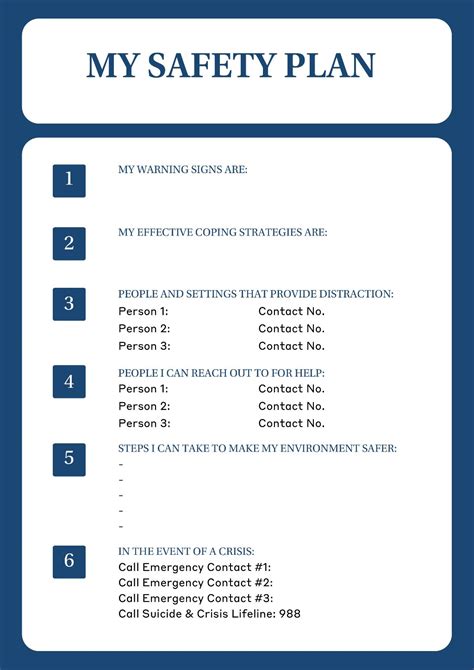
Creating a suicide safety plan is a crucial step in managing mental health and preventing suicidal thoughts or behaviors. This plan serves as a guide to help individuals cope with difficult emotions and situations, providing them with a structured approach to seeking help when they need it most. Developing such a plan involves several key steps, each designed to ensure that the individual has a clear path to follow when experiencing distress.
Step 1: Identify Your Warning Signs
The first step in creating a suicide safety plan is to identify the warning signs that indicate you are at risk of suicidal thoughts or behaviors. These signs can vary from person to person and may include feelings of hopelessness, increased anxiety, withdrawal from social activities, or a significant change in mood. Recognizing these signs early on can help in triggering the appropriate responses outlined in your safety plan.
Step 2: List Your Coping Strategies
Next, list the coping strategies that have helped you manage difficult emotions in the past. These strategies can range from engaging in physical activity, practicing mindfulness or meditation, reading, drawing, or any other activity that you find comforting and distracting from stressful thoughts. Having a list of these strategies readily available can provide immediate actions to take when feeling overwhelmed.
Step 3: Create a List of People to Contact
Identify a list of people you can contact when you’re feeling distressed. This list should include: - Close friends or family members who are supportive and understanding. - Mental health professionals, such as therapists or counselors. - Hotline numbers, such as the National Suicide Prevention Lifeline (1-800-273-TALK (8255) in the United States), that are available 24⁄7. - Local crisis centers or emergency services.
Step 4: Develop a Plan for Your Environment
This step involves removing or limiting access to things that could be used for self-harm. For example, if you have firearms in your home, consider storing them with a trusted individual or using a gun safe. Similarly, reduce access to medications or other potentially harmful substances.
Step 5: Outline Steps for Emergency Situations
In situations where you feel you are in immediate danger of harming yourself, it’s crucial to have a clear plan of action. This includes: - Contacting emergency services or a crisis hotline. - Going to the nearest emergency room. - Reaching out to a trusted friend or family member for immediate support.
Step 6: Regularly Review and Update Your Plan
Suicide safety plans are not static documents; they need to be reviewed and updated regularly. As your situation changes, your support network expands, or as you discover new coping strategies, incorporate these changes into your plan to ensure it remains relevant and effective.
Step 7: Keep Your Plan Accessible
Ensure that your safety plan is easily accessible at all times. This could mean: - Keeping a physical copy in a convenient location, such as on your fridge or in your wallet. - Saving it as a note on your phone or computer. - Sharing it with a trusted friend or family member so they can provide support when needed.
Implementing Your Plan
The effectiveness of a suicide safety plan hinges on its implementation. When you start feeling overwhelmed or notice your warning signs, take immediate action as outlined in your plan. Whether it’s reaching out to a friend, engaging in a coping strategy, or seeking professional help, remember that you are taking a proactive step towards your well-being.
Conclusion
Creating a suicide safety plan is a proactive and empowering step towards managing your mental health. It’s a reminder that you are not alone and that there are people and resources available to help you through challenging times. By following these steps and regularly updating your plan, you can take significant strides towards a safer, healthier you.
Additional Resources
For those looking for more information or seeking immediate support: - National Suicide Prevention Lifeline (US): 1-800-273-TALK (8255) - Crisis Text Line (US): Text HOME to 741741 - Local Mental Health Services: Search online for services available in your area.
Remember, your safety and well-being are paramount, and seeking help is a sign of strength, not weakness.