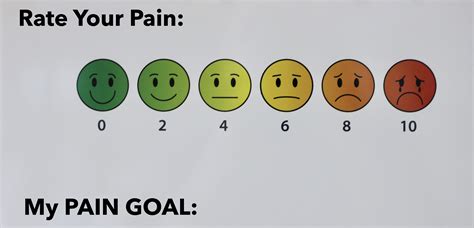
The Faces Pain Scale (FPS) is a widely used tool in the medical field to assess the level of pain a patient is experiencing. Developed as a simple, yet effective method to communicate pain levels, it features a series of facial expressions ranging from a smiling face (indicating no pain) to a crying face (indicating extreme pain). This scale is particularly useful for patients who may have difficulty describing their pain, such as children, the elderly, or those with cognitive impairments.
Introduction to the Faces Pain Scale
The Faces Pain Scale is part of a broader category of pain assessment tools known as pain scales. These tools are crucial for healthcare providers to evaluate the intensity of a patient’s pain and to monitor the effectiveness of pain management strategies. The scale typically consists of six to seven faces, each representing a different level of pain intensity, from no pain to worst possible pain.
How the Faces Pain Scale Works
- Patient Selection: The healthcare provider presents the patient with the Faces Pain Scale and asks them to choose the face that best represents their current level of pain.
- Interpretation: Each face on the scale is assigned a numerical value, allowing for a quantifiable measure of pain. For instance, a scale might range from 0 (no pain) to 6 (worst possible pain).
- Assessment and Reassessment: The patient’s selection is documented in their medical record. This process can be repeated over time to assess changes in pain levels, especially in response to treatment.
Benefits of the Faces Pain Scale
- Ease of Use: The Faces Pain Scale is straightforward and easy to understand, making it accessible to a wide range of patients.
- Communication: It facilitates better communication between patients and healthcare providers about pain, which is inherently subjective.
- Cultural Sensitivity: The use of faces can transcend language barriers, potentially making it more universally applicable than verbal or written scales.
Limitations of the Faces Pain Scale
- Subjectivity: Like all pain assessment tools, the Faces Pain Scale is subjective and relies on the patient’s personal perception of their pain.
- Age and Cognitive Factors: While useful for children and certain patient groups, its effectiveness can be limited by the patient’s ability to understand and relate to the facial expressions.
- Emotional Influence: Patients’ choices might be influenced by their emotional state or expectations, rather than the actual intensity of their pain.
Clinical Applications and Alternatives
The Faces Pain Scale is commonly used in pediatric care and among patients with communication challenges. However, for patients who can communicate more effectively, other scales like the Numerical Rating Scale (NRS) or the Visual Analog Scale (VAS) might be preferred due to their finer gradations of pain intensity.
In clinical practice, healthcare providers often combine the Faces Pain Scale with other assessment tools to gain a more comprehensive understanding of a patient’s pain experience. This multi-modal approach helps in developing tailored treatment plans that address not just the intensity but also the impact of pain on the patient’s quality of life.
Future Directions in Pain Assessment
As healthcare continues to evolve, there is an increasing interest in developing more sophisticated and personalized pain assessment tools. Technological advancements, such as mobile apps and wearable devices, offer new avenues for pain monitoring and management. Furthermore, research into biomarkers of pain could potentially lead to more objective measures of pain intensity, although such developments are still in their infancy.
Conclusion
The Faces Pain Scale remains a valuable tool in the healthcare arsenal for assessing pain, particularly among certain patient populations. Its simplicity and non-verbal nature make it an accessible means of communication about pain. However, like all assessment tools, it should be used judiciously and as part of a comprehensive pain evaluation, recognizing both its benefits and its limitations. As healthcare moves towards more personalized and precise care, the continued development and refinement of pain assessment tools will play a critical role in improving patient outcomes.
Frequently Asked Questions
What is the Faces Pain Scale used for?
+The Faces Pain Scale is used to assess the level of pain a patient is experiencing, providing a simple and effective method for patients to communicate their pain levels to healthcare providers.
How does the Faces Pain Scale work?
+The scale features a series of faces with different expressions, from a smiling face (no pain) to a crying face (extreme pain). Patients select the face that best represents their current level of pain, allowing healthcare providers to quantify and monitor pain intensity.
What are the benefits of using the Faces Pain Scale?
+The benefits include ease of use, improved communication between patients and healthcare providers, and cultural sensitivity, as it can be understood by patients across different language backgrounds.
Are there any limitations to the Faces Pain Scale?
+Yes, the scale is subjective and relies on the patient’s personal perception of pain. Additionally, it may be less effective for patients with certain cognitive or emotional challenges, and its use should be considered alongside other assessment tools for a comprehensive evaluation.
What are some alternatives to the Faces Pain Scale?
+Alternatives include the Numerical Rating Scale (NRS) and the Visual Analog Scale (VAS), which may offer more precise measurements of pain intensity for patients who can effectively communicate their pain levels.
How will pain assessment evolve in the future?
+Future developments are likely to include more personalized and technological approaches to pain assessment, such as mobile apps and potentially, biomarkers for pain. These advancements aim to provide more objective and precise measurements of pain, leading to more effective pain management strategies.