Preseptal cellulitis, also known as periorbital cellulitis, is a bacterial infection of the eyelid and the skin surrounding the eye, but not involving the orbital tissue itself. This condition is typically characterized by redness, swelling, warmth, and tenderness of the eyelid and periocular skin. It’s crucial to distinguish preseptal cellulitis from orbital cellulitis, as the latter involves the deeper tissues around the eye and can have more severe complications, including vision loss.
Causes and Risk Factors
Preseptal cellulitis often arises from bacterial infections, with the most common pathogens being Staphylococcus aureus, Streptococcus pneumoniae, and beta-hemolytic streptococci. The infection can spread to the preseptal area from adjacent structures, such as the paranasal sinuses, the face, or via hematogenous spread from a distant site of infection. Risk factors include upper respiratory infections, trauma to the eyelid (which can provide an entry point for bacteria), and immunocompromised states.
Symptoms
Patients with preseptal cellulitis typically present with:
- Eyelid swelling: This can range from mild to severe and may cause the eyelid to appear red and puffy.
- Redness and warmth: The affected area is often erythematous (red) and warm to the touch.
- Pain or tenderness: The eyelid and surrounding area may be painful or tender to the touch.
- Limited eye movement: While not typically affected in preseptal cellulitis, there can be some discomfort that limits eye movement due to swelling and pain.
- Fever: Some patients may develop a fever, indicating the body’s response to an infection.
Diagnosis
The diagnosis of preseptal cellulitis is primarily clinical, based on the presentation of symptoms. However, to differentiate it from orbital cellulitis and to identify the causative organism, further investigations may be necessary, including:
- Complete Blood Count (CBC): To look for signs of infection or inflammation, such as an elevated white blood cell count.
- Blood cultures: If there’s suspicion of bacteremia (bacteria in the blood).
- Imaging studies: CT scans of the orbits can help distinguish preseptal from orbital cellulitis by showing the extent of involvement. However, for preseptal cellulitis, imaging might not always be necessary unless there’s suspicion of complications or the diagnosis is unclear.
- Culture of the drainage or aspirate: If there’s an abscess or significant drainage, culturing the material can help identify the causative organism.
Treatment
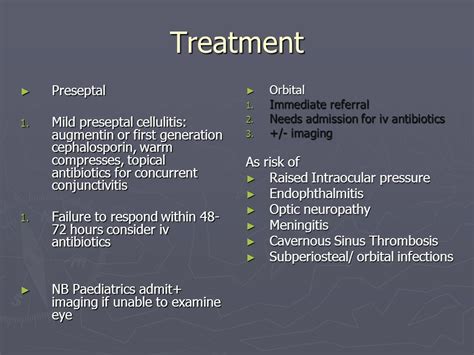
The treatment of preseptal cellulitis primarily involves antibiotic therapy, aimed at covering the most likely causative organisms. The choice of antibiotics may be adjusted based on culture results, if available.
- Outpatient oral antibiotics: For mild cases, oral antibiotics such as amoxicillin-clavulanate or cephalexin may be prescribed. The duration of treatment is usually 7-10 days but can be adjusted based on clinical response.
- Inpatient intravenous antibiotics: For more severe cases, hospital admission for intravenous antibiotics may be necessary. This is particularly important if there’s concern about the potential for the infection to spread to the orbit or if the patient is systemically unwell.
- Supportive care: This includes applying warm compresses to the affected area, which can help reduce swelling and promote comfort.
- Surgical intervention: Rarely, if an abscess forms, surgical drainage may be required.
Prevention
Preventing preseptal cellulitis involves reducing the risk of bacterial infections in general, such as practicing good hygiene, avoiding close contact with individuals who have infections, and seeking prompt medical attention if symptoms of an infection develop.
Complications
While preseptal cellulitis itself is typically less severe than orbital cellulitis, it’s crucial to monitor for signs of worsening infection or complications, which can include:
- Orbital cellulitis: Spread of the infection to the orbital tissues, which can lead to more serious complications, including vision loss.
- Abscess formation: A collection of pus that may require surgical drainage.
- Septicemia: Bacteria entering the bloodstream, which can lead to a systemic infection.
Conclusion
Preseptal cellulitis is a condition that, while often distressing due to its appearance and symptoms, can typically be managed with appropriate antibiotic therapy and supportive care. Early recognition and treatment are key to preventing complications and ensuring a full recovery.
Frequently Asked Questions
What is the difference between preseptal and orbital cellulitis?
+Preseptal cellulitis involves the eyelid and the skin surrounding the eye, without involving the deeper orbital tissues. Orbital cellulitis, on the other hand, involves the tissues surrounding the eye itself, which can lead to more severe complications, including vision loss.
How long does it take for preseptal cellulitis to heal?
+The healing time for preseptal cellulitis can vary depending on the severity of the infection and the response to treatment. Generally, with appropriate antibiotic therapy, symptoms can start to improve within a few days, but full recovery may take 7-10 days or more.
Can preseptal cellulitis be prevented?
+While not all cases can be prevented, practicing good hygiene, avoiding touching the face, and seeking prompt medical attention for any signs of infection can reduce the risk of developing preseptal cellulitis.