Dehydration is a condition that occurs when the body loses more fluids than it takes in, causing an imbalance in the body’s water and electrolyte levels. This can happen for a variety of reasons, including not drinking enough water, excessive sweating, vomiting, diarrhea, or certain medical conditions. It’s essential to recognize the signs of dehydration to take prompt action and prevent complications.
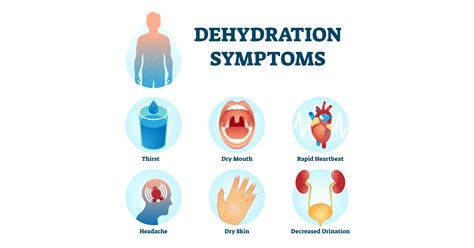
One of the earliest signs of dehydration is a dry mouth, also known as xerostomia. When the body loses fluids, the saliva production decreases, leading to a dry, sticky feeling in the mouth. This can make it difficult to swallow, speak, or even taste food. Additionally, dehydration can cause bad breath, as the reduced saliva flow allows bacteria to multiply in the mouth.
Another common sign of dehydration is fatigue. When the body doesn’t have enough fluids, it can’t function properly, leading to feelings of exhaustion, lethargy, and a lack of energy. Even simple tasks can become challenging, and dehydration can affect cognitive function, making it difficult to concentrate or make decisions.
Dehydration can also cause headaches, which can range from mild to severe. The lack of fluids can lead to a decrease in blood volume, causing blood vessels to constrict and leading to pain. In some cases, dehydration headaches can be debilitating, making it essential to address the underlying cause.
Muscle cramps are another sign of dehydration. When the body loses electrolytes, such as sodium and potassium, it can disrupt muscle function, leading to spasms, cramps, and weakness. This can be particularly concerning for athletes or individuals who engage in strenuous physical activity, as dehydration can increase the risk of injury.
In addition to these symptoms, dehydration can cause a range of other issues, including:
- Dark urine: When the body is dehydrated, the kidneys produce more concentrated urine, which can appear dark yellow or amber-colored.
- Decreased urine output: Dehydration can lead to a decrease in urine production, as the body tries to conserve fluids.
- Dizziness or lightheadedness: Dehydration can cause a drop in blood pressure, leading to dizziness or lightheadedness, especially when standing up quickly.
- Rapid heartbeat: Dehydration can cause an increase in heart rate, as the body tries to compensate for the lack of fluids.
It’s essential to recognize these signs of dehydration and take action to address the underlying cause. In most cases, dehydration can be treated by drinking plenty of fluids, such as water, clear broth, or electrolyte-rich beverages like sports drinks. However, in severe cases, dehydration can lead to serious complications, such as kidney damage, heat stroke, or even death.
To prevent dehydration, it’s essential to drink plenty of fluids throughout the day. The general recommendation is to drink at least eight glasses of water per day, but this can vary depending on individual needs, activity level, and climate. Additionally, eating foods that are rich in water content, such as fruits and vegetables, can help contribute to daily fluid intake.
- Drink plenty of fluids throughout the day, including water, clear broth, and electrolyte-rich beverages.
- Eat foods that are rich in water content, such as fruits and vegetables.
- Avoid excessive sweating by taking regular breaks in cool environments.
- Monitor urine output and color to ensure adequate hydration.
- Avoid caffeine and alcohol, which can exacerbate dehydration.
In conclusion, dehydration is a common condition that can have serious consequences if left untreated. Recognizing the signs of dehydration, such as dry mouth, fatigue, headaches, and muscle cramps, can help prompt action to address the underlying cause. By drinking plenty of fluids, eating hydrating foods, and taking steps to prevent dehydration, individuals can reduce their risk of complications and maintain optimal health.
What are the most common causes of dehydration?
+The most common causes of dehydration include not drinking enough water, excessive sweating, vomiting, diarrhea, and certain medical conditions.
How can I prevent dehydration during exercise?
+To prevent dehydration during exercise, drink plenty of fluids before, during, and after physical activity. Additionally, eat foods that are rich in electrolytes, such as bananas or dates, to help replenish lost salts.
What are the symptoms of severe dehydration?
+The symptoms of severe dehydration include excessive thirst, dark urine, decreased urine output, dizziness or lightheadedness, rapid heartbeat, and confusion or disorientation. If you or someone you know is experiencing these symptoms, seek medical attention immediately.
By understanding the signs of dehydration and taking steps to prevent it, individuals can maintain optimal health and reduce their risk of complications. Remember, dehydration is a common condition that can be easily treated by drinking plenty of fluids and addressing the underlying cause. Stay hydrated, stay healthy!