As individuals navigate the complexities of modern healthcare, having a clear understanding of their options and rights becomes increasingly important. One crucial aspect of this is the advanced health care directive, a document that outlines a person’s wishes for medical treatment in the event they become unable to communicate their decisions. This directive is not just a legal formality; it’s a vital tool that ensures one’s autonomy and dignity are respected during some of the most vulnerable moments of their life.
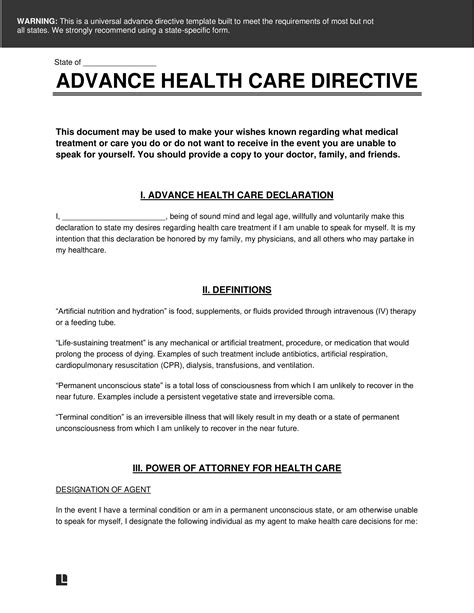
At its core, an advanced health care directive is a combination of two main components: the living will and the durable power of attorney for health care. The living will specifies the types of medical treatment an individual does or does not want to receive if they become incapacitated. This can include preferences regarding life-sustaining treatments, such as ventilators, dialysis, and cardiopulmonary resuscitation (CPR), among others. On the other hand, the durable power of attorney for health care appoints a person (often referred to as an agent or proxy) to make medical decisions on behalf of the individual if they are unable to do so themselves.
The Importance of Advanced Directives
The significance of having an advanced health care directive in place cannot be overstated. Without such a document, family members or healthcare providers may be left to make decisions that might not align with the patient’s wishes, leading to potential conflict and ethical dilemmas. An advanced directive provides clarity and guides decision-making, reducing the burden on loved ones and ensuring that the individual’s autonomy is respected.
Moreover, advanced directives are not just for the elderly or those with serious illnesses. Any adult can benefit from having one, as unforeseen accidents or illnesses can happen at any age. It’s a proactive step in taking control of one’s healthcare, ensuring that personal values and beliefs are honored even when one cannot speak for themselves.
Components of an Advanced Health Care Directive
Living Will: This document outlines specific medical treatments an individual wants or does not want to receive if they become incapacitated. Common considerations include:
- Resuscitation: Should CPR or other resuscitative measures be used if the heart stops or if breathing ceases?
- Mechanical Ventilation: Is the use of a ventilator to assist breathing acceptable?
- Tube Feeding: Should nutrition and hydration be provided through a feeding tube if the individual cannot eat or drink on their own?
- Pain Management: Are there specific treatments or medications the individual prefers or dislikes for pain management?
- Organ Donation: Does the individual wish to donate organs or tissues after death?
- Other Treatments: This can include preferences regarding dialysis, antibiotics, and other medical interventions.
Durable Power of Attorney for Health Care: This part of the directive names an agent who will make healthcare decisions on the individual’s behalf if they are unable to do so. It’s crucial to choose someone who understands the individual’s values, beliefs, and wishes regarding medical treatment. This agent will have the authority to:
- Consent to or refuse medical treatment
- Access medical records
- Make decisions about the individual’s daily care
- Authorize the release of the individual’s medical information
Creating an Advanced Health Care Directive
Creating an advanced health care directive involves several steps:
- Reflect on Your Wishes: Consider your values, beliefs, and preferences regarding medical treatment. It may be helpful to discuss these with your family, friends, and healthcare provider.
- Choose Your Agent: Select someone you trust to make decisions on your behalf. It’s a good idea to also name an alternate agent in case your primary choice is unavailable.
- Obtain the Necessary Forms: You can get these forms from your healthcare provider, a lawyer, or online. Ensure the forms comply with your state’s laws, as requirements can vary.
- Complete the Forms: Fill out the living will and durable power of attorney for health care sections according to your wishes and the laws of your state.
- Sign and Date the Document: Typically, this needs to be done in the presence of witnesses or a notary public, depending on your state’s requirements.
- Distribute Copies: Give copies to your agent, alternate agent, healthcare providers, and family members. It’s also a good idea to keep a copy in an easily accessible location, such as with other important documents.
Challenges and Considerations
Despite the importance of advanced health care directives, several challenges and considerations arise:
- Legal Variations: Laws regarding advanced directives vary by state, so it’s essential to ensure your document complies with local regulations.
- Updating the Directive: As personal beliefs and medical circumstances change, it’s crucial to update the advanced directive to reflect these changes.
- Discussing the Directive: While it can be challenging, discussing your wishes with your agent and loved ones can prevent misunderstandings and ensure your autonomy is respected.
- Digital Storage and Access: In an increasingly digital world, considering how your advanced directive will be stored and accessed is important, especially for emergency situations.
Conclusion
An advanced health care directive is a powerful tool that empowers individuals to take control of their medical care, even when they cannot speak for themselves. By understanding the components, importance, and process of creating such a document, individuals can ensure their dignity and autonomy are respected during some of the most vulnerable moments of their life. It’s a conversation and a process that, while challenging, is ultimately rewarding and important for anyone looking to navigate the complexities of modern healthcare with confidence and peace of mind.
What is the primary purpose of an advanced health care directive?
+The primary purpose of an advanced health care directive is to outline a person’s wishes for medical treatment in the event they become unable to communicate their decisions, ensuring their autonomy and dignity are respected.
What are the main components of an advanced health care directive?
+The main components include the living will, which specifies the types of medical treatment an individual does or does not want to receive, and the durable power of attorney for health care, which appoints an agent to make medical decisions on behalf of the individual.
Why is it important to discuss my advanced directive with my family and healthcare provider?
+Discussing your advanced directive with your family and healthcare provider ensures they understand your wishes and can act accordingly, reducing potential conflict and ensuring your autonomy is respected.
Can I update my advanced health care directive?
+Yes, it’s crucial to update your advanced directive as your personal beliefs, medical circumstances, or agents change, to ensure it continues to reflect your current wishes and comply with local laws.
How do I ensure my advanced directive is accessible in emergency situations?
+Ensure your agents, healthcare providers, and family members have copies of your advanced directive. Consider storing a copy in an easily accessible location and exploring digital solutions that comply with privacy and security standards.